7 Websites for Professional Photographers to Compare

A polished portfolio can still leave you with the hardest part of the job after the shoot. You're sending scattered delivery links, answering proofing questions, managing print orders, and helping event attendees locate images they may never find in a large folder. The right website for a professional photographer should carry more of that workflow.
This comparison looks at seven platforms by what happens before, during, and after the booking. The criteria include portfolio control, gallery experience, commerce, business administration, storage, event distribution, privacy controls, and opportunities for photographers to upsell directly to attendees. Saucial is the event-focused option, built around a “find my photos” experience. The other platforms address broader portfolio, gallery delivery, sales, scheduling, or studio-management needs.
The market is substantial and international. A 2024 survey gathered responses from more than 7,600 photographers across more than 100 countries, while its 2025 report included more than 4,500 photographers across more than 70 countries, showing how widely photographers rely on web-based tools for marketing, inquiries, and delivery (Rudy's photographer website statistics).
1. Saucial
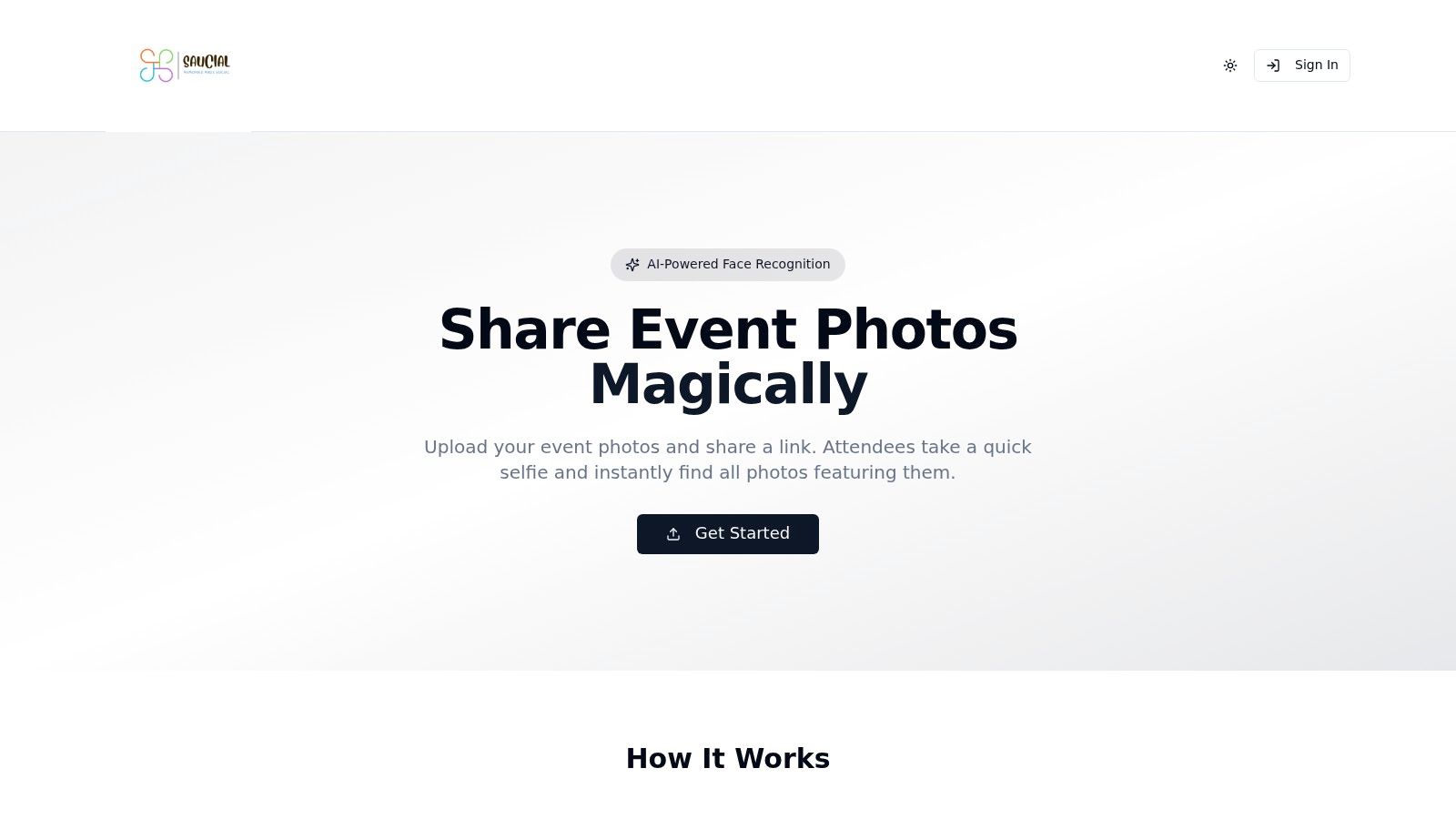
Saucial takes a different starting point from a traditional portfolio builder. It's designed for event photo sharing, where the core problem isn't only displaying beautiful images. It's helping guests locate their own photos quickly, share them, and potentially purchase something after the event.
The workflow is simple. A photographer or organizer uploads images using drag and drop, Saucial processes them in the background, and the event receives a shareable event photo sharing link. Organizers can also distribute a QR code photo gallery at the venue, in follow-up emails, on social media, or through an event website. Guests open the gallery on their phones, take a selfie, and use selfie photo matching to see photos they appear in. No app installation is required, and guests typically don't need an account.
That makes Saucial a strong fit for galas, alumni dinners, fundraisers, festivals, sports tournaments, trade shows, and brand activations. It replaces the familiar “here's a huge folder, good luck” experience with a more direct find my photos journey.
Where Saucial earns its place
For photographers, delivery becomes more than an organizer handoff. Depending on the event agreement, the gallery can support digital downloads, print sales, premium edits, featured sets, or sponsored and branded frames. That creates a direct path to a photographer upsell to attendees, particularly when guests have already found an image they want.
Organizers also retain control over gallery access and attendee experiences. They can decide what gets shared, whether access is free or paid, and which galleries or curated sets are available. That control matters for privacy-sensitive events, especially when a face recognition event gallery is involved. Consent language, expectations, and access rules should be clear before guests use the matching experience.
Practical rule: Use Saucial when fast retrieval and attendee engagement matter more than building a conventional public portfolio.
Saucial isn't a replacement for a full studio website with extensive SEO pages, blogging, or a brand system. It's a workflow layer for distributing event imagery, reducing “can you find my photo?” requests, and creating post-event engagement. Its site doesn't publish public pricing, customer testimonials, awards, or certifications, so photographers and organizers should contact the team for commercial details and case studies.
2. Pixieset
Pixieset is a sensible choice for a solo photographer who wants to reduce the number of separate systems in the business. Its suite brings together client galleries, proofing, downloads, a store, website tools, CRM functions, contracts, invoicing, and a mobile gallery app.
The client experience is one of Pixieset's strongest points. A couple, portrait client, or family can browse a clean gallery, select favorites, download approved files, and purchase products without being pushed through a confusing sequence of third-party pages. For photographers, that means fewer support messages about where to click or how to access a gallery.
Pixieset also works well as a compact website and business hub. You can use the website builder for portfolio pages, then manage delivery and billing in the same account. That single-login approach is valuable for photographers who don't want to connect a separate website builder, gallery service, contract system, and invoicing tool.
The trade-off is control
Pixieset's convenience comes with less granular design and SEO control than a dedicated website builder. If your acquisition strategy depends on highly customized landing pages, deep content architecture, or a distinctive editorial portfolio, you may eventually want a separate marketing site.
The free plan also charges a 15% store commission, while upgraded accounts offer 0% store commission, according to the platform's product information at Pixieset. That distinction should be part of your sales calculation before you publish a large product catalog.
Pixieset is especially practical for wedding and portrait photographers who want a polished client journey from inquiry through delivery. It can also support event galleries, but it isn't primarily built around attendee-level retrieval through selfie matching. For a dedicated event photo sharing workflow, you may need a specialist service such as an event gallery upload workflow.
3. Pic-Time
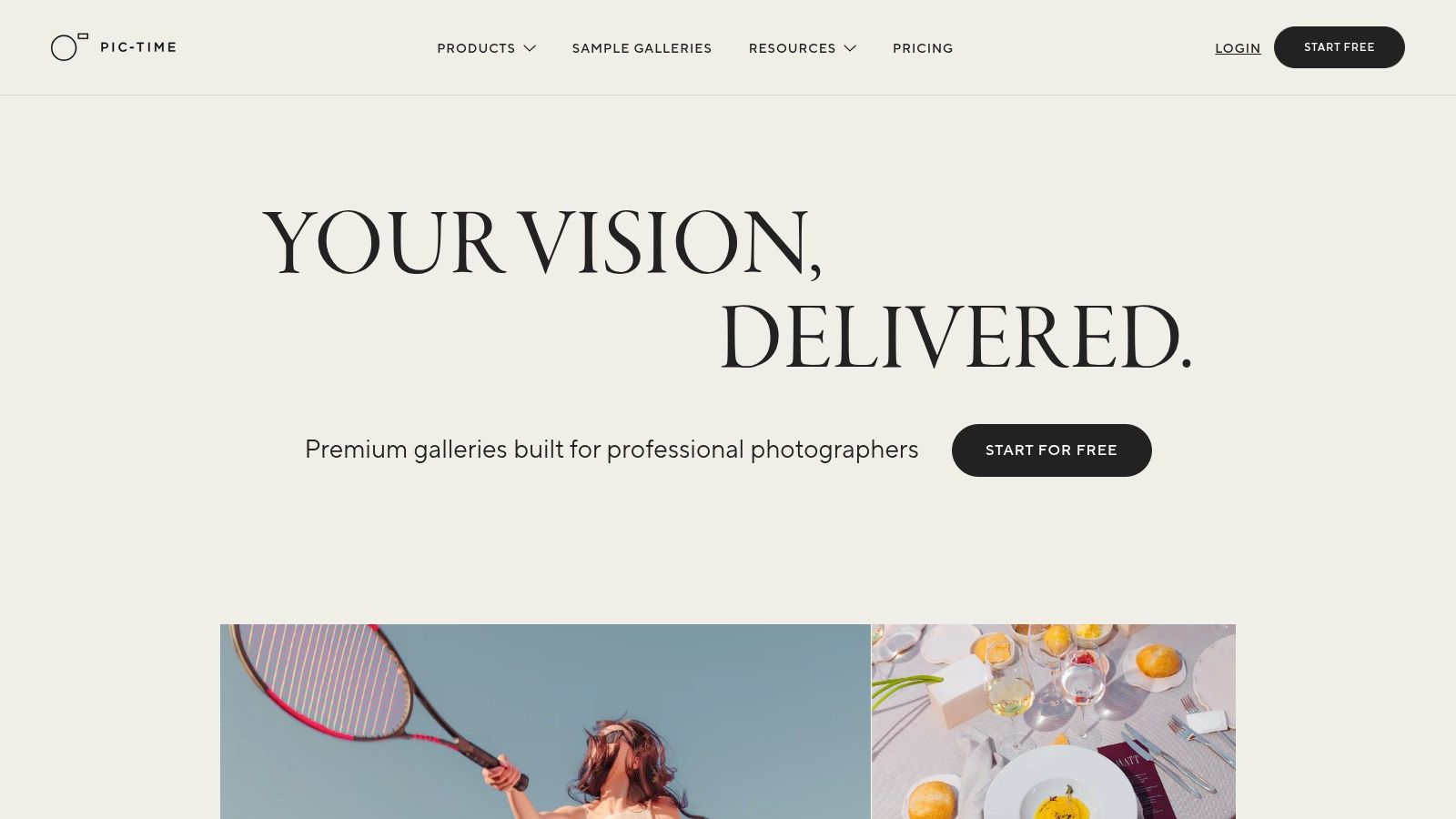
Pic-Time is the most sales-oriented option in this list. Its gallery experience is built to move clients from viewing images to making decisions about albums, prints, wall art, and other products. That makes it a strong candidate for wedding and portrait photographers who see delivery as the beginning of the sales process rather than the end.
The platform combines galleries with sales automations, album proofing, client selections, and integrations with more than 30 labs. Photographers can create a storefront that feels connected to the gallery instead of attaching a generic shop after delivery. For clients, that reduces the distance between seeing an image and considering a purchase.
Pic-Time also supports guest pre-registration and Smart Image Search, including people search and selfie search. That feature can help attendees locate themselves in event galleries without manually scanning every image. It gives Pic-Time a useful role in event delivery, although its commercial strengths remain particularly obvious for albums and post-event product sales.
Strong sales mechanics require setup
Pic-Time's automations can become powerful, but they aren't entirely hands-off. You need to configure campaigns, product offerings, gallery rules, and timing so the client receives relevant prompts rather than a stream of generic sales messages. Photographers who want a simple upload-and-send process may find the customization work heavier than expected.
Advanced automations and unlimited storage are tied to higher-tier plans, and storage and video allowances vary by plan. Review those limits against your actual delivery mix before committing, particularly if you deliver both films and stills.
Pic-Time is a good fit when the gallery should actively support revenue, not merely host finished files.
For event photographers, Smart Image Search can improve attendee discovery, while the sales infrastructure supports prints and other products. If your priority is a dedicated QR-driven find my photos experience with organizer-controlled access, compare Pic-Time with Saucial's upload option before choosing.
4. ShootProof
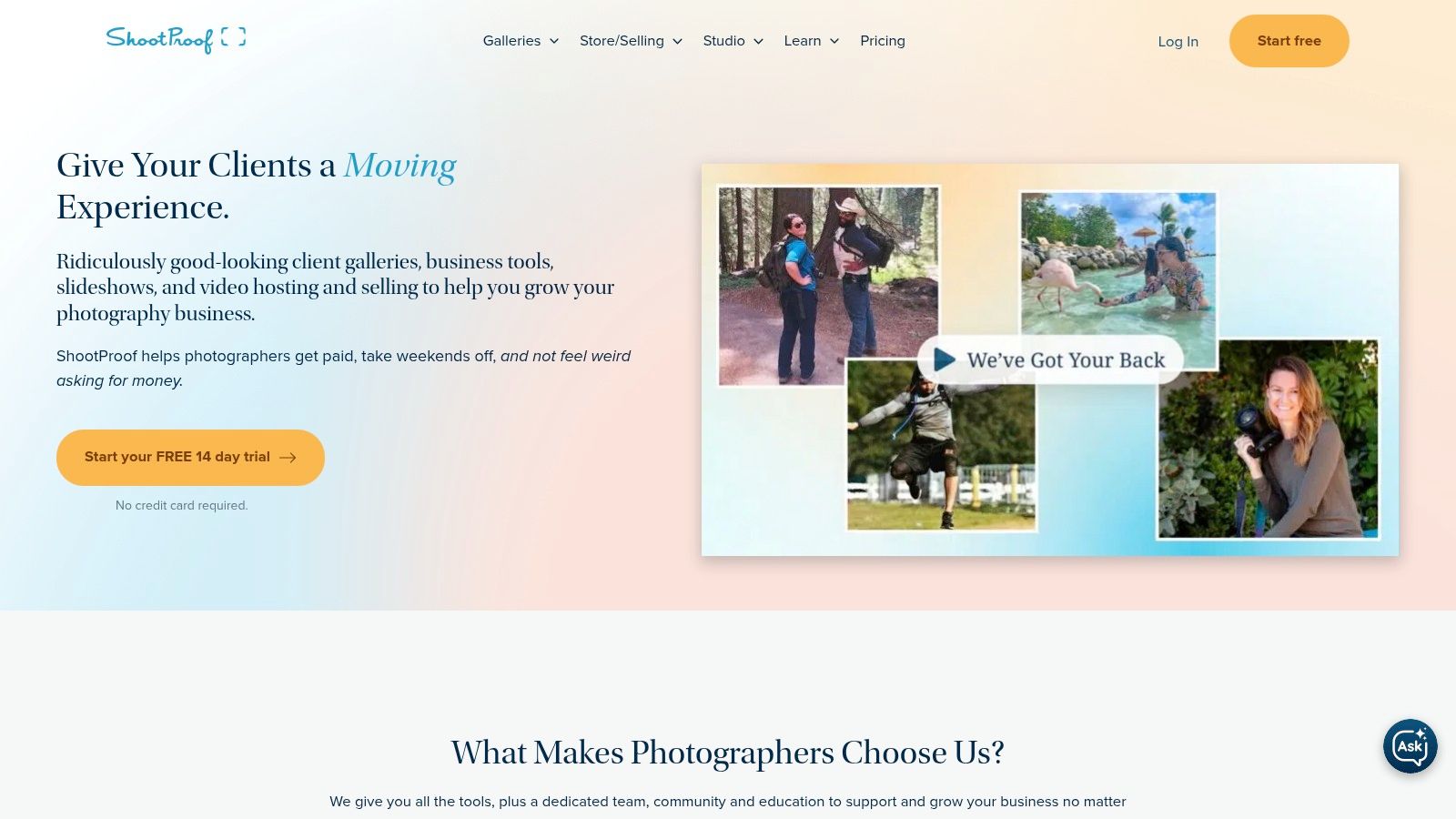
ShootProof combines gallery delivery with practical studio administration. It offers client galleries, proofing, stores, slideshows, video support, contracts, invoices, and an optional booking add-on. The result is less of a design-led portfolio platform and more of an operational system for photographers who need client work to move cleanly from approval to payment.
Its proofing tools are useful for commercial, portrait, school, and event workflows where clients need to mark favorites or approve selections. Print fulfillment through professional lab integrations can reduce manual order handling, while paid plans offer 0% commission on sales, based on the platform's published product information at ShootProof.
The galleries are white-labeled by default, so clients won't automatically see ShootProof branding in the delivery experience. That small detail matters when the photographer wants the gallery to feel like part of the studio rather than a hosted handoff.
Better for operations than visual experimentation
ShootProof's portfolio website module is relatively basic compared with a dedicated website builder. If your public website needs extensive storytelling, local landing pages, or highly flexible layouts, you may use ShootProof for delivery and sales while keeping your main marketing site elsewhere.
Storage is another practical consideration. The storage-based pricing model makes the cost easier to understand, but high-volume photographers may need a higher tier as active galleries accumulate. Decide which galleries should remain live and which should be archived before your account grows.
ShootProof doesn't center its experience on attendee selfie matching or QR distribution. It's better suited to a studio that needs reliable proofing, contracts, invoices, and print fulfillment. You can still add a specialist event distribution layer through Saucial's account workflow when attendees need a faster way to retrieve personal images.
5. SmugMug
SmugMug suits photographers who need durable image hosting, portfolio galleries, and built-in sales. Its main plans include unlimited full-resolution JPEG storage, while RAW files require a paid add-on. The distinction matters because unlimited storage does not automatically cover every original file in an archive.
For photographers producing large volumes of work, that setup reduces pressure to remove older JPEG galleries. You can present a broad portfolio, deliver client galleries, and sell prints or digital downloads from the same account. Coupons, packages, custom price lists, and professional lab fulfillment support a practical e-commerce workflow.
A strong archive, a less flexible brand system
SmugMug works well when the priority is uploading, organizing, protecting, and selling images without maintaining a complex technical stack. Lightroom and Dropbox integrations can fit established production routines. QR code generation also gives clients a quick route to private galleries, which helps when links need to be shared after a shoot or event.
The trade-off is design control. SmugMug templates are more constrained than those of modern website builders, so photographers with a highly art-directed brand may need to accept layout compromises or maintain a separate marketing site. Its strengths sit in hosting and commerce rather than editorial presentation or advanced client acquisition pages.
SmugMug provides 24/7 live support, useful when gallery access or a sales workflow becomes urgent. Before choosing it, confirm the privacy settings for client galleries, how long active galleries remain available, and whether JPEG-only unlimited storage fits your archive.
Choose SmugMug for durable portfolio hosting, gallery delivery, and established print sales. A specialist event retrieval workflow requires another tool.
For a sports tournament or large event, SmugMug can host and sell galleries, but it does not provide the focused selfie photo matching workflow available when you configure Saucial's event settings.
6. Zenfolio
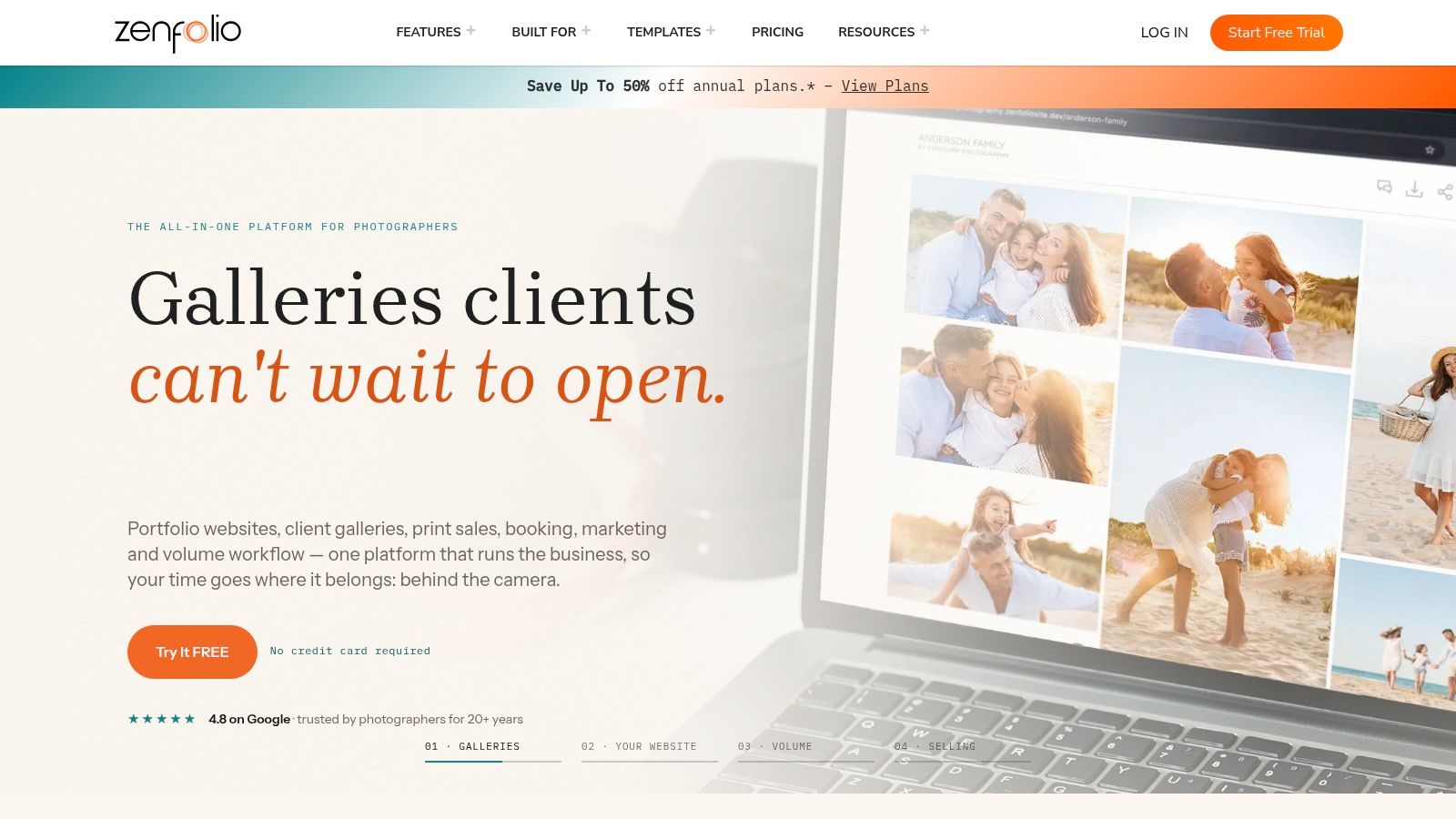
Zenfolio is built for solo professionals who want website, galleries, selling, and scheduling under one account. Its BookMe tools let clients schedule sessions, pay deposits, and receive reminders, which can reduce the email exchange around mini-sessions, portrait appointments, and event bookings.
The gallery side includes print and digital sales with automated lab fulfillment. Packages and presets for common products can help photographers get a store live without designing every product combination from scratch. Zenfolio also includes workflows aimed at sports, schools, and events, so it has broader operational relevance than a portfolio-only builder.
Scheduling is the differentiator
Zenfolio makes the most sense when scheduling is part of the sales journey. A potential client can move from website content to booking and deposit without the photographer manually coordinating every step. That's useful for photographers running recurring sessions, school photography, sports coverage, or event-related appointments.
The trade-off is that plan details and fees vary by tier, so review the current structure carefully before comparing it with an apparently cheaper platform. Also examine how long-term gallery storage and archiving work if you intend to keep client galleries available for extended periods.
Zenfolio can sell prints and downloads, but it isn't positioned as an attendee-first how to share event photos with attendees system. For an event where guests need a QR code gallery, selfie search, and immediate personal retrieval, you may need an additional distribution workflow. For a studio where booking, deposits, reminders, galleries, and product sales need to share one login, Zenfolio remains a practical option.
7. CloudSpot
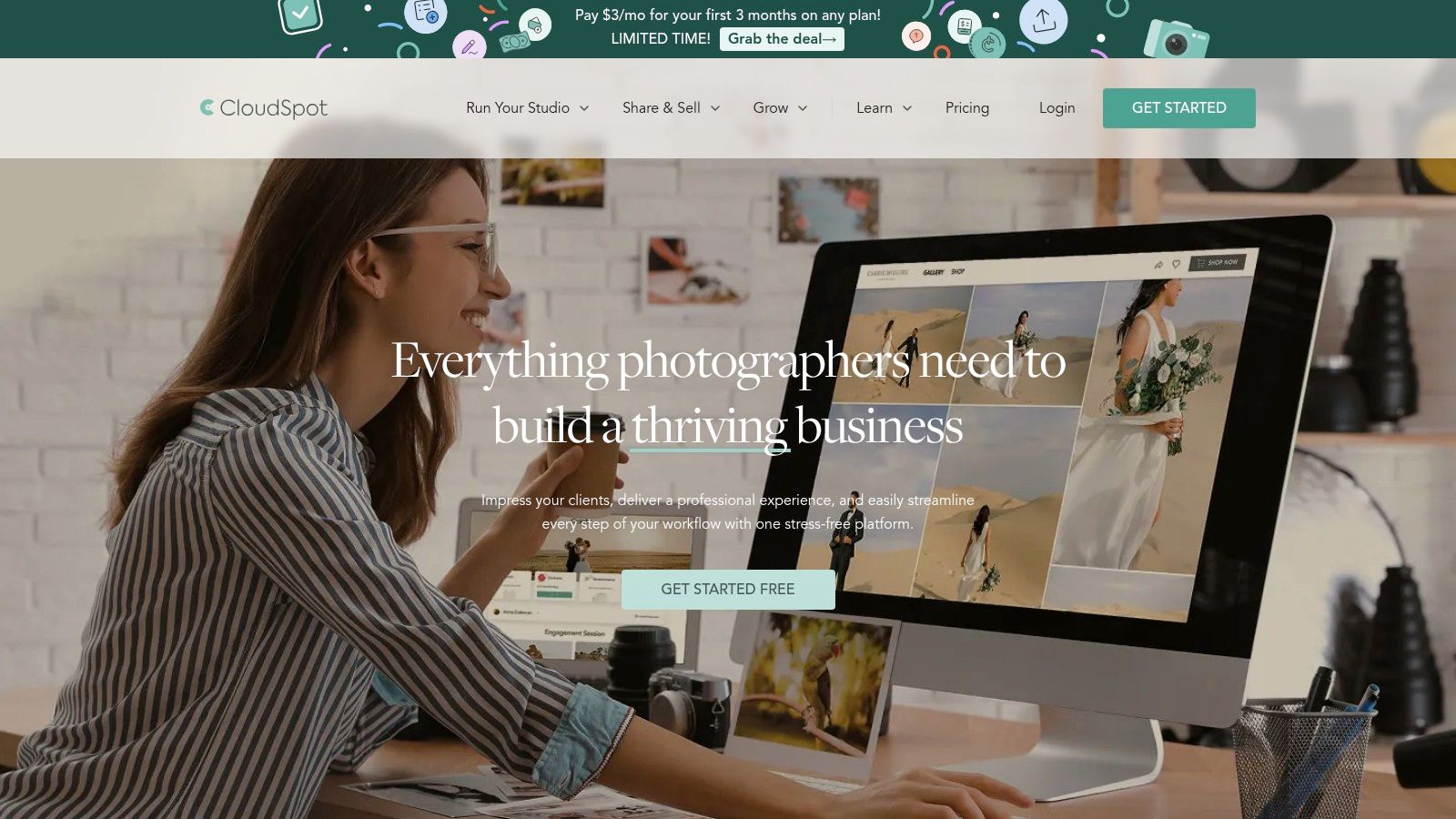
CloudSpot sits between a client-gallery service and a lightweight studio manager. It provides galleries, a print store, invoices, contracts, e-signatures, scheduling, questionnaires, and mini-session tools. That combination suits a growing studio that wants more structure than a basic gallery platform without adopting a complex business-management system.
The setup is approachable. CloudSpot publishes a clear plan comparison, with storage limits that reach unlimited on higher tiers, making it easier to compare the account with your expected gallery volume. Payments can run through PayPal, and basic video delivery can use YouTube or Vimeo embeds.
Useful business basics without heavy automation
CloudSpot's Studio Manager features are valuable for photographers who need questionnaires, contracts, and invoices in the same environment as gallery delivery. Mini-session scheduling is another practical advantage, particularly for studios that run repeatable booking campaigns.
The limitations appear in more advanced workflows. Lower-tier video delivery relies on embeds rather than native storage, and CloudSpot's automation is lighter than Pic-Time's sales-focused campaign tools. Photographers who depend on advanced product prompts, album workflows, or complex attendee discovery may need to add another service.
CloudSpot is a good middle ground for portrait, wedding, and small event photographers who want an organized client experience. It isn't primarily a trade show photo sharing platform or an attendee monetization system, but it can handle the core business administration around standard client delivery. Review the current features at CloudSpot before deciding whether its storage and video approach fit your workflow.
Top 7 Photographer Website Platforms Compared
| Product | Implementation (🔄 Complexity) | Resource needs (⚡ Efficiency / Cost) | Expected outcomes (⭐ / 📊) | Ideal use cases (💡) | Key advantages |
|---|---|---|---|---|---|
| Saucial | Moderate 🔄, workflow-first setup with background face processing and QR/selfie flow | Moderate ⚡, cloud facial processing; minimal attendee friction (no app) | High ⭐📊, faster attendee discovery, higher post-event sharing, reduced admin | Live events with high guest sharing (galas, festivals, activations) | Selfie matching + QR galleries; fast delivery; monetization paths |
| Pixieset | Low 🔄, plug-and-play all-in-one with integrated gallery + site | Low ⚡, single vendor bundle reduces integrations and setup time | Good ⭐📊, clean guest UX, fewer support requests | Solo studios wanting one vendor for delivery, site and billing | Client galleries + website + store + CRM in one account |
| Pic-Time | Moderate–High 🔄, sales-first automations and store configuration | Higher ⚡, advanced automations and integrated labs often need higher tiers | High ⭐📊, strong revenue uplift via automated upsells and storefronts | Wedding/portrait pros focused on post-event sales | Robust store presentation, smart image/search, sales automations |
| ShootProof | Low–Moderate 🔄, end-to-end studio tooling with proofing and business tools | Moderate ⚡, storage-based pricing; paid tiers unlock features | Reliable ⭐📊, white-labeled delivery and streamlined client workflows | Studios needing proofing plus invoicing/contracts | Transparent pricing, white-label galleries, pro lab integrations |
| SmugMug | Low 🔄, hosting-first with portfolio and e‑commerce features | Moderate ⚡, unlimited JPEG hosting on main plans; RAW paid add-on | Strong ⭐📊, dependable long-term hosting and sales for archives | High-volume shooters needing long-term storage and sales | Unlimited JPEG storage, pro lab fulfillment, mature integrations |
| Zenfolio | Low–Moderate 🔄, integrated gallery + scheduling (BookMe) | Moderate ⚡, combined booking, sales and site in one platform | Good ⭐📊, simplifies booking and sales for solo pros | Solo photographers needing booking+sales under one login | Built-in scheduling (BookMe), presets and sales workflows |
| CloudSpot | Low 🔄, straightforward gallery + basic studio manager features | Low–Moderate ⚡, clear plans; higher tiers offer unlimited storage | Good ⭐📊, approachable for growing studios; clear pricing | Growing studios wanting simple galleries plus contracts/invoices | Simple setup, contracts/e-signatures, mini-session tools |
Match the Platform to the Job After the Shoot
The best website for a professional photographer depends on where your workflow loses time or revenue. A visually impressive portfolio won't solve attendee support requests, and a powerful sales gallery won't automatically create a strong local acquisition site. Choose the platform that fixes the most expensive or frustrating part of your current process.
Choose Saucial when the priority is fast event distribution, a find my photos workflow, QR code photo gallery access, post-event engagement, or a direct photographer upsell to attendees. It's particularly relevant for galas, fundraisers, festivals, sports tournaments, trade shows, and brand activations where guests need to find and share images from their phones.
Choose Pixieset, ShootProof, or CloudSpot when you want an integrated studio stack. Pixieset is convenient for a polished all-in-one gallery, website, and client-management experience. ShootProof is a strong operational choice for proofing, contracts, invoices, and white-labeled delivery. CloudSpot fits growing studios that need galleries plus straightforward contracts, questionnaires, scheduling, and invoicing.
Choose Pic-Time when sales automation, album workflows, and attendee discovery are central. Its storefront and campaign tools are better suited to photographers who want the gallery to actively support product sales. Choose SmugMug when long-term JPEG hosting, portfolio publishing, and mature print commerce take priority. Choose Zenfolio when scheduling, galleries, deposits, reminders, and selling should share one account.
A historical benchmark shows why delivery and conversion deserve attention. Independent analysis of top photographer websites found that the average site had 10 galleries, or about 7 after outliers were removed, while 85% didn't include contact information on the homepage (ForegroundWeb's photography website statistics). A large portfolio still needs a clear next step, visible contact path, and delivery experience that supports the business.
Before committing, map the full journey:
- Upload to delivery: Identify who prepares files, who approves them, and how quickly guests or clients receive access.
- Distribution channel: Decide whether delivery uses email, SMS, WhatsApp, social media, a private link, or a QR code at the venue.
- Consent and access: Define permissions for private galleries, downloads, facial matching, paid upgrades, and public sharing.
- Mobile testing: Open the gallery on a phone and test the process as a first-time client or attendee.
- Sales preparation: Configure print products, downloads, premium edits, featured sets, or event-approved branded offers before delivery.
- Measurement: Track turnaround time, gallery engagement, support requests, downloads, and sales.
A 2026 benchmark reported conversion of 85% to 98% for IPS studios, compared with 35% to 55% for online-gallery-only studios (Pulse RevOps photography studio benchmark). The practical lesson isn't that every photographer needs the same sales model. It's that passive galleries leave value on the table when the workflow could guide selection, purchasing, or follow-up.
For a professional photographer, the website is no longer just a place to display work. It's the system that connects discovery, booking, proofing, delivery, attendee retrieval, sales, and repeat engagement.
Saucial gives photographers and event teams a faster way to distribute galleries through a shareable link or QR code, while selfie photo matching helps attendees find the images they appear in. Visit Saucial to explore an event-focused workflow that can turn photo delivery into stronger engagement and new attendee sales opportunities.