10 Photography Marketing Ideas for Event Photographers
You've delivered the gala gallery, sent the invoice, and started editing the next job. The organizer thanks you, but guests still message asking where their portraits are. Someone wants a framed photograph, a sponsor needs an approved image, and a guest who organizes conferences can't remember your business name.
The photography is finished. The distribution isn't.
A shared folder can satisfy the delivery clause in your contract without helping attendees find, share, or buy anything. If the organizer never forwards it, your work stays inside an inbox instead of reaching people who could become customers.
Useful photography marketing ideas connect those moments. During the event, give attendees a clear route to their images. In the first seventy-two hours after, make retrieval and sharing easy. Over the following months, turn permission-based contact into print orders, referrals, and future bookings.
Treat attendees as potential customers, not as a mailing list you automatically own.
That distinction matters. The organizer's permission to photograph an event doesn't automatically authorize promotional reuse, biometric matching, or direct marketing to guests. Build those permissions into the workflow, then give each tactic a measurable business outcome.
1. Direct-to-Attendee Event Photo Delivery
Moment created: During the event, when guests want to know where their photos will appear.
At a corporate gala, place a QR code photo gallery invitation on table cards and near the exit. At a tournament, give approved team coordinators an event photo sharing link they can distribute through parent group chats. Don't rely on the organizer remembering to forward a folder later.
In Bitly's survey of more than 250 marketers in 2025, 43% said they use QR codes at events. That supports testing the placement, not assuming every scan will become a sale.
Make retrieval useful before making an offer
Send guests to a focused gallery experience, not your homepage. Explain when images will appear, who can access them, and whether downloads or products cost extra.
- Provide a clear entrance. Label signage with a direct invitation to find event photos.
- Explain matching. Describe selfie photo matching before asking anyone to submit a selfie.
- Keep alternatives available. Offer a curated gallery or manual assistance for guests who decline matching.
- State availability. Publish an actual gallery closing date rather than manufacturing urgency.
You can upload event photos for attendee retrieval as part of preparing the distribution workflow. Agree on access permissions and any attendee sales with the organizer before publishing.
Primary KPI: Attendee purchase conversion, measured as purchasing attendees divided by unique attendee gallery visitors.
This demonstration provides a visual reference for photo retrieval.
2. Google Business Profile Photo Optimization
Moment created: In the months that follow, when a local prospect checks whether you're suitable.
Your Google Business Profile should look like the business you want someone to book. If you want conference assignments but show mostly family portraits, a planner has to guess whether you can handle stage lighting, speaker coverage, and sponsor deliverables.
Choose accurate business categories, describe your services plainly, and keep contact details consistent with your website. Add approved photographs that demonstrate the work buyers need, rather than uploading every attractive image.
A conference photographer could show an auditorium overview, a clean speaker portrait, a networking interaction, and a sponsor activation. Together, those images explain coverage more clearly than unrelated portfolio favorites.
Show the assignment, not just the aesthetic
Include context wherever the profile format permits. Explain the event type and your role without exposing confidential client information.
- Refresh deliberately. Add relevant work after approved deliveries instead of posting just to meet a schedule.
- Request honest reviews. Ask clients to describe communication, coverage, or delivery in their own words.
- Answer professionally. Respond to criticism without revealing private booking details or arguing publicly.
Don't mistake image uploads for a guaranteed ranking improvement. Treat the profile as a local decision-making page and test whether it produces suitable conversations.
Primary KPI: Qualified inquiries attributed to Google Business Profile. Use a tagged website link and ask callers how they found you. Record inquiries that match your service area and assignment type, not every contact.
3. Short-Form Video Content (Reels and Shorts)
Moment created: During the event and immediately afterward, when prospects can see how you work.
Open a Reel with the finished photograph, then show the lighting setup that produced it. A planner evaluating you needs evidence of competent event coverage, not a prolonged camera-unpacking sequence.
Emplifi's 2024 Social Media Benchmarks report identified Reels, TikTok, and Facebook Live as important drivers of interaction. Use that finding to justify testing video, not abandoning still photography or promising bookings from views.
For a gala, capture an approved room setup, a brief lighting demonstration, and a finished detail photograph. Publish the sequence as an Instagram Reel or YouTube Short with captions explaining the practical result.
Don't sacrifice the contracted photograph to capture marketing footage about taking it.
Batch short clips during setup or assign them to an assistant when the coverage budget allows. Avoid recording registration screens, private conversations, guest lists, or attendees who haven't agreed to promotional filming.
Give each clip a destination
A guest-facing clip should direct attendees toward the approved gallery. A planner-facing clip should lead to a relevant service page or inquiry form. Mixing both audiences into the same sales message makes the next step less clear.
Primary KPI: Qualified inquiries attributed to short-form video. Use campaign-tagged destination links where available and record self-reported discovery in your inquiry form. Views can help diagnose reach, but they aren't the business outcome.
4. Post-Event Engagement Campaigns
Moment created: The first seventy-two hours after the event, while attendees still recognize the moments.
Build the follow-up message before the event, then insert the approved gallery when it's ready. An alumni dinner email might lead with a reunion portrait, explain how to find individual images, and provide an organizer-approved sharing prompt.
The editing and delivery work behind that message needs a defined place in your production schedule.
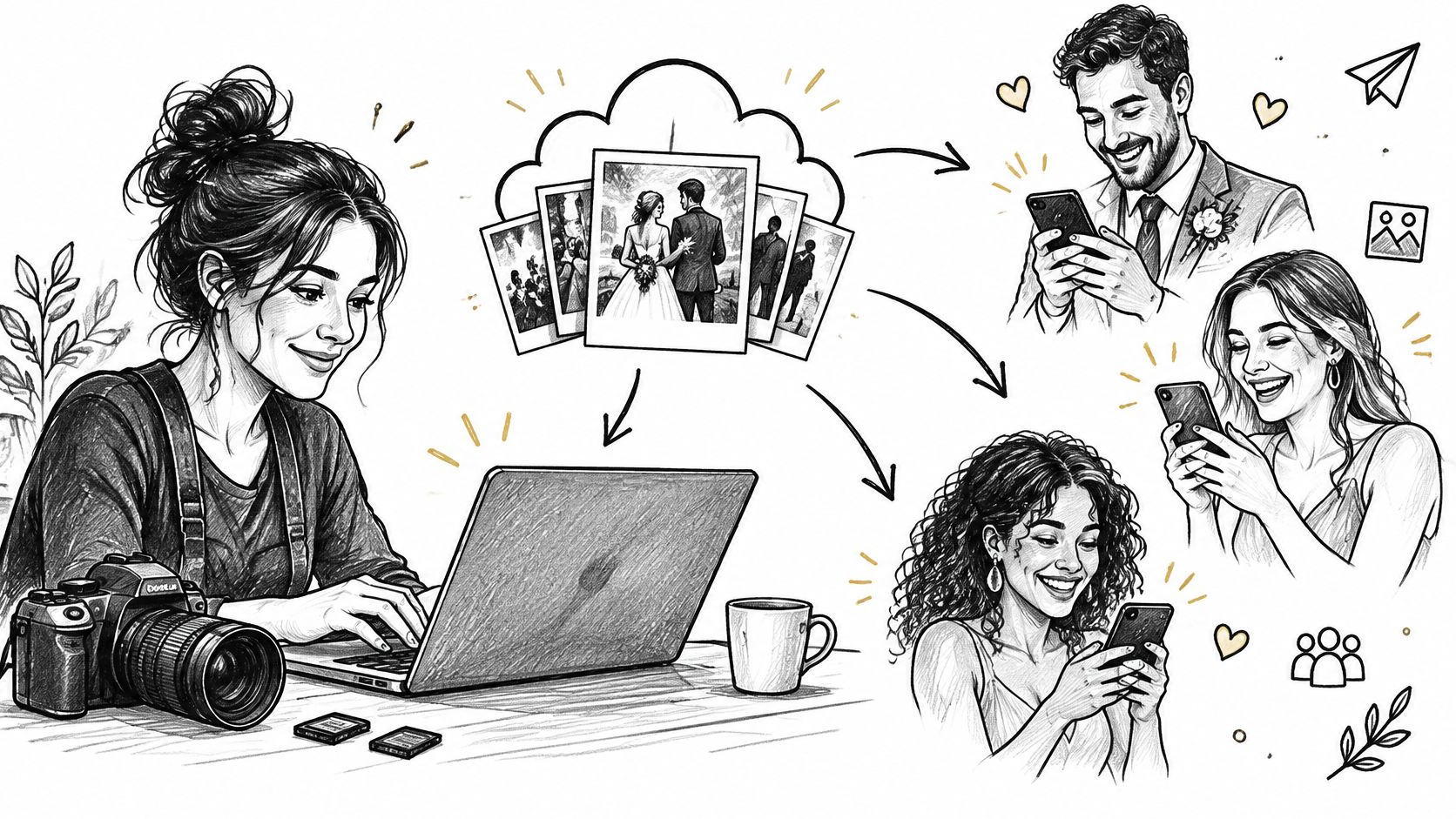
In Event Marketer's 2024 EventTrack reporting, 58% of exhibitors considered post-event connections a critical metric. Give organizers a campaign they can distribute, rather than treating gallery upload as the end of your involvement.
Separate preview delivery from complete delivery
Promise a manageable, approved highlight selection if the full edit needs longer. Put both deliverables in the contract so speed doesn't become an undefined obligation.
- Use the organizer's channel. Let the organization distribute through its authorized email list, event website, or community group.
- Make the next action obvious. Lead with photo retrieval rather than several competing announcements.
- Send a useful reminder. Mention newly available images or a genuine ordering deadline, not artificial scarcity.
For a fundraiser, distinguish complimentary social images from optional print purchases. Don't imply purchases support the charity unless that arrangement exists.
Primary KPI: Gallery visit rate from the follow-up campaign. Measure unique gallery visitors against successfully delivered messages when the organizer can provide a reliable denominator.
5. Print and Product Upsell Packages
Moment created: After attendees find a meaningful image and can picture keeping it.
A parent finding an action photograph has a different buying motive from a sponsor seeking a branded download. Build offers around those uses instead of displaying the same product catalogue to everyone.
For sports tournament photo sales, present an individual print, a coordinated action-photo set, and an optional digital product with clear usage terms. For a gala fundraiser photo gallery, emphasize portraits and display products rather than filling the checkout with unrelated merchandise.
Product photography helps explain what the customer will receive.

Sell a finished result
Show accurate product dimensions, finishes, cropping, shipping terms, and fulfillment expectations. Check whether a tight action crop works at the selected print size before accepting the order.
Keep the photographer upsell to attendees optional. If the organizer has promised included downloads, don't surprise guests with a payment barrier.
- Price for fulfillment. Account for lab costs, packaging, payment fees, retouching, and customer service.
- Keep choices distinct. Each package should serve a recognizable need.
- Use genuine deadlines. Explain whether an ordering window reflects production scheduling or gallery closure.
Primary KPI: Net product revenue per purchasing attendee. Subtract direct fulfillment costs before judging the offer. A higher checkout total isn't an improvement if custom edits and replacement shipments consume the margin.
6. Email Marketing and Client Nurture Sequences
Moment created: Across the months after delivery, when a past customer has another reason to book.
Separate service communication from promotional email. Someone who needs a gallery notification hasn't necessarily agreed to receive seasonal offers, and an organizer's attendee list isn't yours to import.
Collect an explicit marketing opt-in and explain what subscribers will receive. Keep an unsubscribe route visible, record the permission, and avoid making newsletter enrollment a condition of accessing promised photographs.
A school portrait photographer could invite parents to subscribe to future portrait announcements. A corporate event photographer should send planning guidance to opted-in business contacts, not family-session promotions.
Automate relevance, not repetition
Build sequences around the recipient's relationship with you:
- Organizer follow-up. Confirm delivery, request feedback, and invite a conversation about the next event.
- Attendee nurture. Send relevant offers only to people who opted in.
- Past-client reminders. Reference the type of work previously commissioned, without assuming the next booking is guaranteed.
Give each email a clear action. A review request, product offer, and rebooking pitch compete when crammed into the same message.
Pause automation when someone replies with a complaint or an unresolved delivery problem. Continuing promotional messages while a customer waits for help makes the workflow feel careless.
Primary KPI: Bookings attributed to nurture email. Tag destination links and record the campaign against the booking. Review clicks as a diagnostic measure, but don't confuse newsletter activity with paid work.
7. Local SEO and Search-Focused Content
Moment created: Months later, when an organizer searches for help with a specific assignment.
Write the page a buyer needs before sending an inquiry. A nonprofit planning a gala needs to understand coverage, portrait logistics, turnaround, consent, and image distribution, not just see a slideshow.
Create a focused service page for work you actually provide in an area you serve. Avoid near-identical location pages with city names swapped into the same copy.
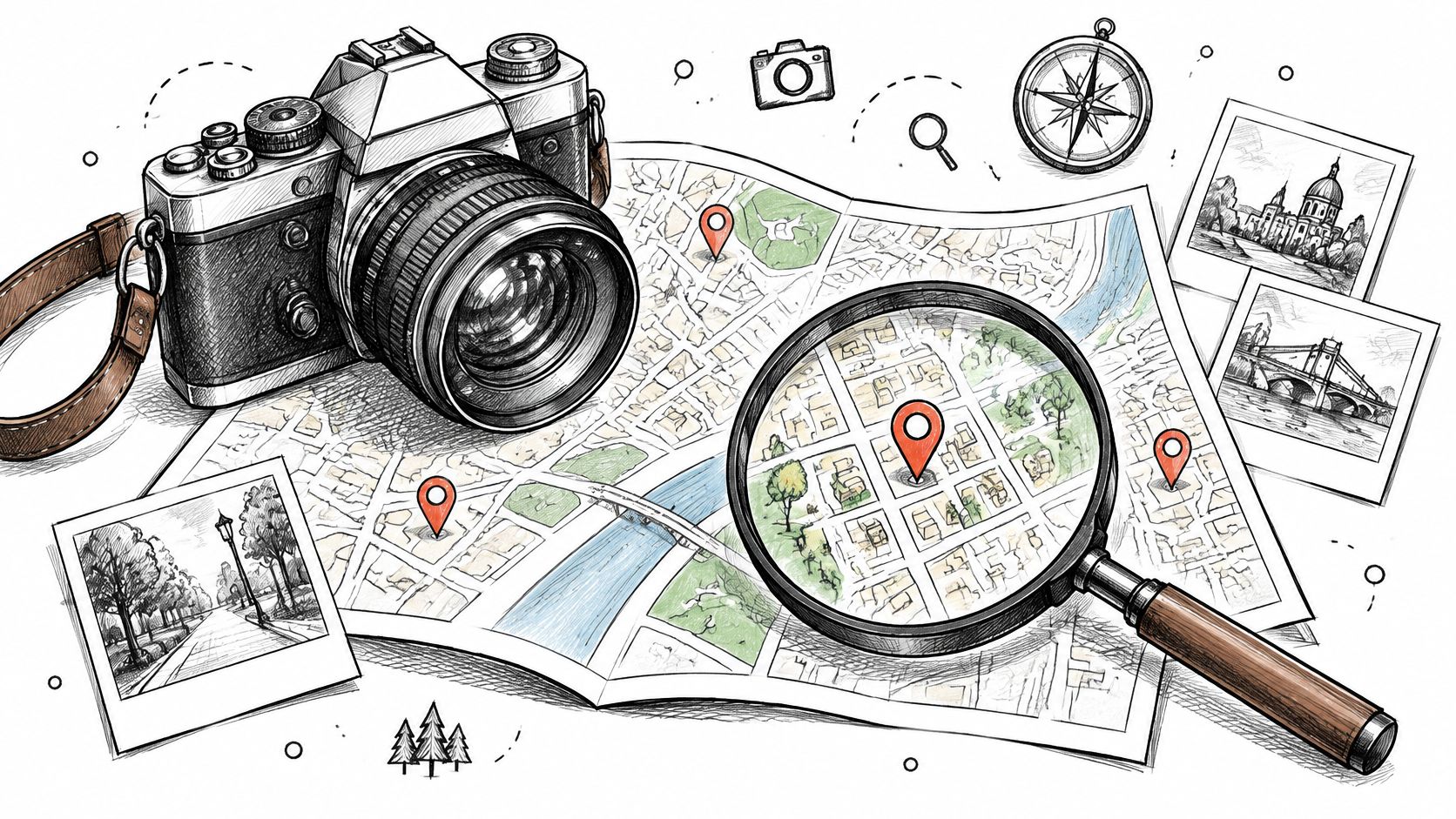
Search-focused planning starts with the relationship between location, service, and customer questions.
Answer operational questions
A trade show photo sharing page could explain booth portraits, sponsor approvals, gallery access, and how exhibitors receive usable files. Include relevant photographs with descriptive alt text, readable captions, and clear inquiry instructions.
Use phrases such as event photo sharing link or how to share event photos with attendees only where they fit the actual service. Repeating them in every paragraph won't make a weak page useful.
For a local gala page, explain how you coordinate a portrait station without blocking guest circulation. That detail demonstrates practical competence more effectively than claiming you capture unforgettable memories.
Primary KPI: Qualified organic inquiries per service page. Connect inquiry submissions to landing pages through your analytics setup and confirm service fit manually. Search impressions help you spot opportunities, but a page attracting other photographers may not attract buyers.
8. Referral and Review Programs
Moment created: Immediately after successful delivery, followed by introductions over the coming months.
Ask for a review when the client has received the work and any delivery issues are resolved. Ask for an introduction when they can identify someone who genuinely needs your service.
Those are different requests. Keep review collection independent from referral rewards, and never condition a benefit on a positive review.
A wedding photographer might offer a disclosed print credit for a referred booking. A photo booth operator could ask a satisfied corporate planner for an introduction to the person managing the company's next regional event.
Practical rule: Make referrals easy to give and reviews safe to give honestly.
Provide a short description of the assignments you want, an easy contact route, and clear reward terms where applicable. Don't make clients explain your entire service catalogue.
Put proof beside the relevant work
With permission, place a planner's comment about dependable conference coverage alongside your conference gallery. Keep testimonials faithful to what the client said, and don't turn a private thank-you into public advertising without approval.
Thank referrers personally and record the introduction as soon as it arrives. Memory isn't a dependable attribution system.
Primary KPI: Referral-to-booking conversion. Divide booked referred prospects by qualified referred prospects, using a consistent definition of qualified. If introductions rarely fit your work, clarify the request before increasing the incentive.
9. Venue and Planner Partnerships
Moment created: During the event through professional coordination, then before future events through recommendations.
A venue coordinator notices whether you block service routes, respect the schedule, and deliver the approved room photographs. Partnership marketing starts with that behavior, not an unsolicited request to join a preferred-vendor list.
After delivery, send a small, approved selection the venue can use under written terms. Specify permitted channels, credit expectations, alteration restrictions, and whether identifiable guests may appear.
For a conference center, provide clean room layouts and stage photographs. For a community festival, propose organizer-approved sponsor frames without implying sponsors own unrestricted rights to attendee images.
Give partners something usable
Vesta's 2025 Event Trends Promotion Report reports that event promoters' average number of marketing channels increased from 4.79 in 2022 to 9.5 in 2024. Help a partner distribute approved assets across its chosen channels, rather than insisting on a particular platform.
- Agree on scope. Define which images and promotional uses are included.
- Disclose commercial arrangements. Put referral fees or commissions in writing where applicable.
- Close the loop. Share a concise delivery and engagement summary without exposing attendee-level personal information.
Don't exchange unlimited free coverage for vague promises of exposure. Define the deliverable, the partner's commitment, and when you'll review the arrangement.
Primary KPI: Booked revenue attributed to each partner. Record the source and subtract commissions or partnership-specific costs when evaluating profitability.
10. Behind-the-Scenes and Social Proof Content
Moment created: During setup, then over the following months as proof for future buyers.
Show the decisions behind the finished image. A lighting carousel can demonstrate how you controlled mixed room lighting, preserved the venue atmosphere, and kept equipment outside guest walkways.
Capture process material without interrupting the assignment.
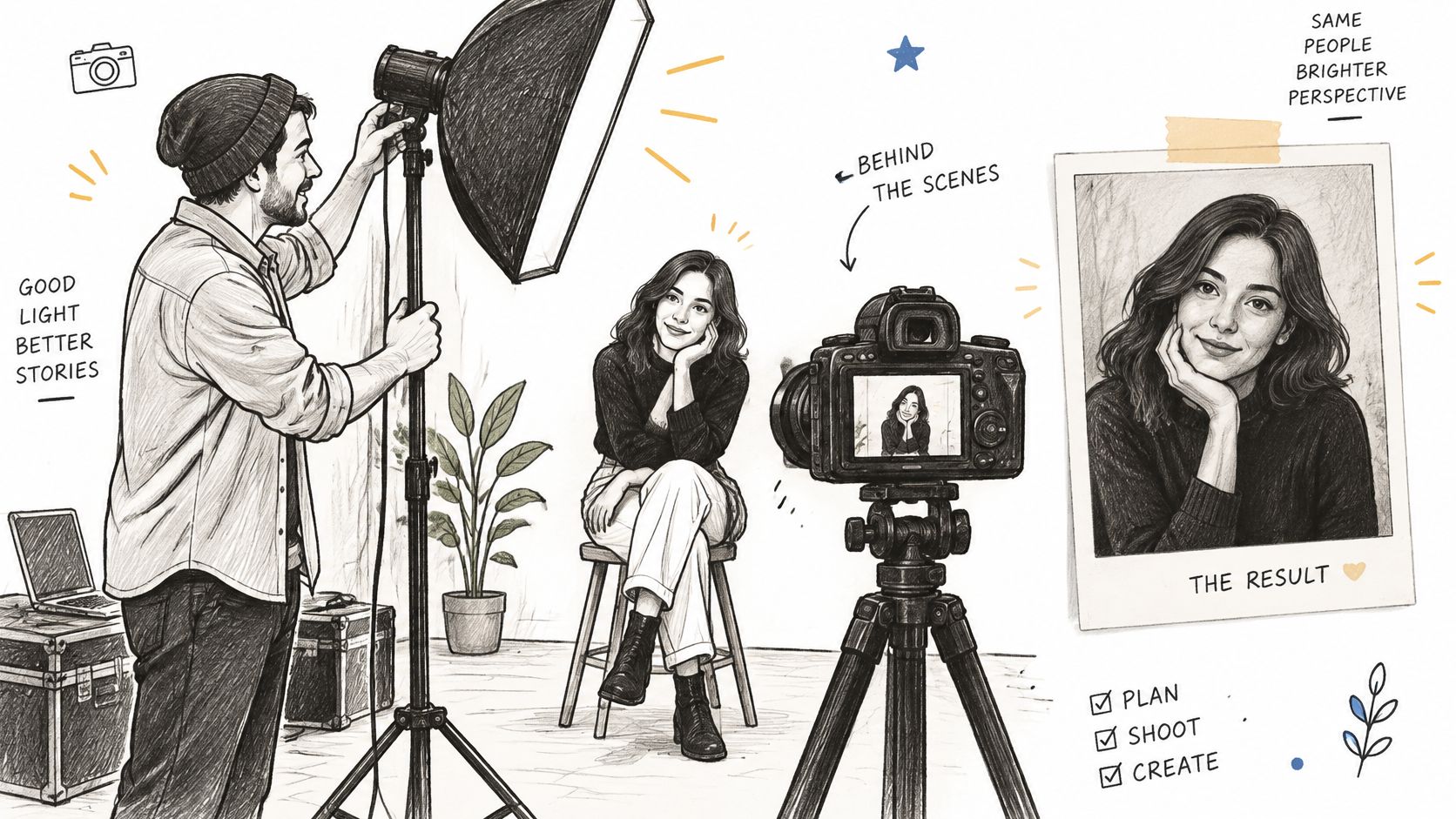
In the event-focused survey reported by Walls.io, 65% of respondents identified photos as the most effective content type for event engagement. Build your proof around strong finished photographs, with behind-the-scenes material explaining how you made them.
Show outcomes without borrowing permission
A trade show case study could pair an approved booth portrait with the organizer's description of the delivery process. Ask before reposting UGC from events, even when the attendee has tagged your account.
Ireland's Data Protection Commission guidance on event photography explains the need for a lawful basis and advises written photography notices at large events and clear consent mechanisms at smaller events. Don't treat signage alone as permission for every subsequent use.
For a face recognition event gallery, explain matching, access, retention, deletion requests, and the alternative retrieval route. Obtain any additional permissions the processing requires, especially where children are involved.
Primary KPI: Qualified inquiries attributed to case-study content. Use a relevant inquiry destination and ask prospects which example helped them decide.
How the ten photography marketing ideas compare on goal, revenue source, timing, and KPI
| Item | Primary Goal | Revenue or Lead Source | Time to Results | Key KPI to Track |
|---|---|---|---|---|
| Direct-to-Attendee Event Photo Delivery | Help attendees find and engage with their photos | Paid downloads, prints, and premium edits | During and after the event | Link opens and purchases |
| Google Business Profile Photo Optimization | Improve local visibility and trust | Calls and bookings from local searches | Gradual, with regular updates | Calls and booking inquiries |
| Short-Form Video Content (Reels and Shorts) | Reach prospects and showcase style | Bookings from social media | Variable; builds with consistent posting | Reach and booking inquiries |
| Post-Event Engagement Campaigns | Drive photo sharing and post-event engagement | Print purchases, client renewals, and referrals | Within days of the event | Opens, shares, and downloads |
| Print and Product Upsell Packages | Increase revenue per client or attendee | Prints, albums, canvases, and other products | At purchase time | Average order value |
| Email Marketing and Client Nurture Sequences | Encourage repeat business and referrals | Repeat bookings and referrals | Ongoing | Open and click rates |
| Local SEO and Search-Focused Content | Attract high-intent local search traffic | Organic inquiries and bookings | Usually takes months | Organic traffic and inquiries |
| Referral and Review Programs | Generate trust and word-of-mouth leads | Client and partner referrals | Ongoing | Referrals and reviews |
| Venue and Planner Partnerships | Build a steady source of event leads | Partner referrals and preferred vendor listings | Takes time to develop | Leads from partners |
| Behind-the-Scenes and Social Proof Content | Build trust and demonstrate the photographer's work | Social engagement and booking inquiries | Ongoing | Shares, tags, and inquiries |
Turn Each Event Into a Measurable Revenue and Referral Channel
Start with a small pairing, not the entire list. For your next event, choose an attendee-facing tactic such as a QR gallery with a clear privacy explanation, plus a follow-up tactic such as an honest review request after delivery.
Choose tactics you can operate reliably alongside paid coverage. A polished campaign that delays the contracted gallery is a poor trade.
Set the baseline before you shoot
Record the results from a comparable previous assignment if you have them. If you don't, treat the next event as your baseline rather than inventing an improvement claim.
Keep a simple event record containing:
- Distribution context. Note which channels the organizer used and when the gallery became available.
- Audience response. Record gallery visits and the primary KPI for the tactic you're testing.
- Commercial outcome. Record attendee purchases, attributed inquiries, and confirmed bookings separately.
- Operating cost. Include extra editing, customer support, fulfillment, and campaign preparation.
Compare similar assignments where possible. A school tournament, donor gala, and trade show have different audiences, permissions, and purchasing motives. Combining their results can hide which offer works for which guest.
Fix the weak step before adding another channel
If attendees don't visit, check distribution and the clarity of the invitation. If they visit but can't find images, address retrieval, gallery organization, or missing coverage. If they find photographs but don't buy, inspect the offer, product presentation, and checkout before sending more reminders.
Don't interpret every nonpurchase as failure. A complimentary portrait can still produce an approved share, a useful introduction, or a future organizer inquiry. Track those outcomes separately so you don't claim revenue that hasn't happened.
Keep privacy controls in the same review. Confirm who can see the gallery, how matching is explained, how removal requests are handled, and whether promotional contact remains optional. Don't collect personal information merely because a tool makes it possible.
The strongest photography marketing ideas give someone a useful next action at the right moment. Guests find their photographs, organizers receive a distribution plan, and prospective clients see evidence that you can handle their assignment. Repeat the tactics that produce profitable, attributable outcomes, then add the next experiment.
Saucial offers AI-powered event photo sharing, with a shareable event link and selfie matching that helps attendees find photographs featuring them. Visit Saucial to explore a find my photos workflow for your next event and plan how attendee delivery can support engagement, optional sales, and future inquiries.