Brand Activation Ideas That Turn Guests Into Promoters
You leave a great event with a full camera roll and a promise that photos will follow. Three days later a shared folder lands in someone's inbox. Almost nobody opens it. Guests cannot find themselves, sponsors never see their logo leave the room, and the photographer spends the week answering the same question.
The brand activation ideas below close that gap. Each one is built around the photo moment: capture, private delivery, and sharing. Selfie matching, branded frames, QR galleries, AR filters, keepsakes, social walls, contests, installations, sponsored sets, and sweepstakes all give attendees something they want to post.
I treat every idea as a workflow, not a stunt. Put one clear call to action on site, get consent before you match faces or reuse images, and decide the numbers you will report after the venue closes. Opens, matches, downloads, and shares beat a headcount when you ask a sponsor to renew.
A gala fundraiser photo gallery is not the same job as trade show photo sharing or sports tournament photo sales. Pick the format that fits the room, then make the photo easy to find.
1. Find-My-Photos Selfie Activation
A conference guest scans a tent card, takes a selfie, and sees only the frames they appear in. That personal reward is what a cluttered folder never delivers. It fits galas and sports tournaments the same way: each athlete or donor gets their own set by link, often while the night is still fresh.
About two-thirds of attendees feel more positive toward a brand after interacting with it at an event, and 49% of U.S. B2B marketers identify events as a primary lead-generation channel, according to Event Groove's event industry statistics. A selfie match turns that interaction into a funnel you can count: scan, consent, retrieval, share.
What to run on site:
- One code, one promise: Put a QR code on signage and table tents with a short "Find My Photos" line.
- A real opt-out: Offer a non-facial browse path for guests who decline matching.
- A 24-hour send: Deliver the event photo sharing link while the night is still easy to remember.
- Three numbers: Track opens, matches, and downloads, not just gallery views.
Say a 400-person alumni dinner uploads portraits the same evening. Guests who match and download are your promoters. Guests who only see a public grid usually are not. We build that private retrieval on the guest's own device, with no app, through Saucial.
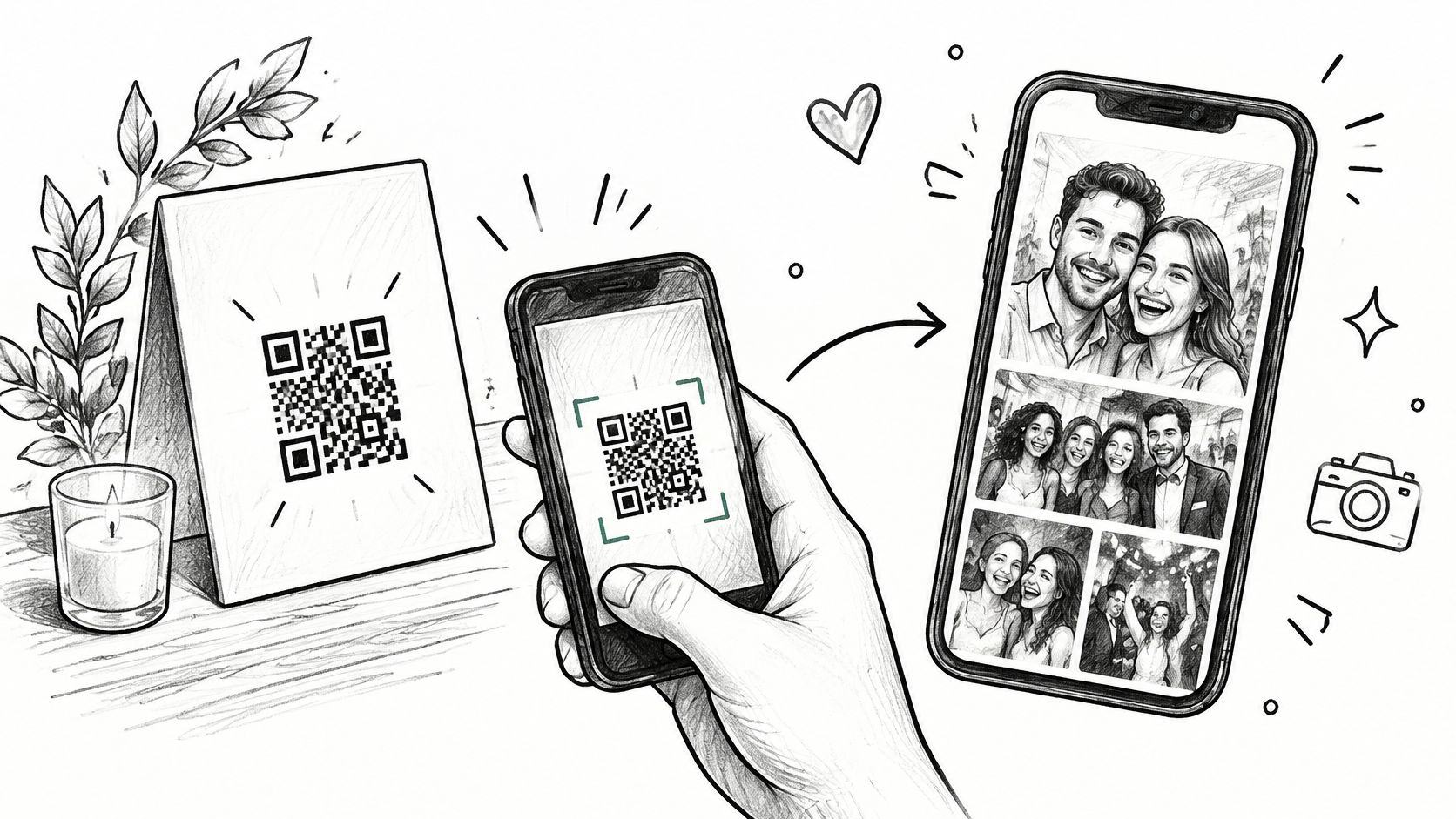
Skip face recognition event gallery features if you cannot explain the processing in one sentence before the selfie. Consent that arrives after the match is already too late.
2. Sponsor-Branded Photo Frames and Overlays
A corner logo beats a backdrop nobody photographs. Sponsors supply a frame, border, or overlay, and guests choose it on a print or a download. You sell the placement as a package, and you keep approval so a partner cannot cover the face.
In-person events remain one of the most trusted marketing channels, which is why sponsor branding works best inside the photo rather than around it. A frame lives in a moment guests already value, then travels when the guest posts.
Practical rule: If the logo competes with the face, the guest will crop it off or skip the share.
Trade shows want a campaign tagline on the border. Galas want one presenting-sponsor mark in a corner. Both fail when you stack four frames and call it "visibility." Cap the number. Clutter reads as noise, and sponsors argue over whose mark got buried.
Keep the package clean:
- Faces first: Logos stay in a border zone.
- Guest choice: Offer the frames inside the gallery so people pick a favorite.
- Sponsor sign-off: Get the artwork approved before doors open, not at the print station.
- A short report: Send impressions and share counts after the event, with sample images.
A mandatory overlay on every file fails. Guests treat it like an ad and stop downloading. Optional frames, organizer-approved, still put the brand in UGC from events without trapping the portrait. Count downloads and shares per frame design, and you can show each sponsor which creative moved.
3. Custom Geofilter or AR Filter for an Event
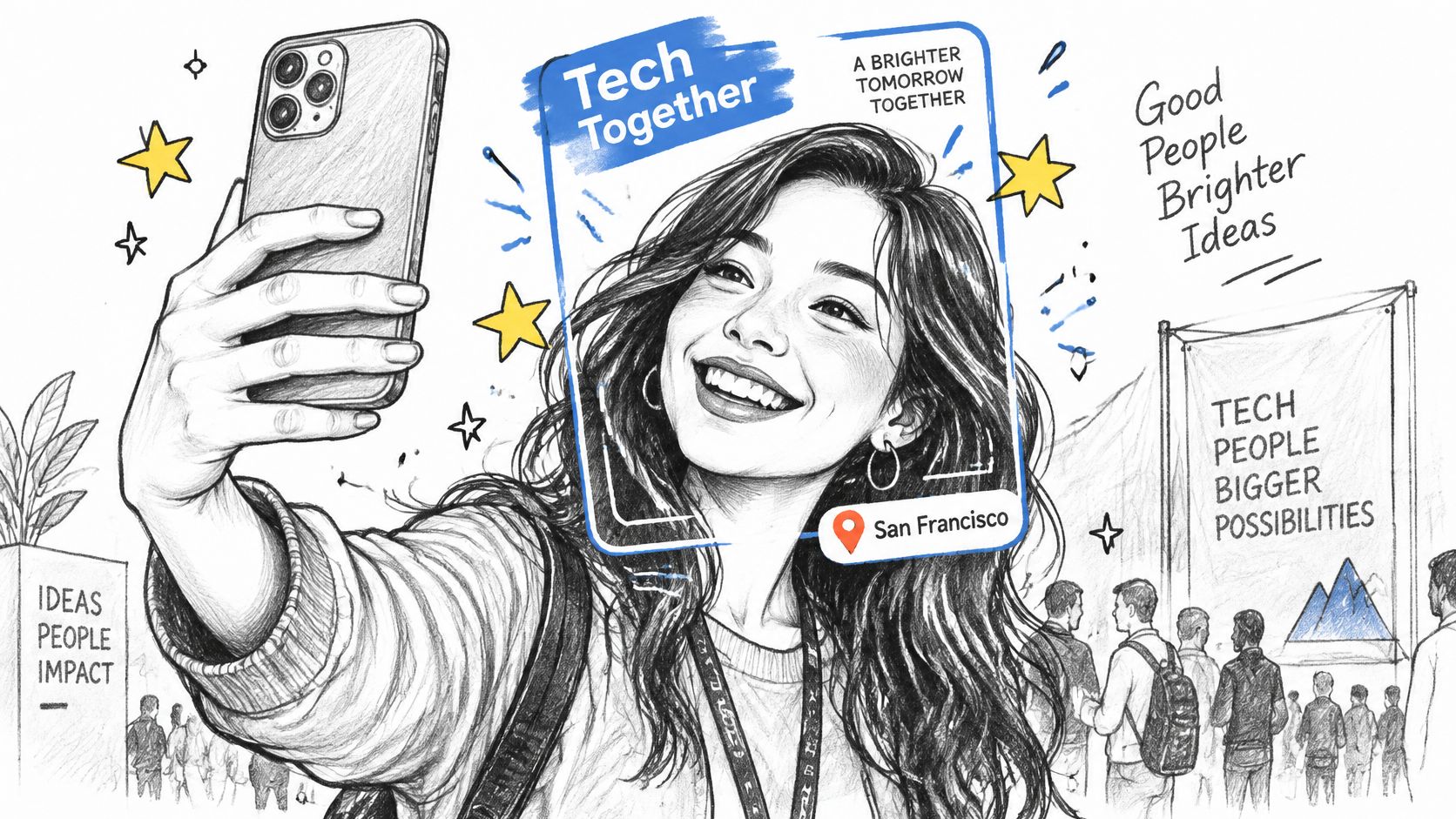
Snapchat made on-demand geofilters a festival habit. Instagram and TikTok filters now do the same job for a product drop or a match day. Guests decorate their own photos. You do not own those files, which is the trade-off. You get reach you cannot fully measure, and you still need a gallery for the shots your photographer sells.
A 2025 marketer survey found that 43% of respondents used QR codes at events, 93% had increased QR-code usage during the prior year, and 86% expected usage to keep growing, as reported by QR Code Generator. Put the filter and the QR code photo gallery on the same code. Unique scans, then gallery loads, tell you whether the creative worked or the placement did.
Before you design:
- Lock the date: Event name and date on the graphic so it expires in people's minds on time.
- One hashtag: Short enough to read on a phone lock screen.
- Platform rules early: Approvals slip, and a filter that goes live on day two is a wasted build.
Say a concert runs a geofilter at the gate and a gallery link on the same card. Posts prove the brand showed up. Matches and downloads prove guests wanted the authentic photos. I would not run the filter alone. Platform content disappears from your report the moment the campaign window closes.
4. Personalized Name or Keepsake Activation
Coca-Cola's Share a Coke campaign, launched in Australia in 2011 and later expanded globally, printed common names on bottles and asked people to find theirs. The same logic works on a photo print at a wedding or an alumni reunion. The object is the hook. The gallery link is what keeps the moment shareable after the print goes in a bag.
Collect names at registration. A line at the bar is where production breaks, because nobody should be typesetting while guests wait for a drink. Use a short consent line at sign-up that says you will print the name and may pair it with event photos. Keep that line visible, plain, and easy to decline.
The global brand activation services market was valued at USD 9.20 billion in 2025 and is projected to reach USD 10.07 billion in 2026, according to Mordor Intelligence. Personalization is one reason organizers pay for services instead of a banner. It only pays you back if the data stays controlled.
Guests forgive a simple print. They do not forgive a name spelled wrong or a photo used in a sponsor ad they never approved.
Hand the keepsake with the event photo sharing link, with the QR code photo gallery printed small on the same card. Limit fields to first name or table. Extra lines slow the printer and raise the chance you store data you do not need. Decide what gets shared and how before the first upload, then set those choices in the organizer gallery settings: what is shared, how it is distributed, and which attendee experiences are turned on. Measure keepsakes claimed, scans, gallery loads, and shares, so the print is judged by post-event engagement rather than applause at pickup.
5. Live Social Wall or Hashtag Wall
A lobby screen that shows a short hashtag makes a conference feel occupied. It also creates a moderation job. Public feeds will surface jokes, complaints, and the occasional photo you cannot put on a sponsor wall. Curate, or do not turn the screen on.
In 2024, sponsorships and partnerships accounted for 88.4% of engagement in Event Academy's review of social-media activity involving 7,424,640 people worldwide, per Event Academy. A wall is one of the few places a partner is visible while guests are still in the building. That only helps if the posts are ones you would defend.
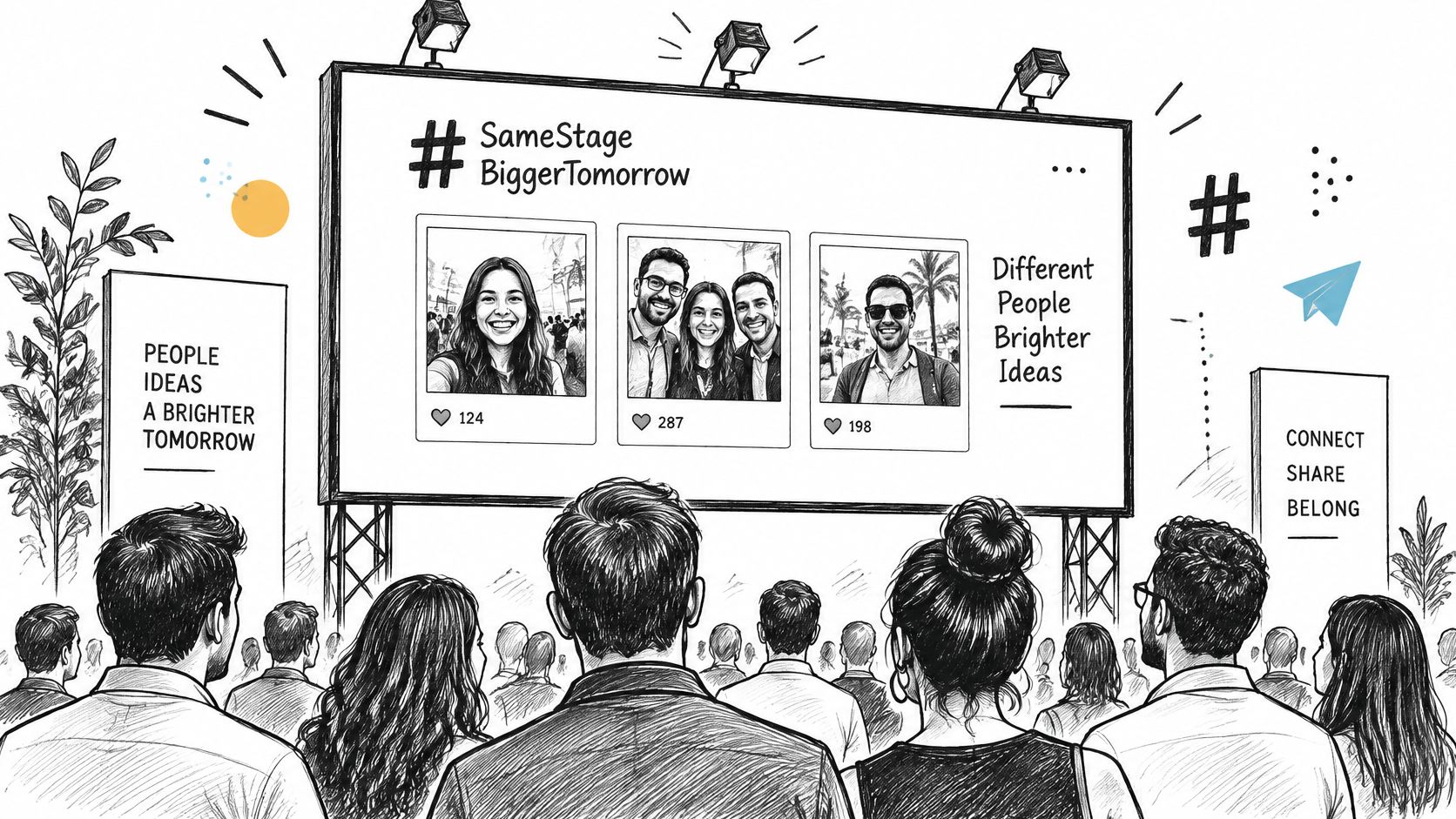
Run it like a show, not a widget:
- Hashtag on the invite: Repeat it on signage. A hashtag announced at dinner is already late.
- Human moderation: Approve posts before they hit a public screen.
- Mix the sources: Professional frames plus guest posts. Guest-only walls go quiet in the first hour.
- A next-day home: Recap the best images in the post-event gallery so the wall is not the archive.
Say a gala screen rotates table photos during speeches. Count posts approved, posts rejected, and how many of those images later get retrieved. Vanity reach on the hashtag is the number sponsors ask for first, and the one that tells you the least.
6. Branded UGC Photo Contest
Starbucks runs an annual Red Cup art contest and invites customers to submit designs. GoPro's photo and video awards ask creators to send footage. Both work because the rules, the prize, and the reuse rights are public before anyone hits submit. An event version is smaller and should be stricter.
A 2025 survey of more than 200 event professionals found audience engagement was the top event goal at 63%, while brand awareness and networking or partnerships each reached 53%. Broader activation research found that only 2% of senior marketers were very confident measuring return on below-the-line investment, and only 5% felt equally confident measuring brand impact, in the 2025 BizBash and Czarnowski white paper. A contest with a tracked entry form is easier to defend than a spectacle you cannot tie to an action.
Write this before you promote it:
- Rules, deadline, and permission: Publish them. "We may repost" is not a license.
- A two-tap entry: QR code to a form, not a scavenger hunt across three apps.
- Prizes the room wants: Event access or a featured gallery beats a generic gift card.
- Credit in public: Name winners and show the entries you have rights to use.
Upload the approved set through a controlled photo upload so the winning frames sit beside the rest of the night, not in a separate social folder nobody can search. Entries without a name and a yes on photo use stay out of the sponsor recap.
7. Immersive Instagrammable Installation
The Museum of Ice Cream, which opened in San Francisco in 2016, built rooms people photograph. You do not need a museum. A lit wall at a trade show, a festival set, or a product launch can do the same job if the path in and out is obvious and the pictures have somewhere to go.
EventTrack research reported that in 2016, 74% of consumers said engaging with branded event marketing experiences made them more likely to buy the promoted products. A later EventTrack study in 2018 found that 47% of consumers whose purchase intent increased attributed that change primarily to product sampling or demonstrations, as summarized by ProfileTree. A wall without a demo or a sample is a backdrop. A wall with something to try, then a photo, is an activation.
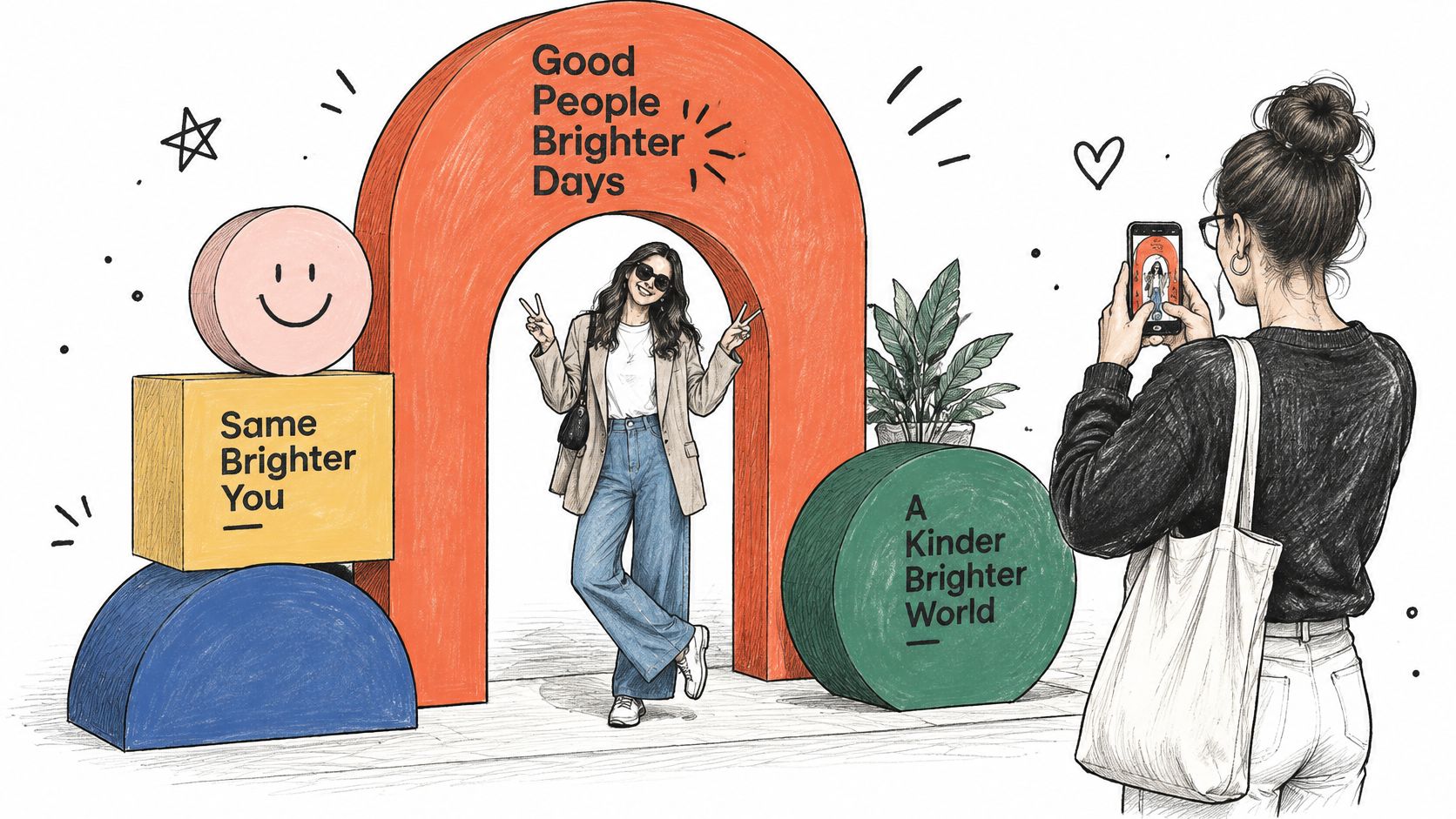
Place it in traffic, not in a dead corner with pretty light and no audience. Assign one photographer so the gallery is not only shaky guest phones. Put a QR code at the exit, not at the entrance where people are still deciding whether to step in.
This short walkthrough shows how a physical set becomes a shareable photo stop rather than a prop people pass.
Say a booth builds a two-panel set with a product in hand. Measure dwell only if you can staff it. Otherwise measure scans at that code, gallery opens from that placement, and shares of those frames. A beautiful build with no distinct code is a cost you cannot explain.
8. Sponsored Photo Gallery Delivery
The highest-attention brand moment is often the morning after, when people hunt for their photos. A presenting sponsor on the email header, the gallery header, or the download page catches that search. A logo on a lanyard does not.
The 2023 Freeman Trust Report, from a U.S. survey run November 1–16, 2022, with 1,800 consumers and business professionals who had attended an in-person event and 250 event decision-makers, found that 77% of consumers said their trust in a brand increased somewhat or significantly after a live-event interaction. It also found that 64% retained a positive impression for at least a month, according to the Freeman Trust Report brief. Delivery during that month is how you keep the impression attached to a name.
Placement that sponsors will renew:
- Header or footer only: A full-screen takeover on a photo page trains people to close the tab.
- A human note: One line from the organizer next to the mark. It reads as a host, not a blast.
- Tiers: Header branding, a featured set, or both. Do not invent a fourth placement to fill a deck.
- The same metrics every time: Gallery views, retrievals, and clicks on the sponsor line.
Say a local club presents a tournament gallery. Athletes open the link for action shots. The sponsor is present at retrieval, which is a better story than "logo on the banner." Report those opens before the renewal meeting, not a month later when nobody remembers the match.
9. Sponsored Featured Sets and Premium Moments
"Best of the Night," "Team Highlights," and "VIP Moments" give guests a reason to browse past their own face. Photographers get a photographer upsell to attendees: a free preview, then a print, a download, or a premium edit. Sponsors get a "presented by" line on a set people chose to open.
Define the categories before doors open. If you invent "Red Carpet" after the fact, you will not have the frames. Keep credit to a single line. A sponsor paragraph on a highlight set is an ad, and people bounce.
Build the set so it can sell:
- Shot list first: Tell the photographer which moments belong in which set.
- Preview, then paywall: A locked gallery with no sample looks like a mistake.
- Rank the sets: Views by category tell you what to shoot next time.
- Organizer approval: Paid upgrades and sponsored frames stay off unless the host turned them on.
Say a fundraiser offers "Award Moments" free to view and a retouched download for a fee, presented by the night's donor. Track views, preview starts, and paid downloads separately. A set with views and no downloads is a branding win. A set with downloads is a sales win. Do not blend those numbers into one "engagement" figure or the sponsor and the photographer will argue about who got paid.
10. Photo-Based Sweepstakes or Entry Activation
A trade show booth that asks for a selfie to enter a draw gets a photo and a contact. A festival challenge with a themed form does the same. Both fail when the rules are vague, the flow takes five minutes, or local raffle law says you needed a registration you skipped.
Check sweepstakes and raffle rules before you print the QR code. Keep entry under two minutes. State how photos will be used and how long you keep them. Then send entrants their gallery link, not only a "you're in" email. The prize is the reason they entered. The photos are why they share.
A sweepstakes photo you cannot trace to a consent checkbox is a liability, not UGC.
Entry flow I would staff:
- One form: Selfie or upload, name, email, and a photo-use checkbox.
- Plain language: Where the image may appear, and when you delete it.
- Gallery in the receipt: The confirmation carries their photos, not a dead end.
- No surprise reuse: Sponsor ads require a separate yes from the entry yes.
Community festivals and booth contests both fit this, as long as the prize matches the crowd. Route sign-in and entry through a simple guest access step so you are not collecting passwords you will never support. If legal review is still open on show day, run the photo gallery without the prize. A late, sloppy draw is worse than no draw.
10 Brand Activation Ideas at a Glance
| Item | Best For | Main Attendee Benefit | Primary Measurable Outcome |
|---|---|---|---|
| Find-My-Photos Selfie Activation | Events with large photo galleries | Quickly finds personal event photos | Gallery opens, photo matches, and downloads |
| Sponsor-Branded Photo Frames and Overlays | Events offering shareable photos or booth prints | Gets polished photos to share | Sponsor impressions and photo shares |
| Custom Geofilter or AR Filter for an Event | Festivals, concerts, and branded events | Adds an event-themed filter to photos | Filter use and hashtagged posts |
| Personalized Name or Keepsake Activation | Galas, weddings, and alumni events | Receives a personal keepsake | Keepsakes produced and social shares |
| Live Social Wall or Hashtag Wall | Conferences, galas, and festivals | Sees attendee posts featured live | Posts displayed and event social reach |
| Branded UGC Photo Contest | Brands seeking audience-created content | Enters for prizes and recognition | Entries, shares, and reusable submissions |
| Immersive Instagrammable Installation | Trade shows, launches, and festivals | Enjoys a memorable photo opportunity | Social posts and gallery visits |
| Sponsored Photo Gallery Delivery | Events with photo-gallery sponsorships | Accesses event photos in one place | Email opens, clicks, and gallery visits |
| Sponsored Featured Sets and Premium Moments | Sports, galas, and alumni events | Browses curated event highlights | Set views and premium downloads |
| Photo-Based Sweepstakes or Entry Activation | Trade shows, galas, and community events | Enters a prize draw with a photo | Entries, opt-in leads, and photo submissions |
Pick One Activation, Then Deliver the Photos Fast
Choose one activation that matches the format and the audience. A tournament wants athlete sets and a sponsor on the highlight reel. A gala wants portraits, a restrained frame, and a fast private link. A trade show can support a contest or a sweepstakes if legal and staffing are ready. Running all ten in one night splits the photographer, the QR placements, and the story you tell afterward.
Secure the sponsor before you design the frame, the header, or the prize. Early buy-in lets you lock placement, cap the number of marks, and agree on what the report will show. Late buy-in produces a logo slapped on a gallery nobody measured.
Design consent on day one. Say whether facial processing is used, offer a browse path for guests who skip the selfie, and separate "find my photos" from "you may use this in ads." Keep retention short and written down. Organizer approval should cover what is public, what is paid, and what is sponsored.
Make delivery the easy part. With Saucial, organizers get a unique link they can share with attendees by email, text, WhatsApp, a venue QR code, or the event page. Put the QR where the moment happens: the photo wall, the awards table, the exit path home. Every activation above can point at that same "Find My Photos" experience, so guests retrieve their images on their own phone and share the ones they like.
Define the scoreboard before doors open. Track opens, matches, downloads, and shares, plus opt-ins if you ran a contest or a draw. Split the numbers by QR placement so you can see which spot worked. Send the sheet to the sponsor while the event is still easy to picture. A measured report is what renews the partnership, and it gives the photographer a clean case for prints, downloads, or a featured set next time.
Saucial turns event photos into a private "Find My Photos" flow for galas, tournaments, trade shows, and festivals, so guests match a selfie to their images on their own device. Organizers send one link, photographers spend less time hunting frames, and post-event engagement is something you can count. Visit Saucial to set up the gallery before your next activation.