Best Photo Delivery App: 7 Event Platforms

You've just finished photographing a gala, tournament, or conference. Hundreds of attendees are waiting for the gallery, but the delivery platform determines what happens next. A crowded folder may technically contain every image, yet guests still abandon it if they can't quickly find their own moments. The best photo delivery app should make access, retrieval, sharing, and optional purchasing feel natural on a phone.
This comparison evaluates seven platforms across the complete event workflow: event photo sharing links, QR delivery, selfie or face matching, attendee monetization, turnaround, and organizer privacy controls. Saucial is the most event-native option for private “find my photos” retrieval, while the other platforms are stronger for broader client galleries, business management, portfolio hosting, or print fulfillment. The right choice depends on the job, not just the gallery design. Before enabling any face-recognition event gallery feature, confirm consent, opt-out handling, retention, and permissions for your audience.
1. Saucial
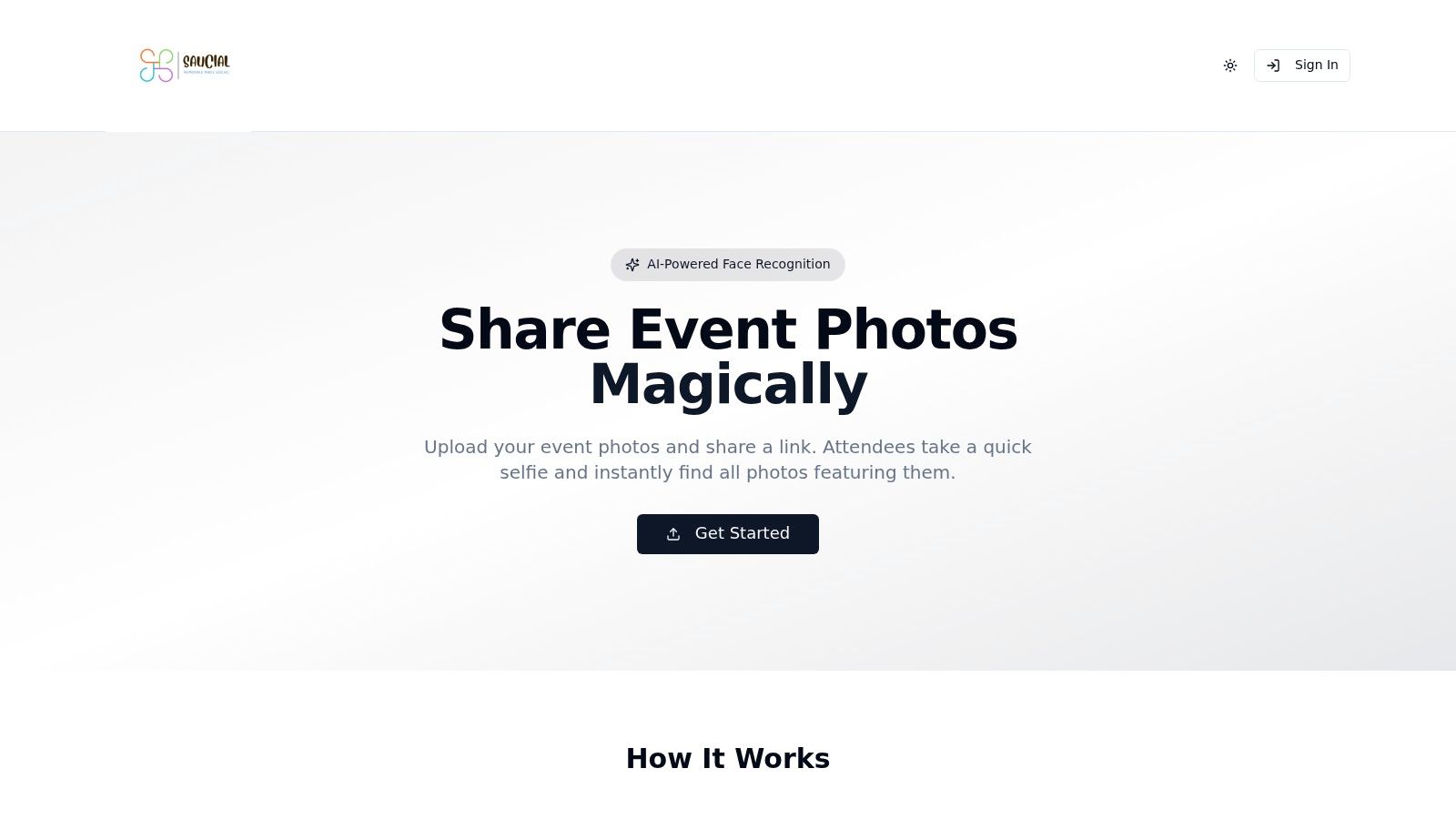
At a gala, tournament, or trade show, the event may end before attendees find a single image. Saucial addresses that gap by letting an organizer or photographer upload the collection, create an event photo sharing link, and display a QR code gallery at the venue. Guests take a selfie and receive the images they appear in, generally without installing an app or creating an account.
The workflow prioritizes attendee search over folder browsing. Saucial processes the collection in the background, then connects a selfie with relevant images. Guests can reach the gallery through email, WhatsApp, SMS, event websites, LinkedIn, Instagram, or QR signage. That distribution range matters when organizers need one access route for a mixed audience.
Timing affects sharing. One event-photography analysis reports that social engagement from event photos drops by 80% after the first two hours, while same-day delivery produces 4.2x more social shares than traditional post-production timelines. Saucial's phone-based retrieval therefore supports distribution while the event remains current, rather than treating delivery as a later gallery handoff.
Best for event distribution and attendee monetization
Organizers can decide what to share, which channels to use, and whether access is free, paid, curated, or linked to approved offers. Photographers and photo booth operators can sell prints, digital downloads, premium edits, featured sets, or sponsored frames directly to attendees.
Relevant workflows include gala fundraiser photo galleries, sports tournament photo sales, alumni dinners, festivals, trade show photo sharing, and brand activations. Personalized retrieval also reduces manual requests from guests asking photographers to locate individual images.
Practical rule: Use face matching to reduce retrieval friction, and include consent and opt-out handling in the event plan.
The trade-off is reliance on facial matching. Lighting, crowd density, image quality, and non-consenting subjects can affect results. Privacy-sensitive organizers may need explicit opt-in procedures or another access route. Public pages do not list pricing, testimonials, awards, or certifications, so assess costs, support expectations, and data handling directly through Saucial's event photo platform.
2. Waldo Photos
Waldo Photos, including WaldoPro, is designed for high-volume event distribution where guests need a fast “find my photos” experience. Attendees scan a QR code, submit a selfie, and receive only the images they appear in through SMS or the platform's app. That makes it a natural fit for sports, schools, picture-day workflows, resorts, and other events where photographers capture many participants in repetitive or fast-moving settings.
The platform's workflow puts discovery before gallery browsing. QR onboarding can happen at the venue, while SMS delivery gives guests a direct route back to their matched images. Waldo also supports jersey-number recognition, which is particularly relevant to sports photographers working with teams and tournaments.
Best for sports and SMS-led retrieval
Waldo's specialized event tooling can reduce the administrative burden created by individual photo requests. Features such as DSLR-to-cloud workflows, app notifications, and FaceBlocker antifraud proofs support a distribution model where attendees receive personalized access rather than a generic folder.
The trade-off is specialization. If you're delivering a small number of images to one wedding client or portrait customer, Waldo's event-oriented workflow may be more than you need. Downloads and print fulfillment depend on the plan and event configuration, so confirm how your preferred sales path works before committing.
One event-sharing market overview describes a broader ecosystem in which roughly 14 billion photos are shared daily on social networks, with WhatsApp handling about 6.9 billion images per day. That environment favors platforms that make a photo easy to retrieve and pass into an existing messaging habit.
For a quick evaluation of event-focused retrieval options, you can also review Saucial's access flow. Choose Waldo when SMS delivery, QR onboarding, sports recognition, and high-volume personalization matter more than a general-purpose client gallery.
3. Pic-Time
Pic-Time approaches delivery from the perspective of the photographer who wants a polished gallery and a structured sales journey. Its client galleries are designed for storytelling, proofing, downloads, albums, and product purchases. Sales Automations can combine banners, email timing, coupons, gift cards, and campaign sequences so the gallery continues working after the initial delivery.
That makes Pic-Time particularly suitable for wedding and portrait studios, where the recipient is usually a known client rather than an anonymous attendee searching a large event archive. The platform supports image, people, and selfie search in its plan details, but its center of gravity remains the client gallery and store, not the instant venue-wide “find my photos” experience.
Best for presentation and print fulfillment
Pic-Time connects with 30+ global print labs, according to the product information provided, and includes album-building tools plus video support that varies by tier. A photographer can present a curated collection, invite selections, proof an album, and guide the client toward prints or other products without moving between several systems.
This is a stronger choice than an event-native retrieval tool when the gallery itself is part of the brand experience. The visual presentation, automated campaigns, and lab network can help a studio turn delivery into a repeatable sales process. The cost is setup complexity. Automations need thoughtful configuration, and storage or video limits should be monitored against the type of work you deliver.
Pic-Time also supports migration assistance from other gallery platforms, which may matter if you're changing systems without rebuilding your client workflow. It's less compelling when guests need immediate access from a QR code at a crowded conference or festival, especially if most recipients don't already have a client relationship with the photographer.
Use Pic-Time when gallery presentation, proofing, and print sales lead the workflow. Use an event-specific platform when attendee self-service retrieval is the primary objective.
4. Pixieset
Pixieset is a broad all-in-one choice for photographers who want client galleries, store functionality, and optional website or studio-management tools from one vendor. Its familiar gallery experience supports full-resolution downloads, bulk sharing, email campaigns, RAW uploads, and product sales. Clients can receive a branded collection rather than a bare file-delivery link.
For event work, Pixieset's QR code capability and bulk sharing can support organized distribution. Its published guidance describes QR delivery for in-person events and workshops, while Bulk Share is aimed at volume photography such as schools, teams, sports events, and mini sessions. That gives Pixieset useful flexibility, although the attendee journey is still generally organized around galleries or personalized collections rather than selfie-first retrieval.
Best for a connected photography stack
Pixieset's store supports automatic fulfillment or self-fulfillment, so photographers can choose between lab logistics and their own production arrangements. Paid Client Gallery plans carry 0% commission, while the Free plan applies a 15% store commission, as specified in the product notes. That distinction matters if event galleries generate meaningful print or download revenue.
Privacy tools include collection passwords, download PINs, download limits, client-exclusive sets, and watermarks, based on Pixieset's delivery documentation. These controls are well suited to client-specific galleries and controlled sharing. They're less directly comparable to event face matching, where organizers also need to consider whether images of bystanders are indexed and how selfie data is handled.
If you want to test a dedicated event retrieval path alongside a broader gallery stack, Saucial's platform access offers a different workflow. Choose Pixieset when one vendor for galleries, store, website, and studio operations is more valuable than instant selfie matching for every attendee.
5. ShootProof
ShootProof connects photo delivery with the operational side of running a photography business. A photographer can use galleries for proofing and sales while managing contracts, invoices, booking, online payments, and lab fulfillment in the same broader system. That makes it a practical option when delivery is only one stage in a client lifecycle.
The platform supports payment through cards and Apple Pay or Google Pay through Stripe or ShootProof Pay, according to the product notes. Photographers can also use US professional lab integrations or self-fulfill orders. Gallery privacy settings and email marketing add control around who sees a collection and how the photographer follows up.
Best for business administration
ShootProof's strongest differentiator is the connection between paperwork and delivery. A wedding studio or commercial photographer may prefer having a contract, invoice, payment record, gallery, and print order connected rather than managing those steps in separate services.
Its plans are based on the number of photos hosted online simultaneously, so the right tier depends on active inventory rather than a single event's final image count. That model can work well for photographers with predictable gallery turnover, but it requires attention if many event collections stay online.
The compromise is presentation and event retrieval. Some photographers may find the gallery experience less visually distinctive than newer competitors, and lightweight video support isn't its core strength. It also doesn't primarily position itself around QR-first, selfie photo matching for anonymous event attendees.
For a photographer who needs to publish a gallery quickly after handling client administration, Saucial's upload workflow can be considered as an event-specific complement. Choose ShootProof when contracts, invoices, payments, and delivery need to live close together.
6. CloudSpot
CloudSpot takes a delivery-first approach with efficient client galleries, a store, and a lightweight Studio Manager. Its Client Portal can combine a gallery, invoice, and contract behind one client-facing link. That creates a simple handoff for photographers who want fewer separate messages and portals after a shoot.
The platform supports multi-size gallery downloads, per-gallery product lists, watermarking controls, abandoned-cart nudges, and US lab integrations. Its free plan allows up to three active galleries and 5 GB, according to the product notes, giving photographers a defined way to test the workflow before choosing a paid setup.
Best for fast, low-friction client delivery
CloudSpot works best when the photographer wants to publish a gallery, share one portal, and offer straightforward products without building a highly complex sales system. The abandoned-cart feature is useful because it keeps a possible order connected to the gallery rather than relying entirely on manual follow-up.
That simplicity is also the limitation. Store customization and advanced marketing depth are lighter than on platforms built around extensive automated campaigns. If you need an in-depth print strategy, a finely tuned product catalog, or complex attendee matching, CloudSpot may feel constrained.
CloudSpot is better suited to known clients than to a venue full of guests who need private self-service retrieval. It can support event galleries as a delivery portal, but it doesn't replace the value of a dedicated QR code photo gallery and selfie matching flow when attendees need to locate themselves across a large collection.
Choose CloudSpot when fast publishing, a consolidated client link, and uncomplicated sales matter most. For an event organizer comparing retrieval workflows, the distinction is important: a clean gallery portal isn't the same as a personalized “find my photos” system.
7. SmugMug
SmugMug is a long-standing platform for portfolio hosting, client proofing, galleries, selling, and access control. It suits photographers who want their public brand presence and private client work under one established system. Pro lab integrations, including Bay Photo and others, support print fulfillment while giving photographers control over pricing.
Its proofing galleries include price lists and digital delivery controls. The RAW Source add-on provides cloud archiving for original files, which can be useful when photographers want storage and presentation connected. Mature access settings and full-resolution download options also make SmugMug a dependable choice for controlled client delivery.
Best for established hosting and selling
SmugMug's strength is breadth with a familiar operating model. A photographer can maintain a portfolio, deliver client galleries, set product pricing, and connect orders to professional labs. That makes it a solid fit for studios that value stable hosting and established sales tools over a newer event-specific discovery experience.
The trade-off is plan dependency. The strongest selling and proofing tools sit on higher paid plans, and some users have cited recent price increases. SmugMug also isn't centered on QR-first attendee onboarding or selfie photo matching, so event guests may still need to browse folders or use gallery organization to find their images.
For an organizer requiring face-based retrieval, compare SmugMug's access controls with a platform that explicitly scopes matching by event. Saucial's settings workflow is relevant for teams that need to think through permissions, distribution, and attendee access before launch.
Choose SmugMug when reliable hosting, portfolio integration, print sales, and mature access controls outweigh instant personalized retrieval.
Top 7 Photo Delivery Apps Comparison
| Product | 🔄 Implementation Complexity | 💡 Resource Requirements | ⭐ Expected Outcomes | 📊 Ideal Use Cases | ⚡ Key Advantages |
|---|---|---|---|---|---|
| Saucial | Low, drag‑and‑drop + selfie flow, minimal setup | Cloud face‑processing; privacy/consent config | High, faster retrieval, higher attendee sharing, monetization | Galas, festivals, trade shows, brand activations, sports | Selfie matching/no app, organizer controls, direct‑to‑attendee sales |
| Waldo Photos (WaldoPro) | Medium, QR/selfie + SMS workflows and on‑site tools | SMS gateway costs, event tools, jersey‑OCR support | Very high personalized delivery and open rates | Sports events, picture‑day, large high‑sharing events | Face & jersey recognition, SMS‑first delivery, antifraud proofs |
| Pic‑Time | Medium, initial automations setup required | Integrations with 30+ labs; automation configuration | High, proven uplift in print/digital sales | Wedding and portrait studios focused on product sales | Sales automations, strong gallery UX, wide lab network |
| Pixieset (Client Gallery) | Low, straightforward galleries; optional website/CRM | Storage and optional website/CRM resources | Good, polished client experience and predictable sales | Photographers wanting single vendor for galleries + site | All‑in‑one stack, commission‑free on paid plans, self‑fulfill option |
| ShootProof | Medium, integrates contracts, invoices, booking into flow | Business features (payments, contracts), lab integrations | High, consolidated business workflow, fewer tools to manage | Studios needing booking→paperwork→delivery→sales in one | Built‑in contracts/invoices, commission‑free sales, lab support |
| CloudSpot | Low, fast publish and lightweight CRM | Lightweight Studio Manager; basic lab integrations | Good, fast turnaround and low client friction | Fast‑turnaround shoots, entry‑level studios, solo photographers | Quick publishing, free tier, abandoned‑cart recovery tools |
| SmugMug | Low–Medium, mature platform; pro features on higher tiers | Reliable hosting, pro lab integrations, optional RAW storage | Stable, predictable hosting and established selling pipelines | Portfolio + client galleries + labs; photographers wanting reliability | Mature hosting, trusted brand, pro lab fulfillment and RAW add‑on |
Choose the Workflow, Not Just the Gallery
There isn't one universal best photo delivery app. The right platform depends on what happens after the upload. If attendees need to scan a QR code, submit a selfie, and retrieve only the images they appear in, Saucial or Waldo Photos are the strongest matches. Both align with high-sharing events where speed and individualized access matter more than elaborate client-gallery presentation.
Choose Pic-Time or Pixieset when the gallery is also a sales environment. They're better suited to photographers who want polished presentation, proofing, print products, album workflows, and broader client-management connections. Pixieset is especially useful if you want galleries, a store, and optional website or studio tools from one vendor. Pic-Time is a strong fit when automated sales campaigns and print-lab fulfillment are central.
ShootProof makes more sense when contracts, invoices, booking, payments, and delivery should connect in one business workflow. CloudSpot is the simpler choice for an efficient portal, quick gallery publishing, and lightweight sales recovery. SmugMug remains a practical option for established hosting, portfolio presentation, access controls, and mature print selling.
Before you choose, answer five operational questions:
- Attendee journey: Do guests need a direct “find my photos” experience, or is browsing a private gallery acceptable?
- Distribution channels: Will you share an event photo sharing link by email, WhatsApp, SMS, or event website? Will a QR code photo gallery be displayed at the venue?
- Turnaround: Can your workflow publish images while post-event interest is highest? One event photography analysis reports that most guests share within 24 hours, so delayed delivery can weaken the social moment.
- Revenue model: Are downloads free, are prints available, or will you offer premium edits, curated sets, or another photographer upsell to attendees?
- Privacy governance: Document consent, opt-out handling, gallery visibility, selfie retention, event separation, passwords, signed links, and organizer permissions before enabling a face recognition event gallery.
The broader ecosystem also favors mobile-first access. An independent photo-sharing market summary reports that mobile platforms held 62.3% of market share in 2025, reinforcing the case for no-install, phone-friendly delivery. For event teams, the practical lesson is simple: evaluate the complete path from QR scan to retrieval, sharing, purchase, and post-event control. A beautiful gallery that guests can't find quickly won't outperform a simpler workflow that gets the right image onto the right phone.
Saucial offers organizers and photographers a no-app event photo sharing workflow with drag-and-drop upload, an event photo sharing link, optional QR delivery, and private selfie photo matching. If your next event needs faster retrieval, stronger post-event engagement, or attendee-facing sales options, visit Saucial to explore the workflow.