What Is Facial Recognition Technology An Explainer Guide
Facial recognition might sound like something out of a sci-fi movie, but it's really just a type of artificial intelligence that can pick out a person's face from a crowd. Think of it like a digital fingerprint, but for your face. It lets a computer tell one person from another in a picture or video.
How Facial Recognition Actually Works
So, what’s going on under the hood? At its heart, facial recognition is a biometric tool that maps out the unique geometry of your face. A computer doesn't see a face the way we do—with personality and emotion. Instead, it sees data points.
The system measures things like the distance between your eyes, the bridge of your nose, and the curve of your jawline. It then turns all those measurements into a unique numerical code, often called a faceprint. This faceprint is what gets used to identify or verify who you are.
This whole process boils down to a simple, three-step pipeline that takes an image and turns it into a useful result, whether that's unlocking your phone or finding your photos in a massive event gallery.
The Three Core Steps of Facial Recognition
No matter how simple or complex the system is, it always follows the same basic steps. This pipeline is the engine that makes the whole thing work, ensuring the technology can process faces accurately and consistently.
Let's break down that pipeline.
| Stage | What Happens | Analogy |
|---|---|---|
| 1. Detection | First, the software has to find a face in an image or video. It scans the picture to separate any human faces from the background. | It’s like a digital spotlight finding the actors on a stage. |
| 2. Feature Extraction | Once a face is found, the system analyzes its unique features. It maps dozens of key points to create that unique biometric template, or faceprint. | This is like a police sketch artist drawing a detailed portrait, but with numbers instead of pencil strokes. |
| 3. Matching | Finally, the system compares the new faceprint to a database of known faces. If it finds a match with a high enough confidence score, it makes an identification. | Think of it as a bouncer checking a guest's ID against the club's approved list. |
This core process is what makes it all possible.
The sequence is always the same: detect, extract, and match. The only thing that really changes from one system to another is the size and purpose of the database it's checking against.
Facial recognition has been around for over 50 years, but it wasn't until deep learning came along in the 2010s that its accuracy really took off. Systems like Facebook's DeepFace, for instance, reached about 97% accuracy on standard tests—nearly as good as a human.
This is the same powerful technology used in permission-based event tools like Saucial. The key difference is how it's applied. With Saucial, the system only compares an attendee’s selfie against photos taken at that specific event. It’s a closed loop, creating a private gallery just for you, not performing a broad identity search across the internet.
Understanding this foundation is crucial. It helps make it clear why a private, consent-based tool for event photos is worlds away from large-scale surveillance—a distinction we'll keep coming back to.
Detection, Verification, And Identification Explained
While "facial recognition" gets thrown around as a catch-all term, the technology actually breaks down into three very distinct jobs. Knowing the difference between detection, verification, and identification is key, because each one does something unique and has different implications for how it's used. Let's clear up the confusion.
Think of face detection as the first, most basic step. It’s simply answering the question, "Is there a face in this image?" That's all it does. Your phone’s camera does this every time it puts a little yellow box around a face before you snap a picture. It isn't trying to figure out who that person is; it's just confirming the presence of a face.
This is the non-negotiable starting line. Without successfully detecting a face, the other, more complex functions can't even get started.
From Finding a Face to Confirming an Identity
Once a face has been detected, we can move on to face verification. This is a much more specific task that answers the question, "Are you who you say you are?" It’s a straight-up one-to-one (1:1) comparison.
The perfect example is using your face to unlock your phone. When you first set it up, the phone scans your face and creates a unique digital template. From that moment on, every time you glance at your screen, the phone is doing a quick check: does the face it sees right now match the single template it has on file for the owner?
It’s a simple yes-or-no question. Think of it like a security guard comparing your face to the photo on your driver's license. Verification is all about confirming an identity you’ve already claimed.
This diagram shows how these concepts flow together, always starting with that initial detection.
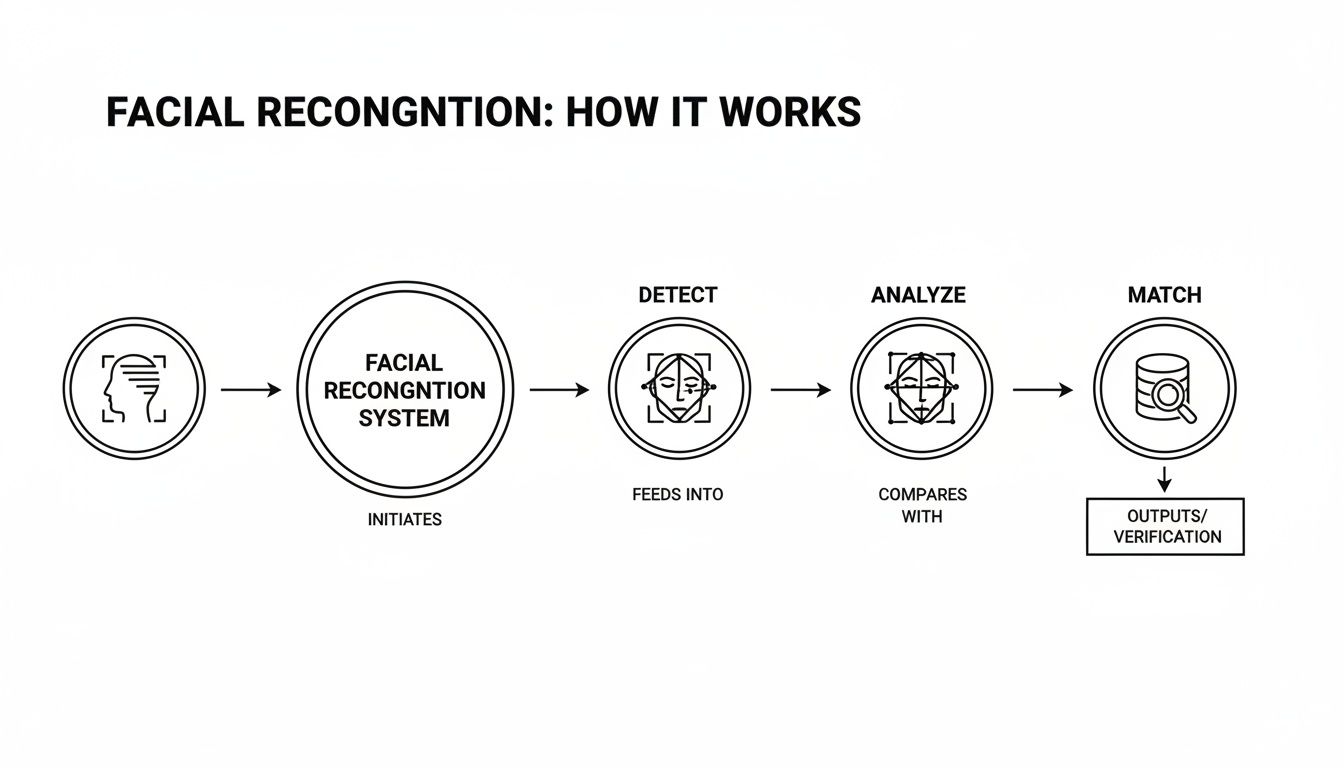
As you can see, the process begins by finding a face, then analyzes its features to build a template, and finally compares that template against a database to find a match.
The Power of Identification in a Controlled Setting
Finally, we arrive at face identification, the most powerful and often misunderstood piece of the puzzle. This process tackles the broadest question: "Who is this person?" Instead of a simple 1:1 check, identification performs a one-to-many (1:N) search, comparing an unknown face against an entire database of known faces to find a potential match.
This is the kind of technology you hear about in law enforcement contexts, but its use at events is far more focused and based on consent.
For an event, identification serves a very narrow, practical goal. A platform like Saucial uses selfie photo matching to search a database that only contains photos from that single event. It's a closed-loop system built for attendee convenience, not surveillance.
When a guest wants to find their pictures, they simply use their selfie to kick off the search. The system then runs a one-to-many search but keeps it strictly within that specific face recognition event gallery. It’s not checking against a global database; it’s just sifting through the photos taken right there, that day.
Here's the simplest way to remember the difference:
- Detection: Finds a face in an image. (Is there a face here?)
- Verification: Confirms a person is who they claim to be. (Are you Jane Doe?)
- Identification: Pinpoints a specific person within a group. (Which one of these people is John Smith?)
Getting these distinctions right is crucial. It separates the helpful, narrow application of finding your photos at a charity gala from the much larger societal concerns about mass surveillance. For event professionals, the goal is always to use controlled identification to give attendees a better, more personal experience.
How Facial Recognition Is Changing Event Photography
If you're an event professional, you know the drill. You hire a great photographer, they capture thousands of amazing shots, and then... what? The photos end up in a massive, unorganized online gallery.
Guests are left to scroll endlessly, squinting at thumbnails, hoping to find a picture of themselves. It’s a tedious process that kills the excitement. Most people give up, and all that fantastic content goes to waste. This is the single biggest disconnect in event photography, and it's a problem that's been begging for a real solution.
From Cluttered Galleries to Personalized Experiences
This is where AI-powered photo matching completely changes the game. Instead of one giant, impersonal folder, you give every single guest their own personal photo album, instantly.
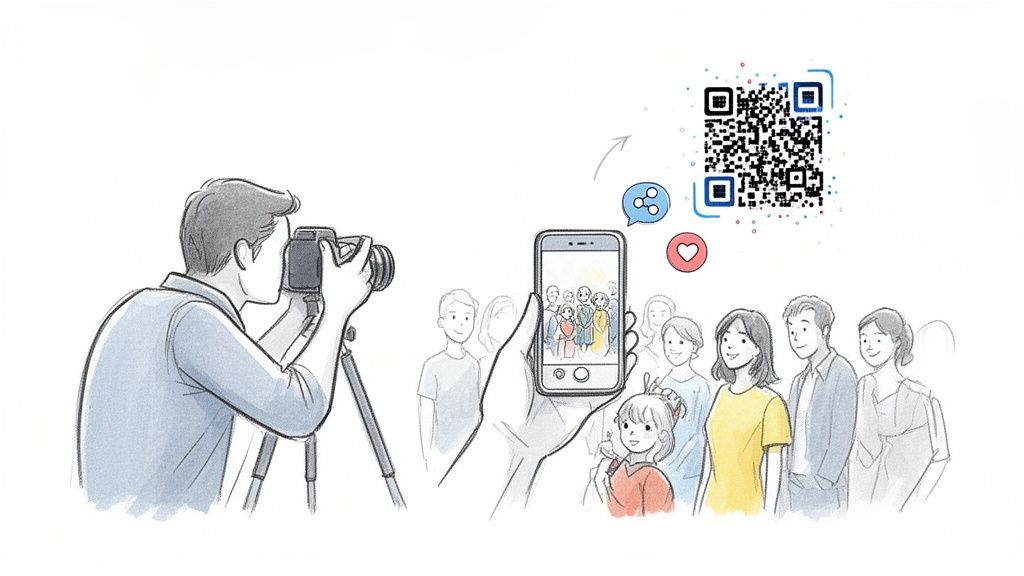
It's a beautifully simple idea. An attendee scans a QR code photo gallery link, snaps a quick selfie, and voilà—the system instantly pulls up every single photo they're in. There’s no app to download, no account to create, and zero scrolling. It’s a moment of pure magic that turns a chore into a highlight.
This small shift in workflow solves the biggest headaches of traditional photo delivery:
- No More Attendee Frustration: They get their photos in seconds, not hours.
- Engagement Skyrockets: Guests are far more likely to view and share photos when they don't have to work for them.
- Zero Administrative Hassle: You and your photographer can say goodbye to all those "Can you find my photo?" emails.
By switching from a passive gallery to an active, on-demand search, you fundamentally change how people connect with your event long after it’s over.
The Power of a Closed-Loop System
Now, I know what you might be thinking: facial recognition and privacy. That's where a closed-loop system comes in. This isn't about connecting to social media, government watchlists, or any other external database.
The search is confined exclusively to the photos from your specific event.
An attendee's selfie is used for one thing and one thing only: to find their pictures from that day. The data is isolated and permission-based, built for a positive experience, not for tracking.
This focused approach is absolutely crucial for building trust. Organizers keep full control. They decide which photos are included and how the gallery is shared. It’s a tool for convenience, not a surveillance system.
Think about it: organizers capture thousands of photos at a single conference, but average click rates on generic galleries often hover around a dismal 20–30%. That’s a huge amount of value left on the table. By using a consented event photo sharing link, platforms like Saucial put high-accuracy AI to work solving this exact problem.
A Seamless Workflow for Organizers and Photographers
The best part? This isn't some complex system that requires a team of engineers to set up. It’s designed to fit right into your existing workflow. For photographers and planners, creating a face recognition event gallery is dead simple.
The process usually looks like this:
- Create a Gallery: Set up a new gallery for your event on the platform.
- Upload Your Photos: Just drag and drop your photos. It's that easy. The AI works its magic in the background, detecting and indexing faces. You can see just how simple it is to upload event photos with a modern system.
- Share the Link: Once it’s done, you get a unique link and QR code. You can display it on screens at the venue, print it on badges, or send it out in a follow-up email.
This takes all the friction out of the process. The photographer saves hours of manual sorting, and the event organizer delivers a memorable, high-tech experience that drives social sharing and keeps the buzz going. Photos are no longer a static archive; they become an active tool for engagement.
Navigating Privacy And Consent For Events
Let's be honest: when you hear "facial recognition," your mind probably jumps straight to privacy concerns. And for good reason. It's powerful stuff, and with that power comes a huge responsibility to use it ethically.
The trick is to draw a bright, clear line between creepy, unconsented public surveillance and a focused, permission-based tool built purely for attendee convenience. At an event, the goal isn’t to track anyone. It’s to solve a real-world problem—finding photos—in a way that puts privacy first.
An ethical approach gives the attendee total control, right from the start.
Building Trust with A Closed-Loop System
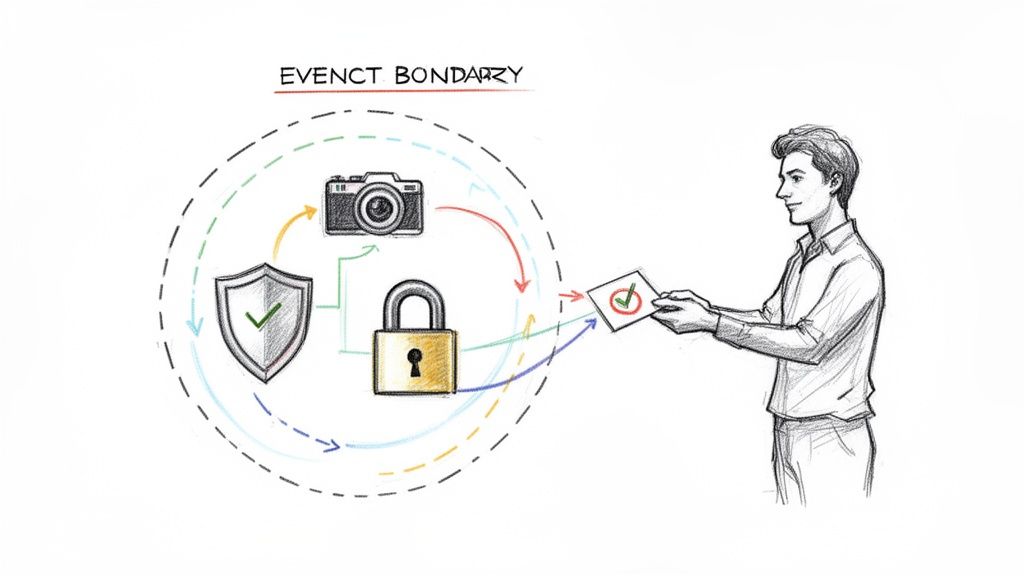
The entire foundation of a privacy-first model is the closed-loop system. This is a simple but critical concept. It just means that all the data—the event photos and the selfies people use to find their pictures—stays inside a secure, private bubble for that one single event.
Think of it like a temporary digital room. The photos your photographers took are inside. An attendee uses their selfie as a personal key to unlock the door and find only their pictures. Once the event is over, that room is locked and the key is discarded. That selfie is never added to some massive global database or repurposed for anything else.
This is the polar opposite of public surveillance. It's a private, one-time service that only works if someone actively chooses to use it. The system isn't scouring the internet; it only searches the photos you uploaded for that specific occasion.
This boundary is everything. It ensures the technology does one job and one job only: making your guests happy. It's not identifying people behind their backs, which is the crucial distinction that builds trust and makes attendees feel safe.
The Power of Explicit Opt-In
Consent has to be crystal clear, informed, and actively given. For events, this means an explicit opt-in process is non-negotiable. Nobody is ever automatically enrolled.
An attendee makes a conscious choice. They see a QR code, scan it, and decide to take a selfie. They are the ones kicking off the search to solve their own problem. This is a world away from a system that scans faces without asking.
Here are the pillars of a consent-driven approach:
- User-Initiated Action: The process doesn't even begin until a guest decides they want their photos and takes a selfie. They're in the driver's seat.
- Clear Purpose: It’s made perfectly obvious that the selfie is used for one thing: matching them to their event photos. No hidden agendas.
- No App or Account Required: Forcing people to download an app or create a permanent account leaves a data trail they might not want. A simple, web-based tool respects their privacy far more.
This opt-in framework empowers attendees. It transforms photo discovery from something that happens to them into a helpful service they choose to use.
Data Control And Deletion Are Non-Negotiable
Finally, real privacy means giving both organizers and attendees control over their data. As an event organizer, you're the custodian of your community's memories and information. A responsible platform must give you the tools to manage everything properly.
This means straightforward policies and easy-to-use features for handling data. You should be able to set your own data retention periods or delete entire galleries after an event wraps up. This guarantees that attendee data isn't just sitting around forever. And, of course, the platform should be rock-solid in its commitment to never selling or sharing personal data.
At Saucial, we put these controls directly in your hands. You can manage access, privacy, and data right from your dashboard, making sure you stay fully aligned with your own privacy standards. To see how this works, you can explore the options available in the Saucial gallery settings. We give you the tools so you can use this amazing technology with confidence, all while honoring the trust your attendees place in you.
Unlocking New Value For Photographers And Organizers
Beyond just solving the age-old "find my photos" headache, a private, permission-based facial recognition system creates some serious business value. It turns a standard event photo gallery from a passive archive into an active tool for engagement and sales, helping both the people running the show and the pros capturing the moments.
For event organizers, the real return comes from strengthening audience connections and boosting their brand. A smooth, instant photo experience pays dividends long after the lights go down.
Driving Post-Event Engagement For Organizers
Think about it: when attendees can instantly find and access their personal photos, what’s the first thing they do? They share them. This natural impulse creates an explosion of user-generated content (UGC) that organically extends the event's reach, turning happy guests into powerful brand advocates.
This process delivers tangible results that every organizer wants to see:
- Massive Brand Reach: Every social share is a free, authentic endorsement that expands your event’s visibility to new networks.
- Sky-High Engagement: Forget sending a generic gallery link that gets ignored. A personalized experience drives clicks, views, and shares like nothing else.
- A Goldmine of Authentic Content: Organizers get a library of high-quality, genuine content perfect for future marketing, from social media campaigns to website galleries.
A gala fundraiser photo gallery that puts shareable moments in guests' hands can keep donations and buzz alive for weeks. Likewise, a trade show photo sharing platform gives exhibitors and sponsors real content to showcase their event's success.
The big shift is moving from a one-to-many broadcast (a single gallery link for everyone) to a one-to-one conversation (a personal set of photos for each guest). That personal touch is what turns a quiet attendee into a vocal promoter.
Creating New Revenue Streams For Photographers
For photographers, this technology is about much more than just saving a few hours on admin. It completely rewrites the business model by opening a direct sales channel to the people who want the photos most—the attendees. The job no longer ends when a folder of images is handed over to the organizer.
The photo gallery becomes a digital storefront, creating some incredible opportunities for a photographer upsell to attendees. This is a game-changer for events like sports tournaments, where parents and athletes are always eager to buy professional action shots.
This direct-to-attendee model unlocks several ways to make money:
- Print and Digital Sales: Offer high-quality prints, canvases, or full-resolution digital downloads directly from the gallery. It’s a classic revenue stream made far more effective by instant photo discovery.
- Sponsored Frames: Team up with event sponsors to offer branded digital frames that guests can add to their photos before sharing. This creates a new income source while adding value for sponsors.
- Premium Photo Sets: Curate and sell access to exclusive photo collections, like a "Best Of" album or behind-the-scenes shots that weren't included in the main gallery.
Take sports tournament photo sales as a perfect example. A parent can scan a QR code, find every single picture of their kid in seconds, and buy a print package from their phone before they even leave the venue. That kind of immediacy is what drives sales through the roof.
The difference between the old way and the new way is stark. The table below breaks down how facial recognition transforms the experience for everyone involved.
Value Unlocked By Facial Recognition Photo Sharing
| Stakeholder | Traditional Method Pain Points | Facial Recognition Solution Benefits |
|---|---|---|
| Event Organizer | Gallery engagement is low and social sharing is minimal. Good content gets buried and never seen by guests. | Skyrockets brand reach through authentic UGC. Drives much higher post-event engagement and interaction. |
| Photographer | Income is limited to the client's fee. No direct sales channel to attendees. Hours are wasted on manual photo searches. | Creates a direct-to-attendee sales channel for prints, downloads, and more. Drastically cuts down on administrative work. |
When you boil it down, facial recognition in the events space is a tool that aligns everyone's goals. Organizers get better marketing results, photographers open up new ways to earn, and attendees get a fantastic, instant experience that connects them to their favorite memories. It’s a win-win-win.
Your Questions About Facial Recognition, Answered
As facial recognition pops up more in our daily lives, it's totally normal to have questions about how it works, if it's safe, and what it's actually used for. Let's clear up some of the most common questions, especially when it comes to using this tech at events.
Is It Safe and Private to Use Facial Recognition for Event Photos?
Yes, but only when it’s done the right way. There’s a world of difference between public surveillance and a private, permission-based system designed for a single event. A trustworthy platform operates in what’s called a “closed loop.”
What that means is an attendee's selfie is only ever used to find their photos from that one specific event. The data is completely walled off—it’s never shared, sold, or used to build some massive, creepy database.
The whole system is built on consent. Unlike platforms that might scrape photos from the internet, an ethical event photo system needs you to actively take a selfie to even start a search. This puts you in the driver's seat, fully aware and in agreement with the process.
To make sure you’re keeping things safe, always look for platforms that stick to these golden rules:
- User Consent is King: The attendee has to kick off the search themselves. No exceptions.
- Crystal-Clear Privacy Policies: The platform must be upfront about how it handles and protects data.
- The Organizer is in Control: The event host should have complete authority over the data, including the power to delete it.
This consent-first approach is all about creating a great, secure experience for guests, not about tracking them.
How Accurate Is This Selfie Matching Thing, Really?
Modern facial recognition is shockingly good. We're talking accuracy rates that often top 99% in decent conditions. For event photography, that makes it an incredibly reliable way to connect people with their pictures.
These systems are built on powerful, enterprise-grade AI that can handle the wild and unpredictable nature of a live event. They can still find faces even with all sorts of variables in the mix:
- Shifting and tricky lighting
- All kinds of different camera angles
- A whole range of facial expressions (smiles, laughs, you name it)
- Faces buried in group shots or caught in mid-action
Look, no tech is 100% perfect all the time, but the error rate on a quality system is tiny. The bottom line is that it’s a massive leap forward from making your guests scroll through thousands of photos just to find the few they’re in.
What’s the Setup Process Like for a Face-Finding Photo Gallery?
One of the best things about modern photo-sharing platforms is how simple they are to set up. You don't need to be a tech wizard or install any complicated software. It’s designed to fit right into how you already work.
For any organizer or photographer, it really just boils down to three quick steps:
- Create Your Gallery: First, you just set up a new, dedicated gallery for your event on the platform, usually through a simple dashboard. If you're curious what that looks like, you can see how to create a new Saucial account to get a feel for it.
- Upload Your Photos: Next, just drag and drop all your event photos from your computer. The AI then hums along in the background, automatically scanning every image to detect and index all the faces it finds.
- Share with Your Guests: Once it’s done, the system spits out a unique link and a QR code for your gallery. All you have to do is share it—send it in an email, post it on social media, or just display the QR code on screens around your venue.
The whole thing is designed to be frictionless. Guests don’t have to download an app or create an account, which gets rid of annoying barriers and actually encourages them to check out their photos.
Can This Technology Work for Any Kind of Event?
Absolutely. This tech is incredibly flexible and brings a lot of value to pretty much any event where photos are a big part of the experience. The core benefit—instantly connecting people with their own moments—is something everyone loves.
That makes it a great fit for all sorts of get-togethers.
The common thread is any event where people would be excited to see themselves in professional photos. It doesn’t matter if it’s a black-tie gala or a casual community festival; the desire to find and share personal memories is universal.
Here are just a few examples of events where this technology really shines:
- High-Sharing Social Events: Galas, fundraisers, alumni dinners, and award nights where guests are dressed to the nines and can't wait to see and share great photos.
- Community and Brand Events: Festivals, sports tournaments, and brand activations. Getting photos out quickly makes the whole experience better and gives your brand a huge visibility boost.
- Corporate and Professional Gatherings: At conferences and trade shows, this can drive engagement long after the event ends and provides fantastic content for sponsors.
- Milestone Celebrations: Schools and universities can use it for graduations, reunions, and other big campus events, creating private galleries that are a breeze for everyone to search.
At the end of the day, if you have a photographer at your event, this technology is the best way to make sure their hard work gets seen and loved by every single guest.
Ready to transform your event photography workflow? With Saucial, you can create a magical "Find My Photos" experience that delights your guests and saves you hours of work. Discover how Saucial can elevate your next event.


