Demystifying Wedding Photography Turnaround Time
The wedding day might be over, but the excitement is just getting started. One of the first questions on every newlywed's mind is, "So, when do we get to see our photos?"
While it can vary, the industry standard for a wedding photography turnaround time is 2-4 weeks for a full gallery. Many photographers, however, will get a small collection of "sneak peek" photos over to you within 24-72 hours.
The Eager Wait for Your Wedding Photos

After the blur of your wedding day, the wait for your professional photos can feel like an eternity. It’s completely natural to want to dive back into those beautiful moments right away. But what many couples don't see is that once the last dance is over, your photographer’s work is really just beginning. This is when they step into the editing studio to start the artistic post-production process.
Think of it like a master chef preparing a gourmet meal. The ingredients—your raw photos—were gathered on the wedding day. Now comes the meticulous work of refining, seasoning, and plating each one to absolute perfection. It's a process that simply can't be rushed.
The Art Behind the Wait
The very first step is a massive undertaking called culling. A photographer might easily snap several thousand images during a full-day wedding. Culling is the painstaking process of sifting through every single one of those shots to hand-select the absolute best—the ones with tack-sharp focus, genuine emotion, and perfect composition. This task alone can take hours upon hours.
Once the keepers are chosen, they move into the editing phase. This is where your photographer’s signature style truly shines. Each photo is individually adjusted for:
- Color Correction: Making sure skin tones look natural and colors pop consistently across the entire gallery.
- Exposure and Contrast: Skillfully balancing light and shadows to create images that feel dynamic and professional.
- Cropping and Straightening: Fine-tuning the composition to draw the eye right where it needs to go.
- Minor Retouching: Gently removing small distractions to create a polished, clean final image.
This meticulous process is what transforms a simple snapshot into a timeless piece of art. It’s a craft that requires a keen eye, artistic sensibility, and a significant time investment to ensure every photo in your gallery is flawless.
Setting Clear Expectations
Knowing what goes on behind the scenes helps set realistic expectations for your wedding photography turnaround time. The industry has settled on clear standards that balance high-quality craftsmanship with a couple's excitement. One survey of nearly 2,000 professional photographers found that a 2-to-4 week delivery window is the most common target, with the final gallery typically containing between 500 and 800 images.
While you're waiting for the main event, modern tools are changing how you and your guests can experience the day-of memories. For example, platforms like Saucial use AI to power a "find my photos" experience, letting guests see pictures of themselves just hours after the wedding. It's a brilliant way to bridge the gap, delivering that instant gratification while your photographer puts the finishing touches on the main collection.
Here's a look at what you can generally expect for different deliverables.
Standard Wedding Photography Delivery Timelines
This table breaks down the typical timelines for everything from your initial sneak peeks to the final printed album.
| Deliverable | Industry Standard Turnaround Time |
|---|---|
| Sneak Peek / Preview Gallery | 24 – 72 hours |
| Full Digital Gallery | 2 – 8 weeks |
| Blog Post Feature | 1 – 4 weeks |
| Wedding Album (Design & Print) | 2 – 4 months after photo selection |
| Prints & Wall Art | 2 – 4 weeks after ordering |
While these are great benchmarks, always remember to check your specific photographer's contract for their promised delivery schedule.
What Really Influences Photo Delivery Speed?
Ever wonder why one photographer promises your gallery in two weeks while another quotes two months? That delivery timeline isn't just a random number. It's the result of a complex equation involving artistic dedication, business realities, and the sheer volume of work that goes on behind the scenes.
Let's pull back the curtain and look at what truly shapes your wedding photography turnaround time. Understanding these factors will give you a much clearer picture of the craftsmanship behind the wait.
The Culling and Editing Bottleneck
The single biggest factor is the photographer's post-production workflow. This isn’t about slapping a filter on a few photos; it's a deeply involved artistic process that starts with the monumental task of culling.
For a standard eight-hour wedding, it’s not unusual for a photographer to come home with 3,000 to 5,000 images. Culling is the painstaking job of combing through every single one of those shots to find the gems—the moments with sharp focus, genuine emotion, and perfect composition. This alone can take hours of intense concentration before a single image is even touched up.
Once the "keepers" are selected, the real magic begins. Each photo is individually edited to reflect the photographer's signature style. This process involves:
- Color Grading: Tweaking hues, saturation, and tones to weave a consistent, beautiful look across the entire gallery.
- Exposure Correction: Skillfully balancing the light and shadows so every important detail comes through clearly.
- Retouching: Carefully removing small distractions, like an ugly exit sign or a stray hair, to ensure the final image is polished and perfect.
This is far from a one-click job. A dedicated photographer might spend about 3 hours editing for every 1 hour of shooting. For an 8-hour wedding day, that’s a minimum of 24 hours of pure editing, often spread out over several days to keep their creative eye sharp.
A photographer's editing style is their artistic signature. The time they invest in post-production is what elevates your gallery from a collection of snapshots into a curated, emotional story of your day. This meticulous work is the primary reason for the wait.
Seasonality and The Editing Queue
The time of year you get married has a massive impact on your photo delivery. Most weddings fall during "peak season," which generally runs from late spring through early fall. During these months, a busy photographer might be shooting 2-4 weddings every single week.
Think of it like being in line at the most popular brunch spot on a Sunday. The kitchen (the photographer's editing studio) is flooded with new orders (weddings). They work through them in the order they were received. If your wedding is at the end of October, it gets in the queue behind all the September and early October weddings.
- Off-Season (Jan-Mar): Turnaround is usually much quicker because the editing queue is short or nonexistent.
- Peak Season (Apr-Oct): The editing backlog is real, which naturally extends delivery times for everyone.
This "editing backlog" is a normal part of the business. Photographers set their contractual timelines knowing this seasonal rush is coming, making sure every couple's gallery gets the same amount of love and attention.
Business Structure and Wedding Complexity
Not all photography businesses are built the same, and that structure directly affects speed. A solo photographer is a one-person show—they're the shooter, the culler, the editor, and the customer service rep. Their timeline is naturally limited by what one person can realistically accomplish.
On the other hand, a larger studio might have a whole team of dedicated editors. This can speed things up considerably, as multiple galleries can be worked on at once. The trade-off, however, is that the person who shot your wedding might not be the one editing it.
Finally, the scale of your wedding matters. A simple, four-hour elopement that yields 1,000 photos will be finished much faster than a three-day destination wedding that generates over 10,000 images. It’s a matter of pure volume—more photos and more events simply require more time in post-production to deliver a high-quality, cohesive story.
How to Set Clear Expectations with Your Photographer
A great relationship with your photographer is built on trust and clear communication, especially when it comes to knowing when you’ll see your wedding photos. Talking about this upfront is one of the most important things you can do to avoid that post-wedding anxiety of wondering, "Where are our pictures?"
The goal is to turn the waiting game into a period of shared excitement, not silent frustration. This conversation needs to happen way before the wedding day, right from your first chat. It’s a two-way street: couples need to ask the right questions, and photographers need to be upfront and clear, especially in their contract.
Questions Couples Should Ask Before Booking
Before you sign on the dotted line, you need to get a crystal-clear picture of your photographer's delivery process. Don't be afraid to get into the nitty-gritty details. A true professional will welcome these questions and see it as a chance to show you they care about your experience.
Here’s what you absolutely need to ask:
- What’s the guaranteed delivery date for our full gallery in the contract? You want a specific number of weeks or a firm date, not a vague "sometime in the fall."
- Do you provide a sneak peek or a teaser gallery? If they do, ask how many photos are usually in it and when you can expect to see it (typically within 24-72 hours).
- How will you keep us in the loop while you're editing? Even a quick email update can make all the difference.
- What’s the timeline for designing and receiving our wedding album? Album creation is a whole separate process, so make sure you understand that timeline too.
It’s a fact: photographers who are upfront about their delivery timelines have happier clients. This is especially important when you realize the industry standard for a full gallery is anywhere from 4-12 weeks, with the sweet spot often landing around 6-8 weeks. To understand why it takes this long, check out this great article on what goes into the wedding photo timeline.
For Photographers: How to Write the Perfect Contract Clause
Your contract is your best friend when it comes to managing expectations. This is where you make promises you can keep. Don't leave any room for interpretation. Instead of just listing one final deadline, think about breaking it down into stages. This keeps your clients excited and feeling cared for.
Feel free to adapt this sample clause for your own contracts:
Image Delivery Timeline:
You will receive a preview gallery of 10-15 edited images within 72 hours of your wedding. Your full, edited digital gallery will be delivered no later than eight (8) weeks from the event date. If I run into any unexpected delays, I will let you know at least one week before the original delivery date with a new timeline.
This approach is all about under-promising and over-delivering. It gives you a comfortable buffer during the chaos of wedding season and absolutely delights your clients when they get a beautiful preview just a few days after their wedding.
The Power of a Quick, Proactive Update
Beyond what's written in the contract, a simple communication plan can completely change the waiting experience for your clients. You don’t have to send constant updates, but a couple of thoughtful check-ins can work wonders.
Here’s a simple two-step plan that makes clients feel valued:
- The "Sneak Peek" Email (2-3 days post-wedding): Send them the link to their teaser gallery. Tell them again how much you loved being part of their day and gently remind them of the timeline for the full gallery.
- The "Halfway There" Update (Around week 4 on an 8-week timeline): Shoot them a quick, friendly email. Just say something like, "I'm deep into editing your photos and they are looking absolutely incredible!" This tiny gesture goes a long way in reassuring them they’re on your mind.
You can even make this easier on yourself. Setting up email templates and scheduling them is simple within the settings of client management tools, ensuring no one ever feels forgotten. This kind of proactive communication builds incredible goodwill and shows you’re a true professional.
Using Modern Tools to Accelerate Delivery
In a world where we can share moments instantly, the traditional weeks-long wait for wedding photos can feel like an eternity. Luckily, new technology is giving photographers incredible ways to shorten that wedding photography turnaround time without cutting any creative corners. It’s not about rushing the art; it’s about working smarter.
By adopting the right tools, photographers can automate the tedious stuff, streamline their editing, and create a much more engaging experience for you and your guests. This modern approach closes the gap between the wedding day and the final gallery, keeping the excitement alive.
Streamlining the Post-Production Workflow
After the wedding, the biggest chunk of a photographer's time is spent culling and editing. Imagine sifting through a giant treasure chest to find the best gems and then polishing each one by hand. That's the job. Modern software acts as a powerful assistant, making that process dramatically faster.
- Smart Culling Software: Tools like PhotoMechanic are a lifesaver. They let photographers blaze through thousands of images, instantly tagging the keepers and ditching the blinks or blurry shots without waiting for giant files to load.
- Editing Presets and Profiles: These are far more than simple filters. Professional presets are meticulously built to apply a consistent, signature look across an entire gallery. They create a beautiful starting point, freeing up the photographer to focus on the fine-tuning that makes each image perfect, rather than building the look from scratch every time.
- AI-Powered Editing Assistants: New AI tools can handle repetitive tasks like initial exposure adjustments or sharpening, all based on the photographer’s unique style. This allows the artist to pour their energy into the creative work—storytelling, perfecting skin tones, and adding that final polish that only a human can.
By automating the most mechanical parts of post-production, photographers can claw back dozens of hours per wedding. That time saved translates directly into a faster delivery for your final gallery.
The entire process, from initial conversation to final delivery, hinges on setting clear expectations from the very beginning.
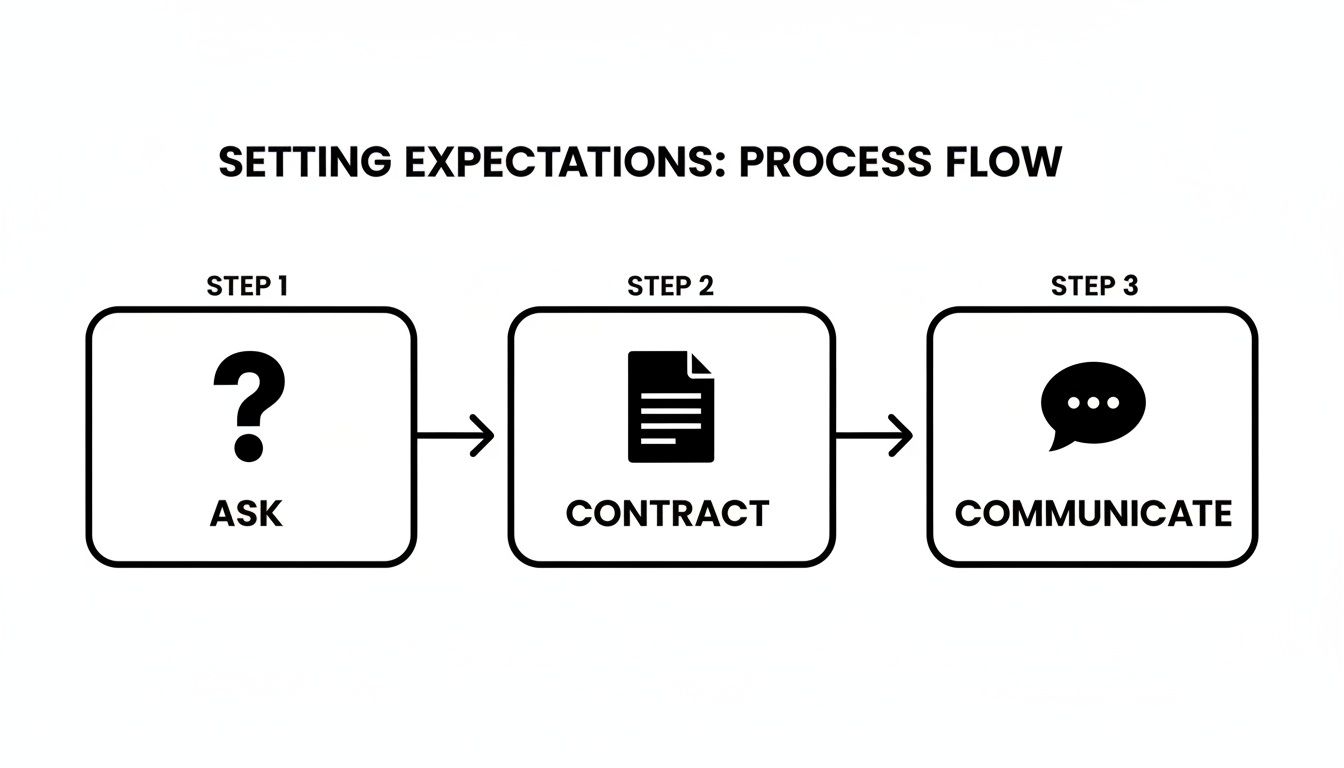
As this shows, a great delivery experience doesn't start with the editing—it starts with clear communication and a solid contract.
Revolutionizing the Guest Experience
While you're eagerly waiting for the full, polished gallery, your guests are just as excited to see and share photos from the day. The old way—waiting weeks for a link to a massive, unorganized folder—often kills that buzz. This is where platforms offering instant guest access have become a total game-changer.
Imagine your guests waking up the next morning, scanning a QR code from the wedding, and instantly finding every photo they're in. This "find my photos" experience is now possible, powered by clever facial recognition technology.
Platforms like Saucial are leading this charge. A photographer can upload a batch of candid guest photos, and within hours, guests can use a quick selfie to see a private gallery of just their pictures. It's a seamless way to deliver immediate value and satisfy that itch to post on social media right away. This keeps everyone buzzing while the photographer focuses on perfecting the main gallery for you. Photographers can see just how easy it is to get started with the Saucial photo upload process.
Traditional vs. Modern Photo Delivery Workflows
The difference between the old method and a new, guest-focused approach is night and day. One relies on a long, linear process, while the other creates immediate engagement.
| Workflow Step | Traditional Method (4-8 Weeks) | Modern Method with Instant Previews (24-48 Hours for Guests) |
|---|---|---|
| Initial Photo Transfer | Photographer uploads all images to their computer for a multi-week culling and editing process. | Photographer uploads a "guest highlights" batch to an instant-delivery platform like Saucial. |
| Guest Access | Guests wait weeks for the couple to share a link to the final, complete gallery. | Guests scan a QR code and find their photos via facial recognition the next day. |
| Couple's Previews | A small "sneak peek" gallery of 10-20 images is sent to the couple within a week. | The couple gets a sneak peek, while guests are already enjoying and sharing hundreds of candid shots. |
| Final Gallery Delivery | The full, edited gallery is delivered to the couple 4-8 weeks after the wedding. | Guests have had photos for weeks; the final, perfected gallery is delivered to the couple on schedule. |
This modern workflow doesn't just make guests happy; it also opens up new avenues for photographers. By connecting directly with every guest, they can offer print sales or digital downloads, turning a waiting period into an interactive and profitable experience. It’s a win-win that brings the entire post-wedding photo journey into the 21st century.
Enhancing the Guest Photo Experience

For the longest time, wedding photos were created for one audience: the couple. After the big day, everyone else—friends, family, that one cousin you hadn't seen in years—waited weeks for the final gallery. If they were lucky, the couple would eventually share a clunky cloud drive link, sending guests on an endless scroll through hundreds of images just to find a single picture of themselves.
That old model is officially on its way out. A wedding isn't just about the couple; it's a shared celebration, and the photo experience should reflect that. The game has changed from a one-way photo dump to a more engaging, community-focused approach. Modern platforms are closing the gap in the wedding photography turnaround time by giving guests an immediate, personal connection to the day's memories.
From Endless Scrolling to Instant Gratification
The biggest problem with the old way? Friction. When a guest has to hunt for their photos, their excitement fades fast. They might look once, get frustrated, and never come back to the gallery. That's a huge missed opportunity for both the couple and the photographer.
The new solution is as simple as it is powerful: a QR code that takes guests to a private gallery of their own photos. This isn't just a small tweak; it's a complete reimagining of how we share event photos. Instead of one massive, overwhelming folder, each guest gets their own curated collection.
This "find my photos" experience uses technology like facial recognition to do all the heavy lifting. A guest scans a code, snaps a quick selfie, and instantly sees every professional photo they're in. It’s an elegant fix that delivers a hit of instant gratification and keeps the post-wedding buzz going.
This shift from passive viewing to active discovery is crucial. When guests can easily find and share photos of themselves, they become brand ambassadors for the event and the photographer, spreading the joy far beyond the wedding day itself.
A New Channel for Photographers
This improved guest experience isn't just a nice-to-have for attendees; it’s a game-changer for photographers. In the past, a photographer’s relationship was almost exclusively with the couple. Once the final gallery was delivered, the job was pretty much done.
But modern photo-sharing platforms create a direct line of communication between the photographer and hundreds of potential new clients—all the wedding guests. This opens up a ton of possibilities that were once nearly impossible to manage.
- Lead Generation: Every guest who finds their photo is a warm lead. They’ve already seen your work up close and know the quality you deliver.
- Direct-to-Guest Sales: You can offer upsells like print orders or premium digital downloads directly to guests, creating a whole new revenue stream from a single event.
- Brand Building: When guests share their professional photos on social media, they’re basically giving you a free marketing campaign, complete with photo credits and tags.
This approach turns the traditional waiting period into a live, interactive marketing opportunity. It’s a smarter way to grow your reach without adding a bunch of extra work to your plate.
Building a Seamless Photo Ecosystem
Getting started with this modern approach is surprisingly simple. Platforms like Saucial are built to slot right into your existing workflow. After the wedding, you can upload a batch of candid guest photos, and the system automatically sorts them using facial recognition.
A simple QR code can be displayed at the reception or shared in a "day after" email. From there, guests use a super intuitive interface to access their personal galleries. The whole system is secure, private, and incredibly user-friendly. For photographers curious about how it all works, you can explore the authentication and setup process here.
By adopting this kind of technology, photographers can radically improve the post-wedding experience for everyone. Guests get instant gratification, the perceived turnaround time shrinks, and you build a powerful engine for business growth. It's a win-win that finally brings the wedding photo experience into the modern era.
Common Questions About Wedding Photo Delivery
Once the confetti has settled and the last song has played, the excitement for your wedding photos really kicks in. It's totally normal to have a ton of questions about what happens next. Knowing what to expect can make the waiting game a lot less stressful and a lot more fun.
Let's walk through some of the most common questions couples have about getting their photos, so you can feel confident and clear about the final steps of your photography journey.
Can I Speed Up the Process by Editing the Photos Myself?
I get this question a lot, and while I understand the eagerness, the answer is a firm but friendly no. Your photographer’s contract will almost certainly forbid this, and for very good reason. Editing is so much more than just a technical step—it’s the final brushstroke of their art.
Think of it like hiring a world-class chef. You wouldn't ask for the raw ingredients to finish the dish at home, right? The final seasoning, plating, and presentation are all part of the experience you're paying for. In the same way, your photographer’s unique editing style—how they handle color, light, and mood—is what creates the stunning images you saw in their portfolio. Handing over unedited RAW files would be like an artist showing you an unfinished painting; it simply doesn't represent their work or the quality you invested in.
What Exactly Is a Sneak Peek Gallery?
A sneak peek is that little taste of magic you get right after the wedding! It’s a small, hand-picked collection of fully edited photos that your photographer sends over, usually within 24 to 72 hours. This preview typically includes between 5 and 20 of the absolute best moments from your day.
The whole point of a sneak peek is to give you something beautiful to share right away while the excitement is still fresh. It tides you over until the full gallery is ready and gives you professional-quality images to post on social media, instead of relying on blurry cell phone shots. It’s become a pretty standard part of most wedding packages these days, but it's always a good idea to confirm it's included.
Is It Okay to Ask for Photos Before the Contracted Date?
It’s completely natural to be bursting with anticipation, but it's best to respect the timeline laid out in your contract. Your photographer is juggling a delicate workflow, balancing multiple weddings and other projects to ensure every single gallery gets the time and attention it deserves.
Frequent check-ins or requests for early delivery can really disrupt that process. That said, if you have a specific, time-sensitive need—say, you need one perfect shot for your thank-you cards—it’s perfectly fine to ask politely if a single image could be prioritized.
The trick is to communicate these special requests well before the wedding, if possible, and to be reasonable. Asking for one photo is a much smaller lift than asking for the entire gallery weeks ahead of schedule.
What Should I Do If My Photographer Misses the Deadline?
If the delivery date in your contract passes and you haven't heard anything, the first step is to send a polite, professional email. Life happens, and unexpected delays—from a family emergency to a tech meltdown—can affect anyone.
In your message, just gently reference the contracted delivery date and ask for an update on the timeline. Keep your tone friendly and patient. If you don't get a reply within a business week or so, a follow-up phone call is a great next step.
Always keep a record of your communication and stay professional. In almost every case, a delay isn't intentional, and a simple, courteous check-in is all it takes to get things back on track. The goal is to work together toward a solution, not to create a conflict.
Your wedding photos are a treasure you'll have for a lifetime, and getting them should be just as joyful as the day itself. For photographers and event planners looking to give guests an incredible experience, Saucial offers a seamless "find my photos" solution. With a simple QR code and facial recognition, guests get instant access to their personal moments, creating a huge post-event buzz while you focus on perfecting the couple's main gallery. Discover how you can elevate the photo experience for everyone involved.


