10 Essential Wedding Photo Techniques for 2026
The perfect wedding photo is a blend of artistry, technical skill, and an incredibly efficient workflow. While couples see the final, breathtaking images, photographers know the real work lies in mastering specific wedding photo techniques that cover everything from capturing candid emotion to delivering the final gallery. Success is not just about a single stunning shot; it's about consistently executing a diverse set of skills throughout a high-pressure, fast-paced day. From the quiet intimacy of the getting-ready moments to the high-energy celebration on the dance floor, each segment of a wedding demands a unique approach to lighting, composition, and interaction.
This guide breaks down 10 essential techniques that define modern wedding photography, providing actionable strategies you can implement immediately. We'll move beyond the basics of camera settings and explore the nuances of sequential storytelling, mastering off-camera flash, and orchestrating group portraits without the chaos. You will learn not only how to capture beautiful images but also how to think like a visual storyteller, anticipating moments before they happen.
Furthermore, we'll address a critical, often overlooked, part of the process: post-event delivery. A key challenge is getting photos to attendees quickly and effortlessly. Instead of sending cluttered cloud folders, platforms like Saucial create a seamless 'find my photos' experience using face recognition. This technology allows guests to instantly access their moments via a simple event photo sharing link, enhancing their experience and saving you valuable time. This comprehensive roundup provides the insights you need to improve your craft, streamline your delivery, and create an unforgettable experience for clients and their guests from start to finish.
1. Candid / Photojournalistic Photography
Candid or photojournalistic photography is a powerful wedding photo technique focused on capturing genuine, unposed moments as they happen. Rather than directing subjects, the photographer acts as an observer, documenting the authentic emotions, interactions, and reactions that tell the story of the day. This approach prioritizes emotional resonance over posed perfection, creating a timeless and heartfelt visual narrative.
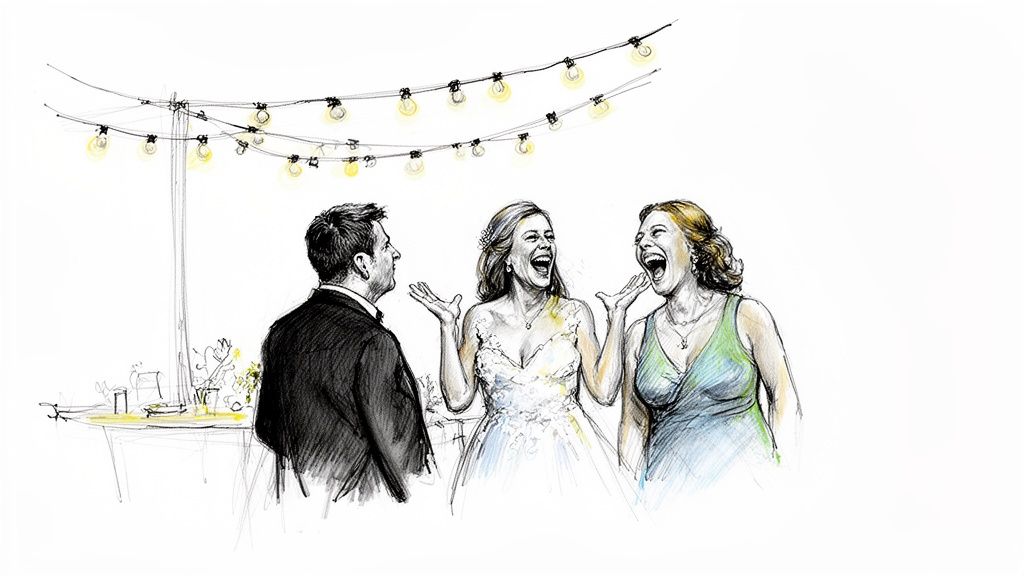
The goal is to preserve the atmosphere of the event, from the laughter during toasts to the quiet, tearful glance between a bride and her father. By focusing on these fleeting moments, you provide clients with images that transport them back to the exact feeling of their wedding day.
How to Implement This Technique
To excel at candid photography, you must become an expert in anticipation. Understanding the flow of a wedding day allows you to predict where key moments will occur.
- Position Strategically: Place yourself on the periphery of an event, such as near the dance floor or bar, where interactions are likely to happen. This allows you to observe without being intrusive.
- Use Longer Lenses: A 70-200mm lens is invaluable. It lets you capture intimate expressions and interactions from a distance, ensuring subjects remain natural and unaware of the camera.
- Master Silent Shooting: Use your camera's silent shutter mode during quiet, emotional moments like the ceremony or vows to avoid disrupting the atmosphere.
Key Insight: The best candid shots come from observation, not direction. Patience is your greatest tool; wait for the moment to unfold naturally rather than trying to force it.
This technique is essential for building a complete wedding gallery that feels alive and authentic. After the event, you can enhance the experience for guests and clients by organizing these photos into specific albums. Using a platform that streamlines the process of photo delivery and tagging allows everyone to easily find their candid moments. Discover how Saucial can improve your photo-sharing workflow and help guests relive the day.
2. Portrait and Detail Photography
Portrait and detail photography is a fundamental wedding photo technique dedicated to capturing the curated and styled elements of the day. This approach involves carefully composing portraits of the couple, wedding party, and family, alongside artistic close-ups of significant details like rings, floral arrangements, attire, and decor. It focuses on highlighting the craftsmanship and personal touches that make each wedding unique.
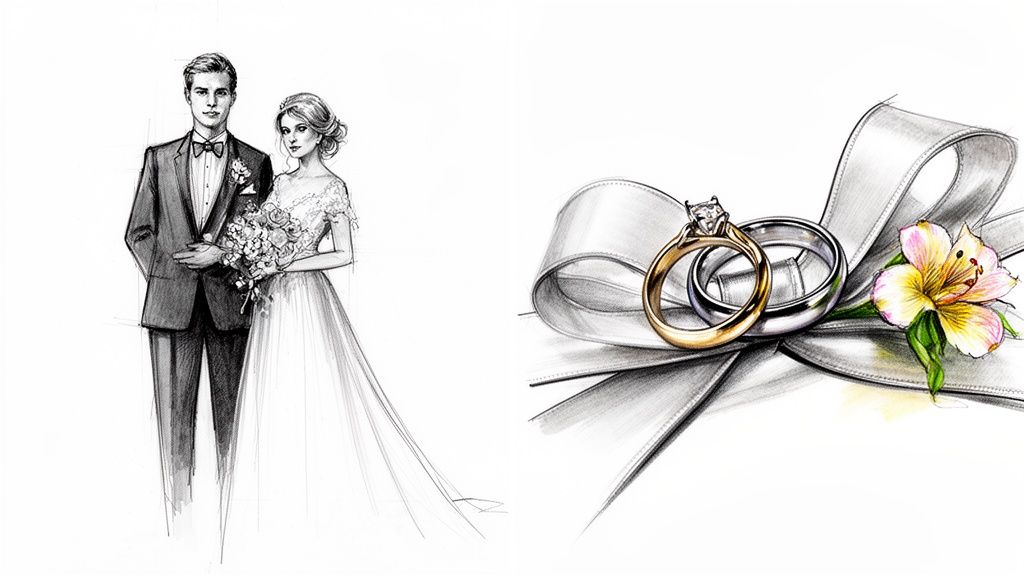
The goal is to create a polished and elegant record of both the people and the aesthetics of the event. These images often become the most iconic and frequently shared photos from the wedding, serving as timeless heirlooms that showcase the beauty and planning invested in the celebration.
How to Implement This Technique
Success in this technique requires planning, precision, and an eye for composition. It’s about creating controlled, beautiful images amidst the day’s hustle.
- Create a Portrait Checklist: Before the event, collaborate with the couple to create a list of all essential family and wedding party portraits. Schedule specific time blocks to ensure every important combination is captured efficiently.
- Isolate the Details: Gather key items like the rings, invitations, and jewelry early in the day. Find a clean, well-lit space to photograph them without distractions, using a macro lens for crisp, close-up shots.
- Use Consistent Lighting: For formal portraits, aim for soft, flattering light. Whether using natural window light or an off-camera flash, maintaining a consistent lighting style helps create a cohesive and professional gallery.
Key Insight: Time is your most valuable asset. Allocating dedicated, uninterrupted time for portraits and details prevents rushing and allows for the creativity needed to produce stunning, high-quality images.
Organizing these carefully crafted shots is crucial for the final gallery. Separating portraits from detail shots allows for a more logical viewing experience. After the wedding, you can streamline this process significantly; explore how a modern photo-sharing platform can help you organize and tag your portrait galleries for faster delivery and easier access for everyone involved.
3. Golden Hour and Natural Light Photography
Golden Hour and Natural Light Photography is a wedding photo technique that harnesses the soft, warm, and directional light occurring shortly after sunrise or before sunset. This approach avoids the harsh, unflattering shadows of midday sun, instead creating luminous, romantic, and naturally flattering images. Photographers leverage this magical light to add depth, warmth, and a cinematic quality to portraits and scenic shots.
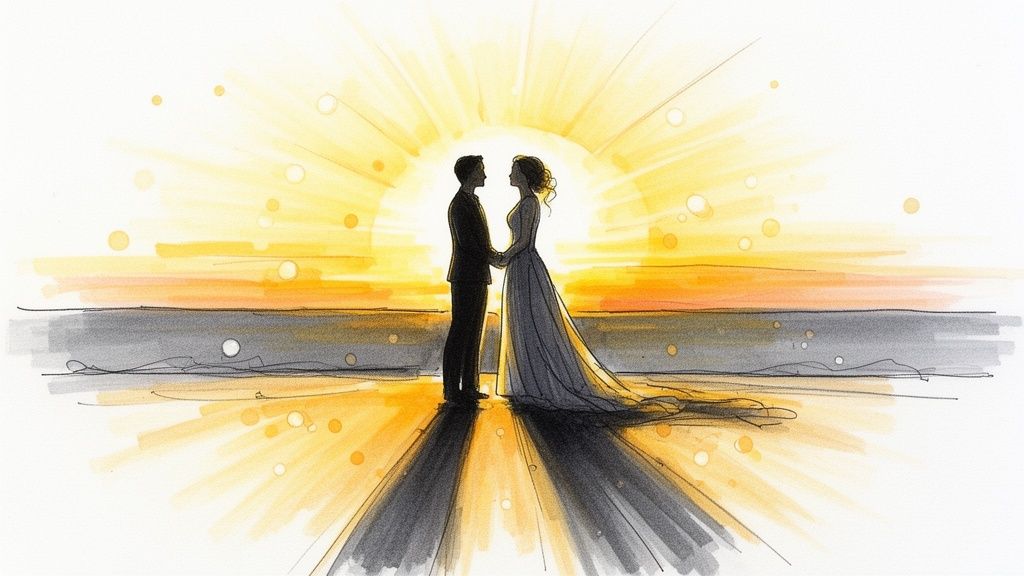
The goal is to produce images with beautiful color palettes, soft textures, and a dreamy atmosphere. Whether it’s creating a glowing rim light around a couple or bathing the wedding party in a warm, even glow, this technique elevates standard portraits into works of art. These photos often become the most iconic and cherished images from the entire day.
How to Implement This Technique
Mastering golden hour requires precise timing and a deep understanding of light direction. Planning is crucial, as the window of ideal light is often very short.
- Scout and Schedule: Visit the venue during golden hour on a day before the wedding. This allows you to identify the best spots and plan the session. Work with the couple and wedding planner to schedule a 15-20 minute portrait session that aligns with the sunset.
- Use Backlighting for Effect: Position your subjects with the sun behind them to create a beautiful rim light or halo effect. This separates them from the background and adds a magical glow. Use a reflector or a touch of off-camera flash to fill in any shadows on their faces.
- Angle the Light: To avoid squinting while still getting beautiful light, position the sun at a 45-degree angle to your subjects. This creates soft, dimensional modeling on their features without the harshness of direct sunlight.
Key Insight: The quality of light changes rapidly during the golden hour. Be prepared to work quickly and adjust your settings continuously to capture the perfect exposure as the sun dips lower.
Golden hour photos are highly sought after by couples and their guests. When delivering the final gallery, create a dedicated album for these stunning shots. Using a platform like Saucial allows you to highlight this "Golden Hour" collection, making it easy for attendees to find and share the most breathtaking moments of the evening.
4. Wide-Angle Environmental Photography
Wide-angle environmental photography is a wedding photo technique that uses wider lenses to place the subjects within a grander context. Instead of tight portraits, this approach captures the venue's architecture, the sprawling landscape, and the overall atmosphere of the event, telling a story about not just who was there, but where they were. It’s about showing the scale and ambiance of the celebration.
The goal is to create "scene-setting" images that anchor the narrative of the wedding day. These shots are perfect for opening an album or showcasing the stunning location the couple chose, from a dramatic ballroom filled with guests to a serene outdoor ceremony with a mountain backdrop. They provide a sense of place and magnitude that tighter shots cannot convey.
How to Implement This Technique
To master wide-angle shots, you must think like a landscape or architectural photographer, focusing on composition and layers. The key is balancing the subjects with their impressive surroundings without letting them get lost.
- Find a Strong Vantage Point: Position yourself in corners, doorways, or from an elevated perspective (like a balcony) to capture more of the scene and create compositional depth.
- Incorporate Layering: Compose your shots with distinct foreground, middle ground, and background elements. For example, shoot through foliage in the foreground to frame the couple in the middle ground, with the venue behind them.
- Use Leading Lines: Utilize architectural elements, aisles, or rows of tables as leading lines to draw the viewer's eye directly to your subjects.
Key Insight: A great environmental shot tells a story of both people and place. Use a smaller aperture (like f/8 or higher) to keep more of the scene in sharp focus, ensuring the environment is just as clear as the couple.
These atmospheric photos are often the ones guests are most excited to see, as they capture the collective experience. When sharing the gallery, tagging these images by location (e.g., "Ceremony Lawn," "Grand Ballroom") helps attendees quickly find photos of the spaces they were in. Saucial's advanced tagging features make it easy to organize these shots by context, allowing everyone to relive the event's full scope.
5. Flash and Off-Camera Lighting Techniques
Mastering flash and off-camera lighting is a transformative wedding photo technique that allows photographers to create beautiful, dramatic, and well-exposed images regardless of the ambient conditions. Instead of relying solely on available light, this method uses one or more external flash units, often positioned away from the camera, to sculpt subjects with directional, flattering light. This gives you complete control over the mood and clarity of your photos, especially during indoor receptions or in challenging low-light situations.
The goal is to produce studio-quality lighting on location, adding depth, separating subjects from the background, and ensuring every critical moment, from the first dance to the grand exit, is perfectly illuminated. This technique elevates a photographer’s work from simple documentation to artistic creation, delivering polished and professional results that stand out.
How to Implement This Technique
Successfully using off-camera flash requires a blend of technical knowledge and creative vision. The key is to make the artificial light look intentional yet natural, enhancing the scene rather than overpowering it.
- Utilize a Wireless System: A reliable wireless trigger and receiver system is essential. It provides the freedom to place your flashes anywhere in a venue-on light stands, held by an assistant, or hidden behind decor-without being tethered by cables.
- Balance Key and Fill Light: For natural-looking portraits, aim for a 2:1 or 3:1 lighting ratio. Position a primary (key) light to one side of the subject and a secondary (fill) light or reflector on the other to soften shadows.
- Bounce and Diffuse: Avoid aiming a bare flash directly at your subjects. Bounce the light off a neutral-colored ceiling or wall to create a large, soft light source that mimics natural window light. Use modifiers like softboxes or umbrellas for even softer results.
Key Insight: Your flash shouldn't just illuminate the scene; it should shape it. Start with your ambient exposure first, then introduce flash to selectively light your subject. This creates a dynamic balance between the atmosphere of the venue and your perfectly lit couple.
Properly lit photos are easier for guests to find and enjoy. Organizing your flash-lit reception photos into a dedicated album simplifies the sharing process. You can explore how to customize photo delivery settings to ensure every moment is presented perfectly.
6. Getting-Ready, First-Look and Bridal Moments
Documenting the getting-ready, first-look, and bridal moments is a wedding photo technique that captures the intimate buildup and anticipation before the ceremony. This narrative-driven approach focuses on the transformation, quiet connections, and emotional crescendos that happen behind the scenes, from the bride putting on her dress to the tearful first-look reaction. These images provide a crucial emotional anchor for the entire wedding story.
The goal is to preserve the quiet, personal moments of the day: the groom joking with his groomsmen, the detailed shot of the bouquet, and the bride’s final deep breath before walking down the aisle. Capturing this sequence provides the couple with a complete chronicle, full of memories they may have been too swept up to fully absorb in the moment.
How to Implement This Technique
Excelling at this technique requires a blend of documentary instinct and artful portraiture. Arriving at least two to three hours before the ceremony is essential to allow enough time for both candid and directed shots without rushing the couple or their families.
- Capture Both Sides: Document the preparations of both partners. This creates a parallel narrative of anticipation and excitement that comes together beautifully in the final gallery.
- Focus on Details: Weave in detail shots of the dress, shoes, jewelry, and invitations. These images add visual texture and context to the story of the day.
- Direct the First Look: Scout a private, well-lit location for the first look. Position yourself to capture both partners' initial reactions, often using a longer lens to give them space for a genuine emotional exchange. A second shooter is invaluable here for covering multiple angles simultaneously.
Key Insight: These pre-ceremony moments are emotionally charged and unrepeatable. Your role is to be a calm, organized presence that facilitates and captures authenticity, not to manufacture it.
After the wedding, organizing these photos chronologically is key. Platforms that allow for easy tagging of bridesmaids, groomsmen, and family members can greatly enhance the post-event experience. By using a system that simplifies photo discovery, you ensure everyone involved in these special moments can easily find and share their pictures. Discover how Saucial can streamline your photo tagging and delivery, making it effortless for the wedding party to relive their memories.
7. Reception Moments and Toasts Photography
Reception moments and toasts photography is a dynamic wedding photo technique dedicated to capturing the celebration's evolving energy. This style documents the emotional arc of the evening, from the heartfelt speeches and roaring laughter during toasts to the high-energy joy of the dance floor. The focus is on preserving the atmosphere of celebration, community, and uninhibited fun that defines the latter half of the wedding day.
The goal is to capture the full spectrum of reception events: the tears during a heartfelt maid of honor speech, the couple's genuine reactions, the collective cheer of a toast, and the exuberant moments on the dance floor. These images become a cherished record of the joy shared with family and friends, completing the story of the wedding day with vibrant energy.
How to Implement This Technique
Excelling at reception photography requires adapting to rapidly changing lighting and anticipating key emotional beats. You must be both an observer and a participant in the energy of the room.
- Capture Both Sides of a Toast: During speeches, position yourself to capture not only the speaker but also the couple's and guests' reactions. A second shooter is invaluable here, but if solo, quickly and quietly move to capture both perspectives.
- Embrace Low-Light Conditions: Use fast prime lenses (f/1.8 or wider) and a high, but clean, ISO to handle dim, ambient lighting. An on-camera flash bounced off a ceiling or wall can provide soft, directional light without killing the mood.
- Vary Your Dance Floor Shots: Alternate between wide-angle shots that show the entire dance floor's energy and tighter shots that focus on the expressions of individual guests or small groups having fun.
- Organize for Easy Viewing: After the event, batching photos by activity (‘Toasts,’ ‘First Dance,’ ‘Dancing’) makes the gallery much easier for the couple and guests to navigate.
Key Insight: The reception is a story in itself. Document the emotional highs of the toasts, the intimacy of the first dance, and the collective euphoria of the party to provide a comprehensive and exhilarating conclusion to the wedding gallery.
A well-organized reception gallery allows guests to easily find and share their favorite moments. Platforms that simplify this process enhance the post-wedding experience for everyone involved. You can streamline your photo delivery process with Saucial's upload feature to get these vibrant memories into your clients' hands faster.
8. Venue and Ceremony Setup Photography
Venue and ceremony setup photography is a crucial wedding photo technique that focuses on documenting the event space before guests arrive. This style captures the thoughtful details, architectural beauty, and overall ambiance that the couple and their vendors painstakingly created. By photographing the untouched scene, you preserve the pure vision of the day, from grand floral installations to intricate table settings.
The goal is to provide a complete record of the wedding environment, showcasing the work of florists, designers, and planners. These images are invaluable not only for the couple but also for the creative partners involved, serving as a powerful portfolio of their craftsmanship. They capture the atmosphere that set the stage for every moment to follow.
How to Implement This Technique
Excelling at venue photography requires early arrival and a methodical approach. It is your only opportunity to capture the space in its pristine, intentional state before the celebration begins.
- Arrive Early: Be the first one in the space. Photograph the empty ceremony site, the reception hall with perfectly set tables, and any unique décor installations before a single guest enters.
- Use Architectural Framing: Utilize natural lines within the venue, like archways, windows, or columns, to frame your shots. This adds depth and highlights the harmony between the décor and the space itself.
- Capture Wide and Detail Shots: Start with wide-angle shots to capture the overall scale and design of the room. Then, move in to photograph specific details like place settings, centerpieces, signage, and custom linens.
Key Insight: Treat the venue as a character in the story. These photos set the scene and give context to all the human moments that will unfold within it, making them an essential part of the narrative.
Organizing these scene-setting shots logically in the final gallery enhances the storytelling. You can create a dedicated album for venue details, allowing vendors to easily find and share their work. Using a platform like Saucial to organize and tag your photos helps ensure that every contributor gets credit and can easily access the images that showcase their talent.
9. Group and Family Photo Sessions
Group and family photo sessions are a cornerstone of wedding photography, dedicated to creating formal or semi-formal portraits of the couple with their loved ones. This technique involves organizing and posing family members, the wedding party, and other important groups in a controlled and efficient manner. The goal is to produce timeless, well-lit portraits that serve as a historical record of the people who gathered to celebrate the union.
These sessions are deliberately scheduled and structured, differing from the spontaneous nature of candid photography. They ensure that every key family member and friend group is documented clearly, providing the couple with cherished keepsakes and creating invaluable photos for older generations. These images are often the ones that get framed and passed down.
How to Implement This Technique
Success in group photos hinges on preparation and crowd management. Efficiently moving through combinations without losing a fun atmosphere is a crucial skill in wedding photo techniques.
- Create a Shot List: Before the wedding, collaborate with the couple to create a detailed list of every group combination they want (e.g., couple with bride's parents, couple with both sets of parents, full wedding party).
- Appoint a "Wrangler": Designate a family member or wedding planner who knows the guests to help gather people for their turn. This drastically speeds up the process and reduces your stress.
- Work from Large to Small: Start with the largest group (e.g., the entire extended family) and dismiss people as their photos are completed. This prevents individuals from having to wait around after their shot is done.
Key Insight: The group photo session is a logistical challenge as much as a creative one. A clear plan and an assertive yet friendly demeanor are essential to keeping the session on schedule and ensuring everyone looks their best.
After the wedding, organizing and tagging these photos is crucial for a great client experience. A system that allows you to tag everyone in a group photo ensures that family and friends can easily find their portraits. Learn how Saucial streamlines photo tagging to help every guest quickly locate their moments.
10. Sequential Storytelling and Photo Series
Sequential storytelling is a powerful wedding photo technique that arranges images into a narrative arc to tell a complete story. Instead of presenting standalone photos, this approach groups them to illustrate a progression of events, from the anticipation of a key moment to its emotional climax and resolution. This transforms a collection of images into a cinematic experience, guiding viewers through the wedding day as a cohesive story.
The goal is to capture and present mini-stories within the larger event. Think of a bride’s entrance: the sequence could show the closed doors, the first glimpse of her, the groom’s reaction, and finally, their embrace. This method gives context to each photo, amplifying its emotional impact by showing what came before and after.
How to Implement This Technique
Mastering sequential storytelling requires a photographer to think like a film director, capturing establishing shots, emotional reactions, and concluding moments.
- Anticipate Key Arcs: Identify moments with a clear beginning, middle, and end. Great examples include the cake cutting, the first dance, or the toasts, from the speaker raising their glass to the couple’s heartfelt response.
- Shoot in Bursts: When a key moment unfolds, shoot continuously to capture the subtle shifts in expression and action. This gives you more options in post-production to build the perfect sequence.
- Maintain Visual Consistency: Edit photos within a sequence with identical color grading and toning. This visual continuity reinforces the idea that they belong together and creates a seamless viewing experience.
- Organize for Impact: When delivering the gallery, group these shots into specific folders or albums labeled descriptively, such as "First Look Sequence" or "Bouquet Toss."
Key Insight: A strong sequence tells a story that a single image cannot. Focus on capturing the emotional evolution of a moment, not just its peak action.
This technique adds incredible depth to the final gallery, allowing the couple and their guests to relive pivotal moments frame by frame. When you upload photos, creating dedicated albums for these sequences helps everyone navigate the story of the day more effectively. Discover how you can easily organize and share your photo sequences on Saucial to enhance the post-event experience.
10-Point Comparison of Wedding Photo Techniques
| Style / Technique | 🔄 Implementation Complexity | ⚡ Resource & Equipment Needs | ⭐📊 Expected Outcomes | 📊 Ideal Use Cases | 💡 Key Advantages / Tips |
|---|---|---|---|---|---|
| Candid / Photojournalistic Photography | 🔄 High — constant anticipation, mobility, timing | ⚡ Low–Medium — long/prime lenses; 2nd shooter helpful | ⭐ High authenticity; 📊 strong engagement & UGC | Cocktail hours, receptions, natural guest interactions, "find my photos" searches | 💡 Position strategically, use long lenses, batch candid shots by moment/location |
| Portrait and Detail Photography | 🔄 Medium — controlled setups and posing | ⚡ Medium — lighting, backdrops, macro lenses | ⭐ High reliability for face recognition; 📊 strong upsell potential | Formal portraits, family sessions, detail/branding galleries | 💡 Use a portrait checklist, consistent lighting, tag names for matching |
| Golden Hour and Natural Light Photography | 🔄 Medium — strict timing coordination | ⚡ Low — relies on natural light; minimal supplemental gear | ⭐ Very high visual quality; 📊 fast turnaround and high shareability | Outdoor couple portraits, sunset backlit sessions, featured gallery sets | 💡 Scout locations, schedule ~30 min before sunset, feature as a set in gallery |
| Wide-Angle Environmental Photography | 🔄 Medium — intentional composition to avoid clutter | ⚡ Low — wide-angle lens, possible elevated position | ⭐ High contextual storytelling; 📊 improves discoverability by location | Venue overviews, ceremony wide shots, conference/ festival crowd scenes | 💡 Shoot from corners/elevations, include foreground layers, tag by location |
| Flash and Off-Camera Lighting Techniques | 🔄 High — setup, ratios, and coordination required | ⚡ High — flashes, modifiers, stands, triggers, assistant often needed | ⭐ Consistent exposure & recognition; 📊 reduces editing time on mixed-light events | Low-light receptions, dance floor, indoor portraits, trade-show booths | 💡 Use wireless triggers, test 2:1–3:1 ratios, separate flash-lit photos for grading |
| Getting-Ready, First-Look and Bridal Moments | 🔄 Medium — access and sensitivity management | ⚡ Low–Medium — multiple lenses, 2nd shooter recommended | ⭐ High emotional resonance; 📊 early engagement and upsell opportunities | Pre-ceremony sequences, first-look reveals, bridal portraits | 💡 Arrive 2–3 hours early, use long lenses to avoid intrusiveness, tag participants |
| Reception Moments and Toasts Photography | 🔄 High — variable lighting and rapid movement | ⚡ Medium–High — fast lenses (f/2.8 or wider), high ISO, flash support | ⭐ Very high engagement; 📊 most-searched and frequently upsold category | Speeches, toasts, dance floor, late-night celebration moments | 💡 Use fast glass, batch by activity type, aggressively cull redundant shots |
| Venue and Ceremony Setup Photography | 🔄 Low — predictable, controllable shooting | ⚡ Low — wide/standard lenses, tripod optional | ⭐ Moderate contextual value; 📊 valuable for organizers and venue promos | Pre-guest venue shots, décor documentation, promotional imagery | 💡 Arrive early, use architectural framing, keep venue shots ~10–15% of gallery |
| Group and Family Photo Sessions | 🔄 High — coordination, scheduling, precision posing | ⚡ Medium — consistent lighting, assistant/coordinator helpful | ⭐ High completeness for face recognition; 📊 strong keepsake and upsell demand | Scheduled post-ceremony family groups, formal party photos | 💡 Prepare a detailed shot list, schedule 45–60 min, use a group coordinator |
| Sequential Storytelling and Photo Series | 🔄 Medium–High — editorial curation and pacing | ⚡ Low — more time for selection/organization than gear | ⭐ High perceived value; 📊 increases time-on-site and repeat visits | Featured story arcs, curated galleries, highlight reels | 💡 Select 5–8 images per arc, apply consistent grading, label sequences clearly |
From Capture to Connection: Modernizing Your Wedding Photography Workflow
The journey through the ten essential wedding photo techniques we've explored is a masterclass in capturing the soul of a celebration. From the unscripted, photojournalistic honesty of candid moments to the meticulously crafted elegance of bridal portraits and the dynamic energy of reception lighting, each technique is a vital tool in your creative arsenal. Mastering the art of sequential storytelling, harnessing the magic of golden hour, and commanding off-camera flash are not just technical skills; they are the very building blocks of a powerful, emotive wedding gallery that will be cherished for generations.
These techniques, when combined, allow you to move beyond simply documenting an event. They empower you to become a true storyteller, weaving a narrative thread through every frame. You capture not just how the day looked, but how it felt: the nervous excitement of getting ready, the breathtaking emotion of the first look, the collective joy during the toasts, and the uninhibited celebration on the dance floor. This comprehensive approach ensures that the final collection of images is rich, diverse, and deeply personal to the couple.
Synthesizing Skill with Modern Workflow
However, the true mark of a modern, successful wedding photographer lies not only in the capture but also in the connection that follows. The most stunningly executed photographs lose their impact if they are difficult to find, share, and enjoy. This is where the technical artistry of photography meets the strategic necessity of a streamlined, client-centric workflow. The post-event experience is your final, and most lasting, impression.
Think of your workflow as the final chapter of the story you’ve so carefully crafted. A clunky, outdated delivery system with massive downloads and endless manual searching can inadvertently diminish the magic you created. It introduces friction at the exact moment when excitement is at its peak. This is why integrating a smart, technology-forward platform is no longer a luxury; it’s a critical component of providing a premium, full-service experience.
The Ultimate Takeaway: Elevating the Entire Experience
The ultimate goal of mastering these wedding photo techniques is to deliver an unparalleled experience from the first consultation to the final gallery share. The value you provide extends far beyond the images themselves. It's about creating a seamless, joyful, and memorable process for everyone involved, from the couple to their guests.
Here are the most critical takeaways to implement immediately:
- Technique Is the Foundation: Continuously practice and refine your skills in lighting, composition, and posing. Your confidence behind the camera is the bedrock upon which everything else is built.
- Storytelling Is Paramount: Don't just take pictures; build a narrative. Think in sequences, capture the in-between moments, and ensure the entire day flows like a well-told story.
- Workflow Is Your Brand: Your post-production and delivery process is a direct reflection of your brand's professionalism and modernity. An inefficient workflow costs you time, frustrates clients, and limits your revenue potential.
- Guest Experience Matters: Happy guests are your best marketers. When attendees can easily find and share their photos, they amplify your work across social networks, organically generating referrals and building your reputation.
By embracing both the art of in-camera excellence and the science of a technologically advanced workflow, you position yourself as a leader in the industry. You transition from being just a photographer to being an indispensable partner in the wedding experience. This holistic approach doesn't just produce beautiful photos; it creates delighted clients and enthusiastic advocates for your business, ensuring a thriving, sustainable career.
Ready to revolutionize your post-event workflow and deliver an unforgettable experience for clients and their guests? Saucial transforms your stunning galleries into interactive, shareable albums where attendees find their photos instantly with selfie-matching technology. Elevate your brand, save countless hours on manual tagging, and unlock new revenue opportunities by visiting Saucial to see how our platform seamlessly integrates with your expert wedding photo techniques.


