12 Best Sites Similar to Flickr for Photo Sharing and Sales in 2026

Flickr has been a cornerstone of the online photography community for years, offering a unique blend of portfolio hosting, community engagement, and massive storage. But as workflows evolve, many photographers-from serious hobbyists to full-time event professionals-are searching for sites similar to Flickr that better align with modern needs. These needs often include client proofing, direct-to-attendee sales, and seamless event photo distribution.
The ideal platform isn't just about storage anymore; it's about control, monetization, and delivering a frictionless experience for your audience, whether they're clients, event guests, or fine-art buyers. Finding the right service means matching its core strengths to your specific goals, from selling prints after a wedding to sharing a secure gallery with a corporate client or building a community around your creative work.
This comprehensive guide breaks down 12 of the best Flickr alternatives, analyzing them not just by their feature lists, but by their specific, practical use cases. We'll explore platforms built for professional client galleries like SmugMug and Pixieset, those focused on community and exposure like 500px, and tools designed for high-volume event workflows. Each entry includes direct links and a detailed analysis of pricing, privacy controls, pros, and cons based on real-world application. By the end, you'll have a clear roadmap to choosing the service that truly fits your objectives, helping you save time, delight clients, and even open up new revenue streams.
1. SmugMug
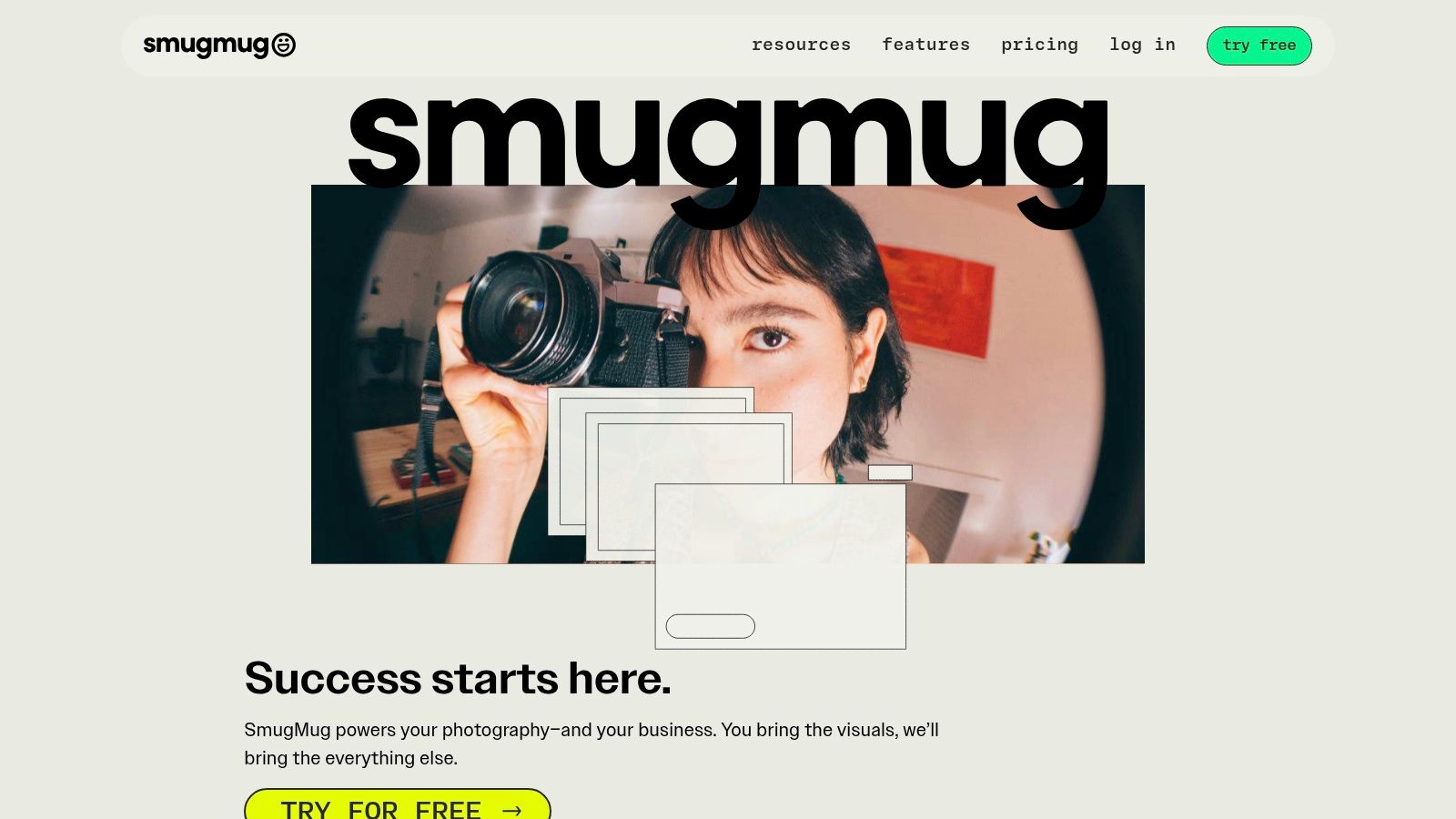
SmugMg has long established itself as a premier destination for photographers looking for more than just storage; it’s a comprehensive platform for showcasing, sharing, and selling their work. Unlike many sites similar to Flickr, SmugMug is built from the ground up with the professional photographer in mind, offering unlimited, full-resolution photo storage on all its paid plans. This focus makes it a reliable hub for building a professional portfolio and managing client galleries.
Standout Features
The platform’s key differentiator is its deeply integrated e-commerce and print fulfillment system. Photographers can set their own prices for prints and digital downloads, with orders automatically fulfilled by top-tier professional labs like Bay Photo, WHCC, and Loxley. This seamless workflow is ideal for wedding, portrait, and event photographers who want to offer clients a high-quality purchasing experience directly from their gallery.
Best Use Cases & Limitations
SmugMug excels for professionals who need robust privacy controls, client-proofing galleries, and a turnkey sales solution. Its Lightroom plugin streamlines the workflow from edit to upload. However, it's less suited for casual sharing or community interaction, which is a core strength of Flickr. The platform also takes a 15% commission from the markup on sales, a crucial factor to consider when pricing your work.
| Feature Comparison | SmugMug |
|---|---|
| Primary Focus | Professional Portfolio & Sales |
| Storage | Unlimited on paid plans |
| E-commerce | Built-in, with lab fulfillment |
| Community | Limited social/community features |
| Commission | 15% on profit markup |
For event organizers who prioritize immediate, collaborative photo distribution over print sales, other platforms may be a better fit. You can create a free Saucial event album to see how a dedicated event-focused system simplifies guest contributions and sharing.
Website: https://www.smugmug.com
2. Zenfolio
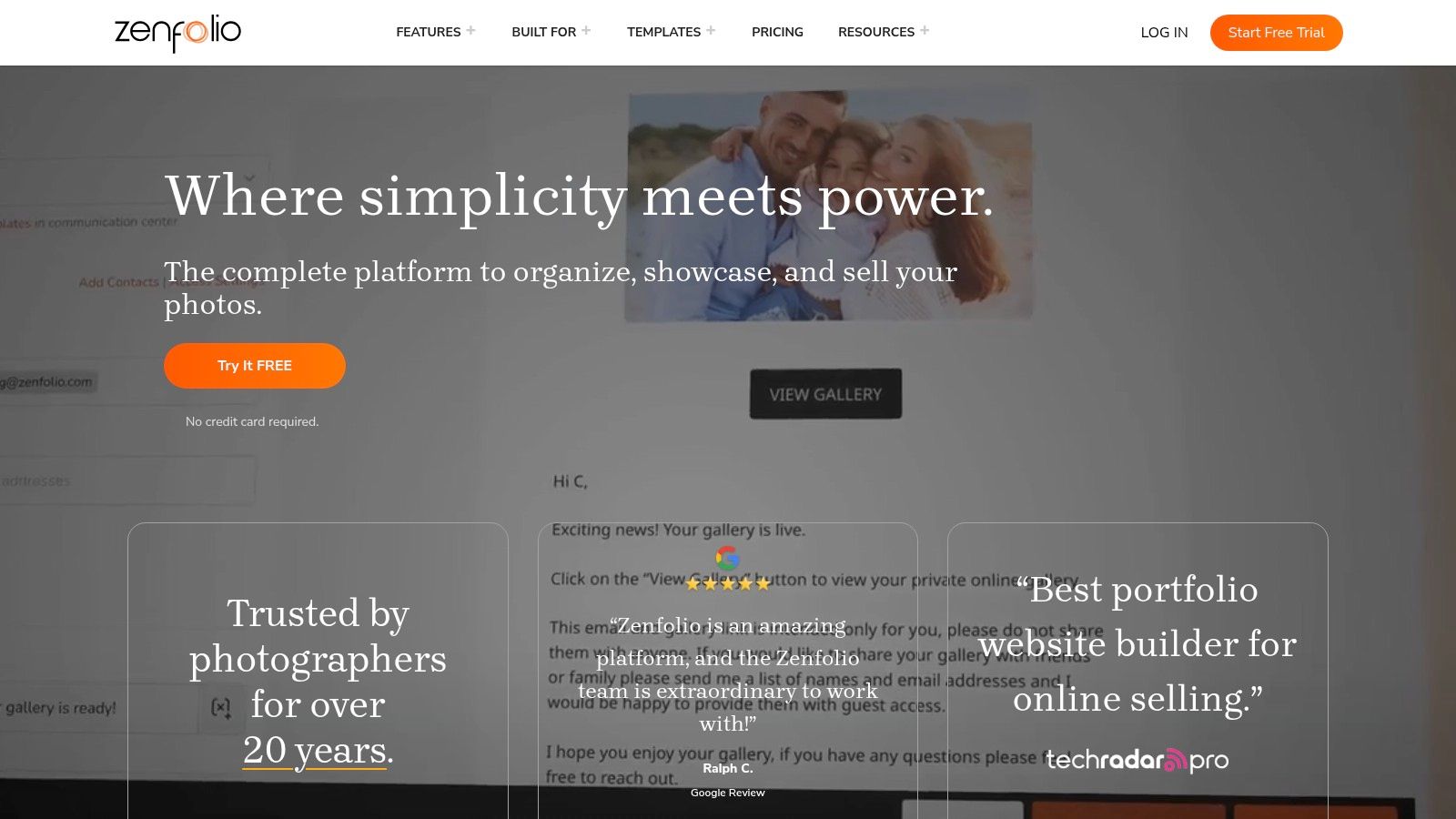
Zenfolio is a comprehensive platform designed for professional photographers who need to manage, share, and sell their work, making it a powerful business-oriented alternative to Flickr. It's particularly well-suited for event, school, and portrait photographers, offering a suite of tools that go beyond simple storage. The platform focuses heavily on client galleries, proofing, and building a professional storefront, complete with integrated business management features.
Standout Features
A key differentiator for Zenfolio is its powerful event and volume photography workflow. Features like QR code tagging for large sports or school events, pre-event registration, and automated marketing campaigns help photographers streamline sales and distribution. The platform also offers BookMe, an add-on for booking, scheduling, and invoicing, turning your portfolio into a complete business hub.
Best Use Cases & Limitations
Zenfolio excels for photographers managing high-volume events who require an end-to-end solution from client booking to print fulfillment. Its event-focused distribution and registration tools are a major advantage. However, the platform charges a 7% commerce fee on top of payment processor fees, which can impact profitability. Additionally, the storage on entry-level plans might be insufficient for photographers who shoot a lot of video.
| Feature Comparison | Zenfolio |
|---|---|
| Primary Focus | Client Galleries & Business Management |
| Storage | Tiered plans, up to 100TB add-on |
| E-commerce | Built-in, with marketing automation |
| Community | Limited social/community features |
| Commission | 7% + payment processing fees |
For event organizers who don't need a full-blown sales platform, a more direct guest contribution system might be more efficient. You can configure your event's sharing permissions and privacy by adjusting your Saucial account settings.
Website: https://www.zenfolio.com
3. PhotoShelter
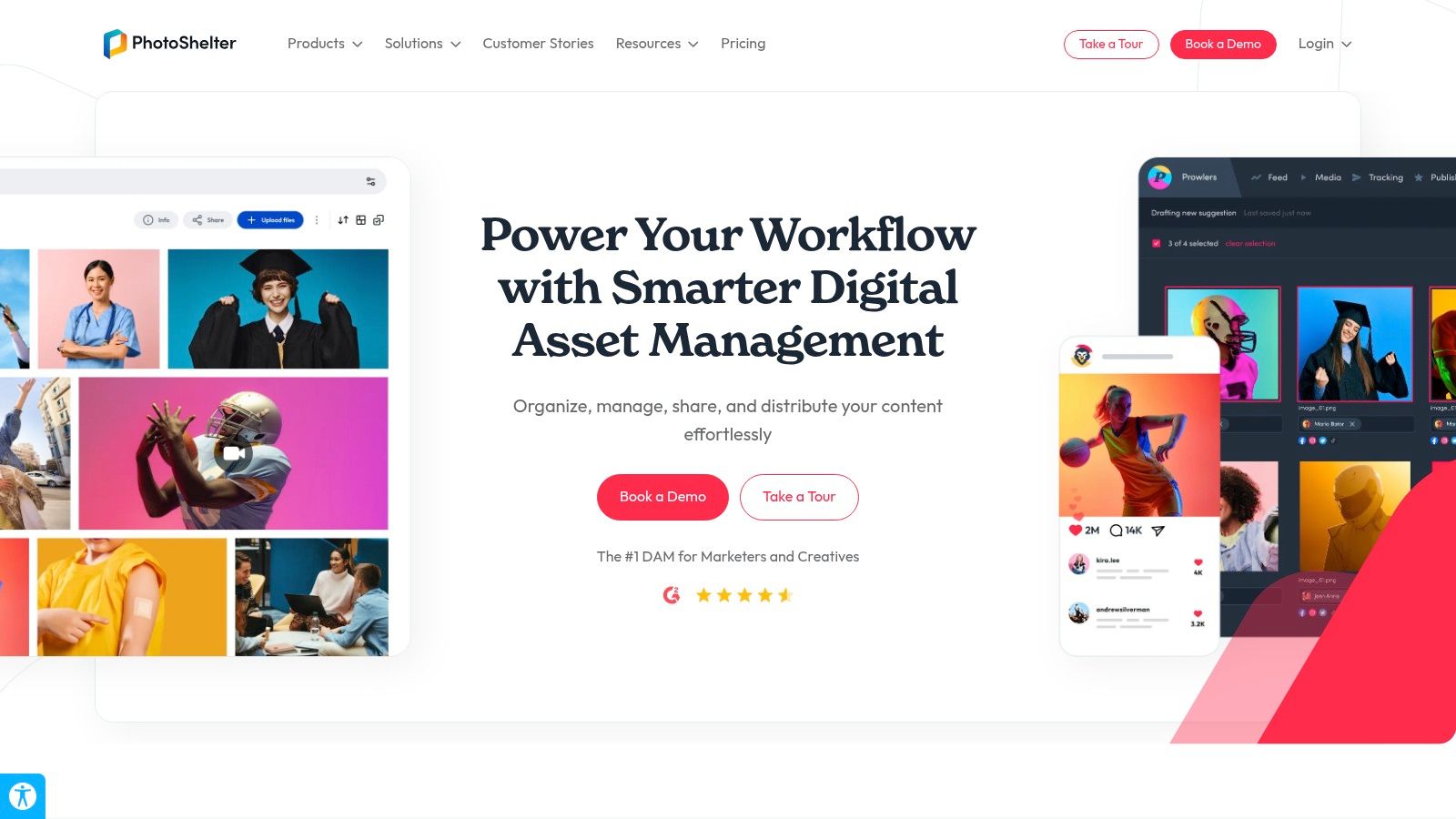
PhotoShelter positions itself as a robust business tool for serious photographers and agencies, moving beyond simple portfolio hosting. It provides a powerful digital asset management (DAM) and sales platform designed for professionals who need fine-grained control over their image licensing and distribution. This focus on commercial utility makes it one of the more business-oriented sites similar to Flickr, built for those who manage large archives and serve diverse client needs.
Standout Features
The platform’s key strength lies in its sophisticated e-commerce engine, which supports not just prints but also complex Rights-Managed (RM) and Royalty-Free (RF) licensing. Photographers can create custom pricing profiles and sell directly to clients, acting as the merchant of record through integrations with Stripe, PayPal, and Authorize.net. This gives you complete control over the transaction, from setting terms to receiving payment, a critical feature for commercial photographers.
Best Use Cases & Limitations
PhotoShelter is ideal for professional photographers, stock agencies, and organizations that require a secure, searchable archive with advanced sales capabilities. Its self-fulfillment option offers flexibility beyond integrated labs. However, its public pricing can be less transparent than competitors, and transaction fees apply on sales, which vary by plan. The platform is not designed for casual social sharing or community building, focusing squarely on the business side of photography.
| Feature Comparison | PhotoShelter |
|---|---|
| Primary Focus | Professional DAM & Licensing |
| Storage | Tiered, with add-ons available |
| E-commerce | Advanced print & license sales |
| Community | Minimal social features |
| Commission | Transaction fees apply (varies) |
For event organizers who need rapid, collaborative photo collection without the complexities of commercial licensing, other solutions are better suited. You can create a free Saucial event album to experience a platform built specifically for streamlined guest contributions and instant sharing.
Website: https://www.photoshelter.com
4. 500px
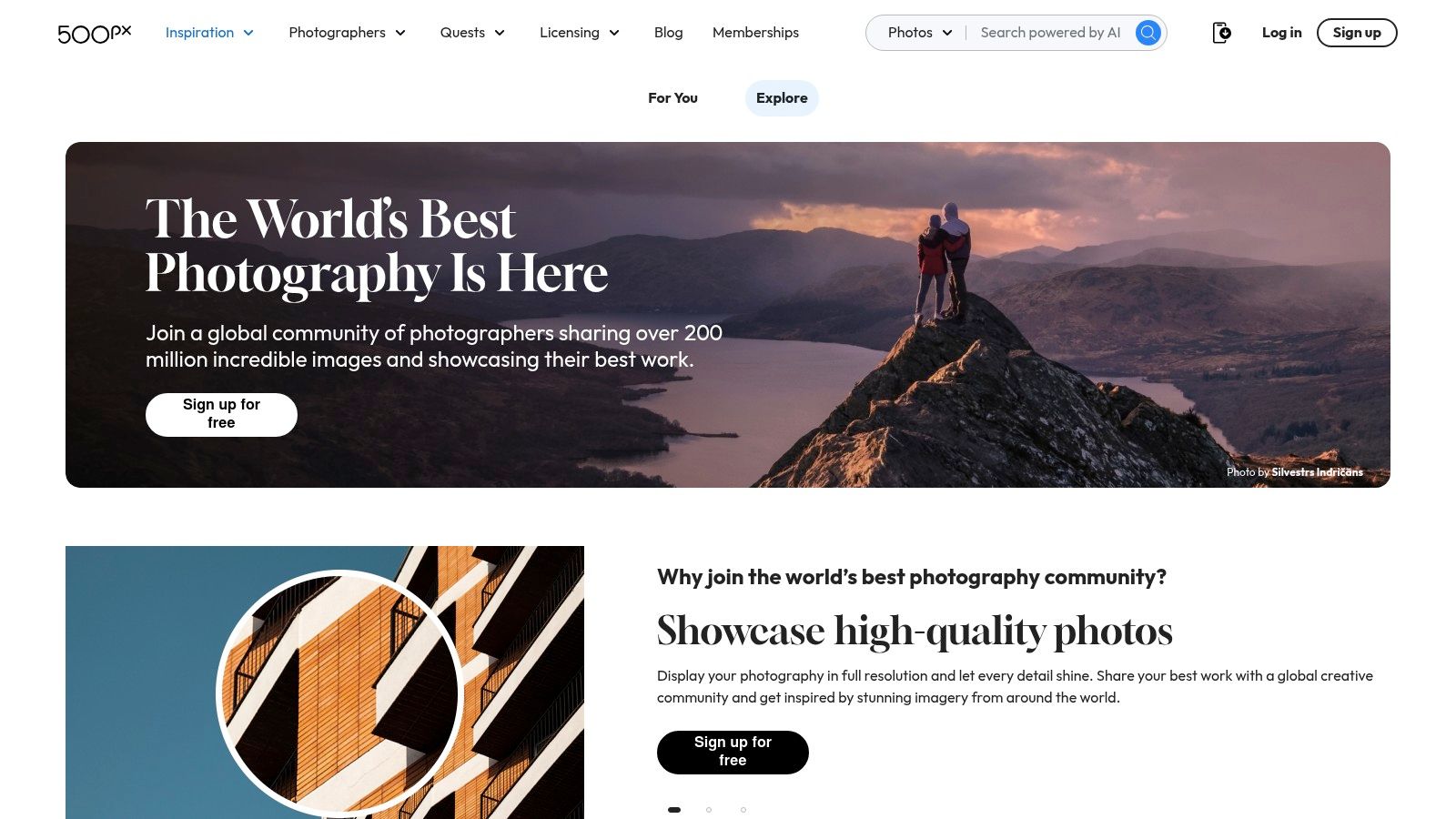
500px stands out as a community-driven platform where photographers can gain significant exposure and even monetize their work through a global distribution network. More than just a photo-sharing site, it functions as a curated gallery where high-quality images are surfaced through an algorithmic and human-curated discovery system. This makes it one of the most compelling sites similar to Flickr for photographers focused on building a reputation and getting their work seen by a large, engaged audience.
Standout Features
The platform’s key differentiator is its integrated licensing program, which distributes photos through major partners like Getty Images and Visual China Group (VCG). This provides a direct pathway to potential stock photography revenue. Photographers can submit their work for licensing and choose between exclusive or non-exclusive options, with higher royalty rates offered for exclusive content on paid plans. This system rewards quality and offers a tangible financial incentive for active participation.
Best Use Cases & Limitations
500px is ideal for photographers seeking discoverability and a potential entry into the stock photography market. The community aspect, including "Quests" (photo challenges), encourages creative growth and engagement. However, the platform is less suited for client-proofing or private gallery management. The royalty model, which flows through its distribution partners, can sometimes feel less transparent than direct sales platforms.
| Feature Comparison | 500px |
|---|---|
| Primary Focus | Community Exposure & Stock Licensing |
| Storage | Limited on free plan; unlimited on paid |
| E-commerce | Licensing distribution via Getty/VCG |
| Community | Strong, with curation & contests |
| Commission | Varies by partner and exclusivity |
For those needing a private, collaborative space for event photos rather than a public portfolio for licensing, other tools are more effective. You can create a free Saucial event album to see how a system designed for group contributions provides a better experience for private events.
Website: https://500px.com
5. Pixieset
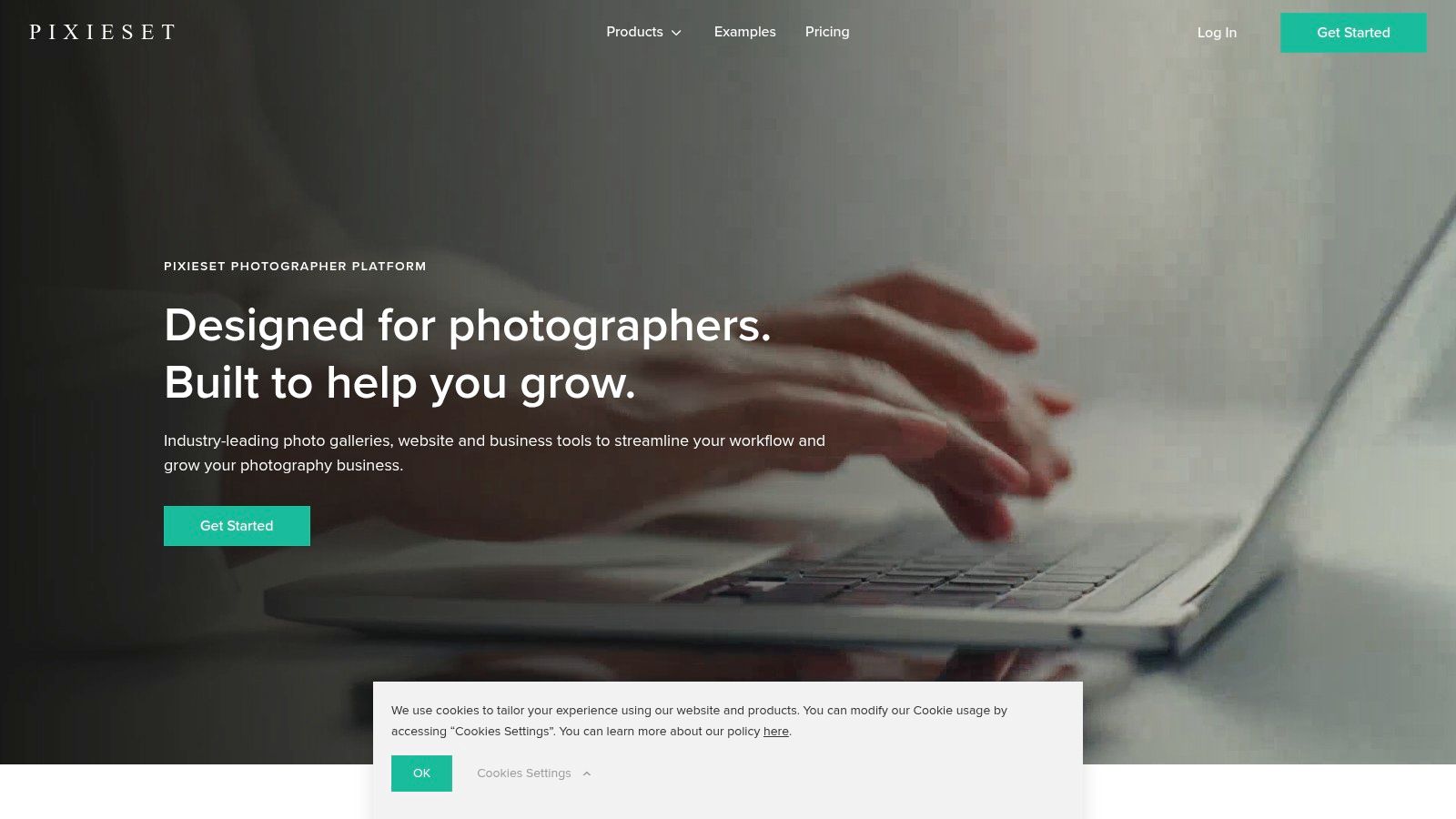
Pixieset has rapidly become a favorite for professional photographers, especially those in the wedding, portrait, and event sectors. It stands out by offering a sleek, modern interface for client galleries combined with an integrated business management suite. This all-in-one approach distinguishes it from many sites similar to Flickr, focusing less on public community and more on creating a seamless, branded experience from booking to delivery.
Standout Features
The platform’s core strength lies in its beautiful client galleries with a deeply embedded storefront. Photographers can easily set up print and digital product sales, offer coupons, and enable client proofing directly within the gallery. The optional Studio Manager upgrade transforms Pixieset into a central business hub, handling contracts, invoices, questionnaires, and scheduling, which streamlines the entire client workflow from a single dashboard.
Best Use Cases & Limitations
Pixieset is ideal for photographers who need a polished, client-facing system that combines galleries with business tools. The modern user experience is a significant advantage for impressing clients and simplifying the purchasing process. However, it's not a community-driven platform for casual photo sharing. While a free tier exists, photographers needing significant storage (up to 10TB) and the full Studio Manager features will find the higher-tier plans can become a considerable business expense.
| Feature Comparison | Pixieset |
|---|---|
| Primary Focus | Client Gallery Delivery & Business Management |
| Storage | Free tier, paid plans up to 10TB |
| E-commerce | Built-in, with lab fulfillment |
| Community | None; client-focused, not social |
| Commission | 0-15% on sales, depending on plan |
For event hosts whose main goal is aggregating guest-contributed photos in real-time without the overhead of a sales platform, other options are more direct. You can create a free Saucial event album to experience a system built specifically for collaborative event photo sharing.
Website: https://www.pixieset.com
6. ShootProof
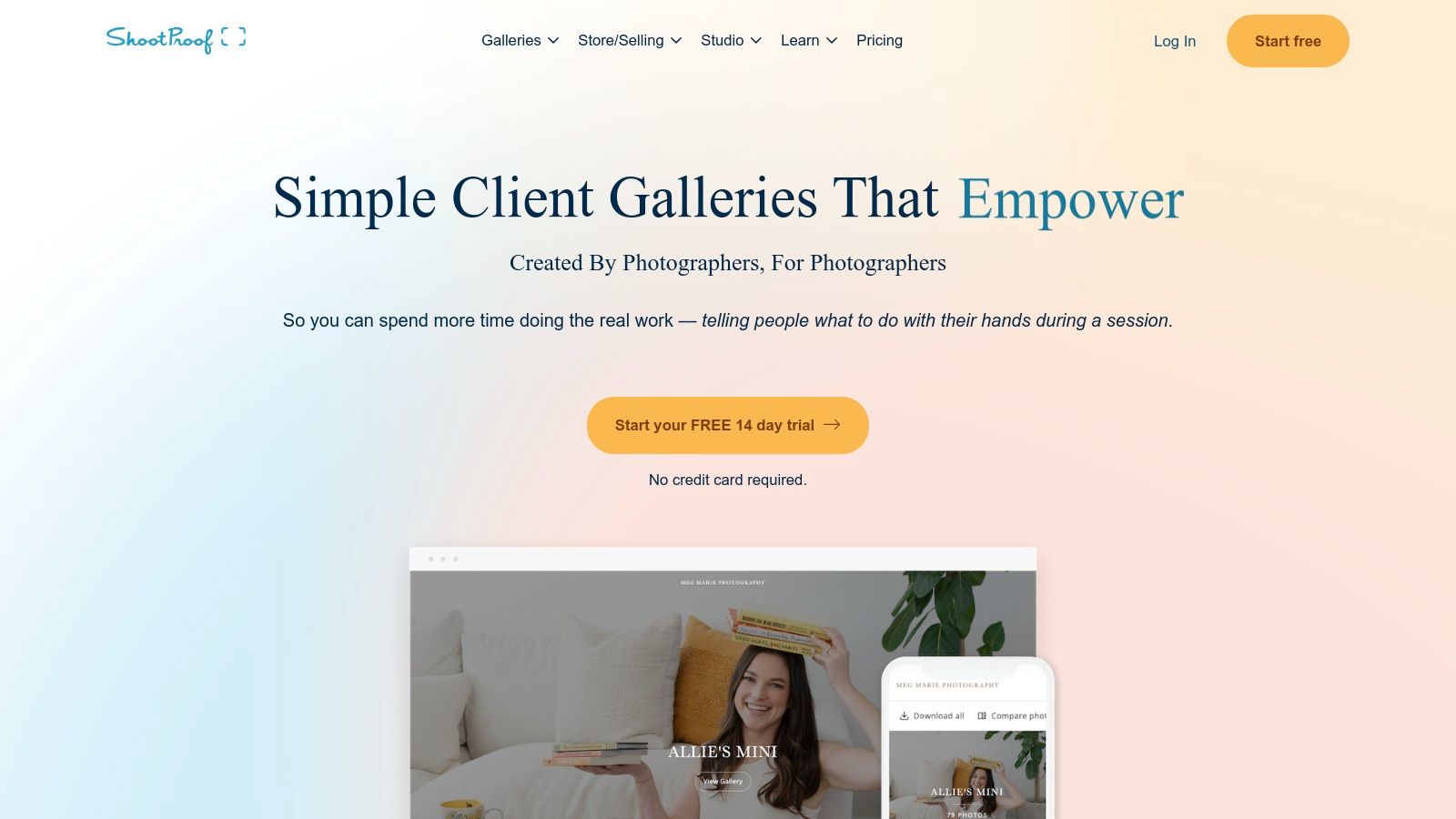
ShootProof positions itself as an all-in-one studio management and gallery platform, targeting photographers who handle a high volume of client work. More than just a photo-hosting site, it integrates essential business tools directly into the workflow. Unlike sites similar to Flickr that focus on community, ShootProof is built for the business of photography, offering predictable, tiered plans based on image counts, including a popular unlimited option perfect for busy event and wedding photographers.
Standout Features
The platform’s key advantage is its integration of business management tools. Photographers can send contracts, create invoices, and manage client payments directly within the same system they use for gallery delivery. This consolidation simplifies the administrative side of running a photography business. The e-commerce storefront is also robust, with options for self-fulfillment or automated print processing through professional labs like Miller's and Loxley, alongside digital delivery.
Best Use Cases & Limitations
ShootProof is ideal for photographers who need a single, streamlined solution for client galleries, sales, and business administration. The tiered pricing, which starts with a free 100-photo plan and scales up, provides a clear and affordable path for growth. However, its strength in business tools means it lacks the social discovery and community features that are central to Flickr's appeal. The storage limits on lower-tier plans can also be a constraint for those not yet ready for the unlimited package.
| Feature Comparison | ShootProof |
|---|---|
| Primary Focus | Client Galleries & Business Management |
| Storage | Tiered by image count (up to Unlimited) |
| E-commerce | Built-in, with lab and self-fulfillment options |
| Community | None; client-focused platform |
| Commission | 0% commission on sales |
For event organizers who need to gather photos from many guests rather than just deliver a gallery, ShootProof's one-to-many model is less suitable. In these scenarios, a platform designed for collaborative uploads is more efficient. You can create a free Saucial event album to experience a system built specifically for crowdsourced event photo collection.
Website: https://www.shootproof.com
7. Pic-Time
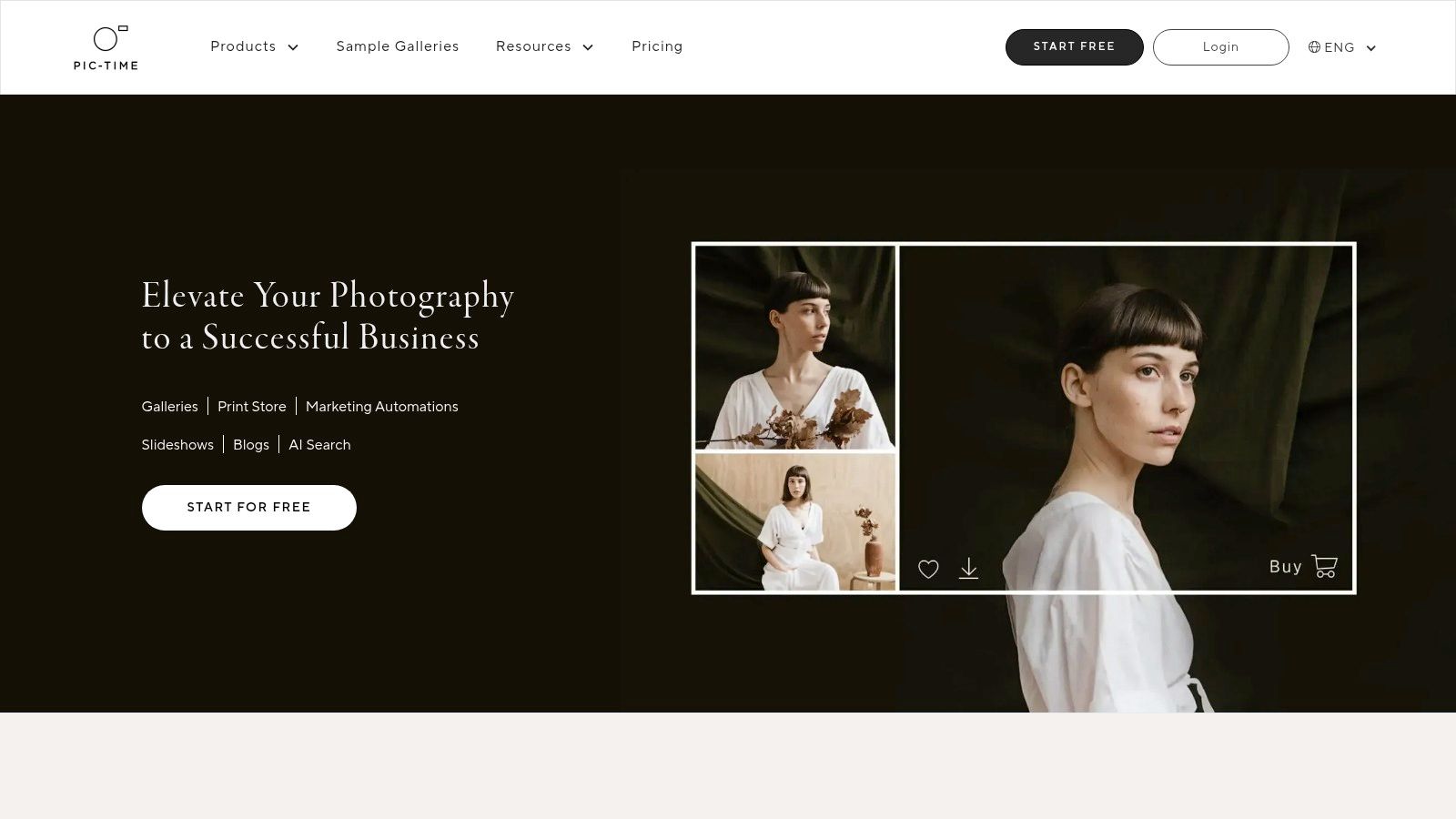
Pic-Time has carved out a niche as a sophisticated client gallery platform, favored by wedding and portrait photographers who prioritize a modern aesthetic and powerful post-event sales. It stands out among sites similar to Flickr by focusing intensely on the client experience and automating the monetization of galleries. The platform combines elegant design with a robust back-end, creating a seamless journey from photo delivery to print and album sales.
Standout Features
The platform’s key differentiator is its Sales Automation engine. Photographers can set up customized email campaigns and promotions (like early bird discounts or holiday sales) that run automatically, encouraging clients to purchase prints, albums, and other products directly from their gallery. This system is integrated with a network of over 30 professional labs worldwide, ensuring high-quality fulfillment for an international client base.
Best Use Cases & Limitations
Pic-Time excels for professionals who want to maximize their print and product revenue with minimal ongoing effort. Its built-in Art Store and AI-powered gallery search enhance the client's ability to find and purchase their favorite moments. However, the depth of its features can present a learning curve for new users, and its significant focus on sales makes it less ideal for simple, community-driven photo sharing. Also, substantial video storage requires a separate add-on purchase.
| Feature Comparison | Pic-Time |
|---|---|
| Primary Focus | Client Galleries & Automated Sales |
| Storage | Unlimited on Advanced plan |
| E-commerce | Built-in, with 30+ global labs |
| Community | Client-focused, not a public community |
| Commission | 0% on paid plans |
For event hosts more concerned with collecting and sharing photos collaboratively with guests rather than selling prints, other solutions are better aligned. You can create a free Saucial event album to see how a dedicated event platform streamlines guest contributions and live sharing.
Website: https://www.pic-time.com
8. Format
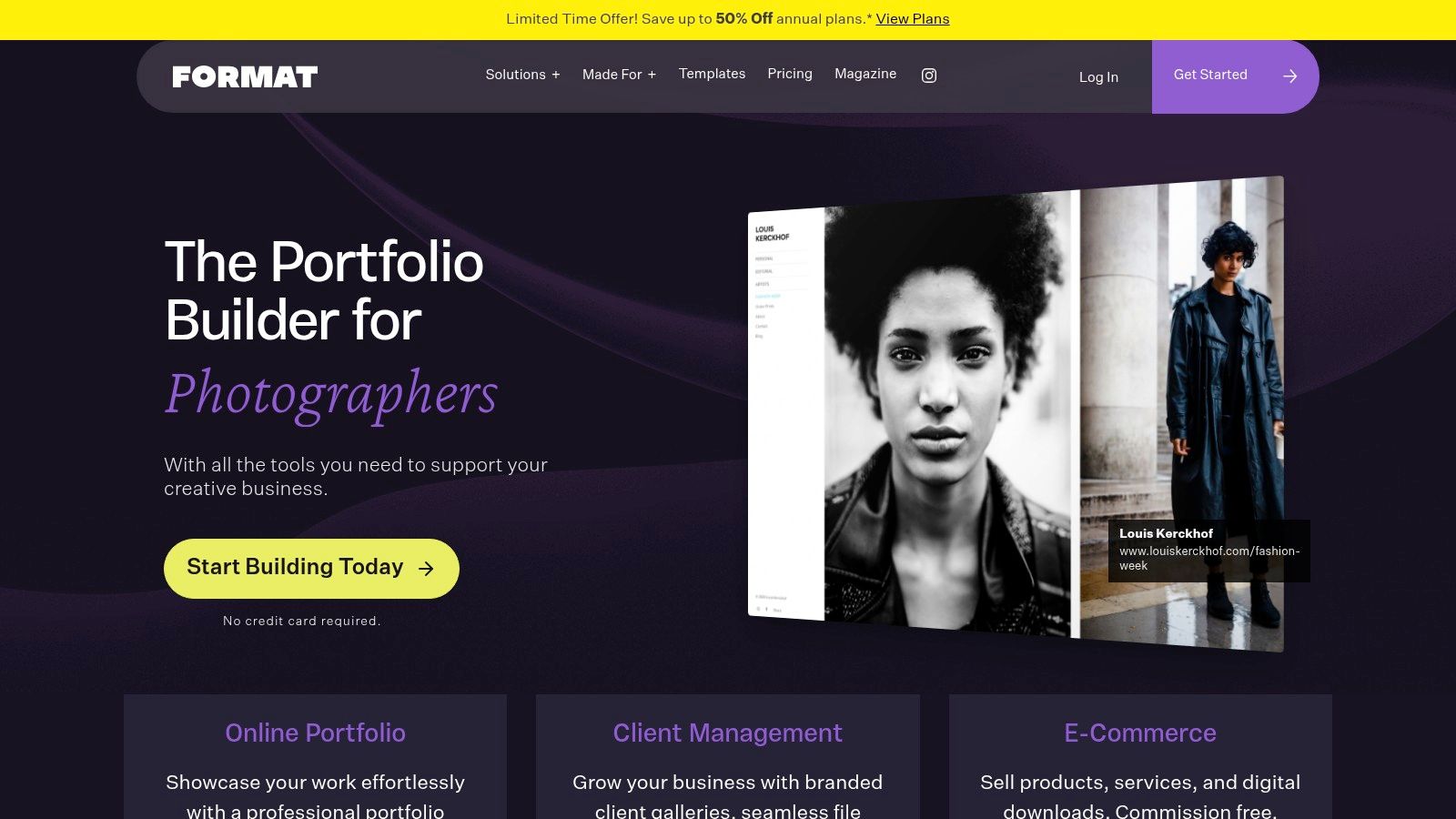
Format positions itself as an all-in-one portfolio solution for creative professionals, blending elegant website templates with powerful client gallery and e-commerce tools. It's a strong contender among sites similar to Flickr for photographers who need a branded online presence rather than just a photo-sharing community. The platform empowers users to build a polished, professional website that serves as a central hub for showcasing work, delivering client photos, and selling products.
Standout Features
Format’s key advantage is its commission-free online store. Photographers can sell digital and physical products directly from their site and keep 100% of the revenue, with only standard payment processor fees (like PayPal) applying. This provides complete control over pricing and fulfillment. The platform also offers a separate, curated Prints Marketplace, giving select photographers an additional avenue for exposure and passive income, though inclusion is not guaranteed.
Best Use Cases & Limitations
This platform is ideal for photographers seeking to build a brand and manage their entire business from one place, from portfolio to client proofing to sales. The Lightroom integration streamlines the workflow for professionals. However, its core strength is not community engagement; it lacks the social discovery features that are central to Flickr's appeal. Furthermore, the lower-tier plans come with stricter limits on the number of pages, client galleries, and hosted videos you can have.
| Feature Comparison | Format |
|---|---|
| Primary Focus | Portfolio Website & E-commerce |
| Storage | Varies by plan (not unlimited) |
| E-commerce | Commission-free store (self-fulfilled) |
| Community | Very limited; focus is on individual brand |
| Commission | 0% on your own store sales |
While Format is excellent for building a professional brand, it's not designed for the rapid, collaborative photo collection typical of live events. For event organizers needing a simple way to gather and share guest photos instantly, a specialized tool is more effective. You can create a free Saucial event album to experience a platform built specifically for that purpose.
Website: https://www.format.com
9. CloudSpot
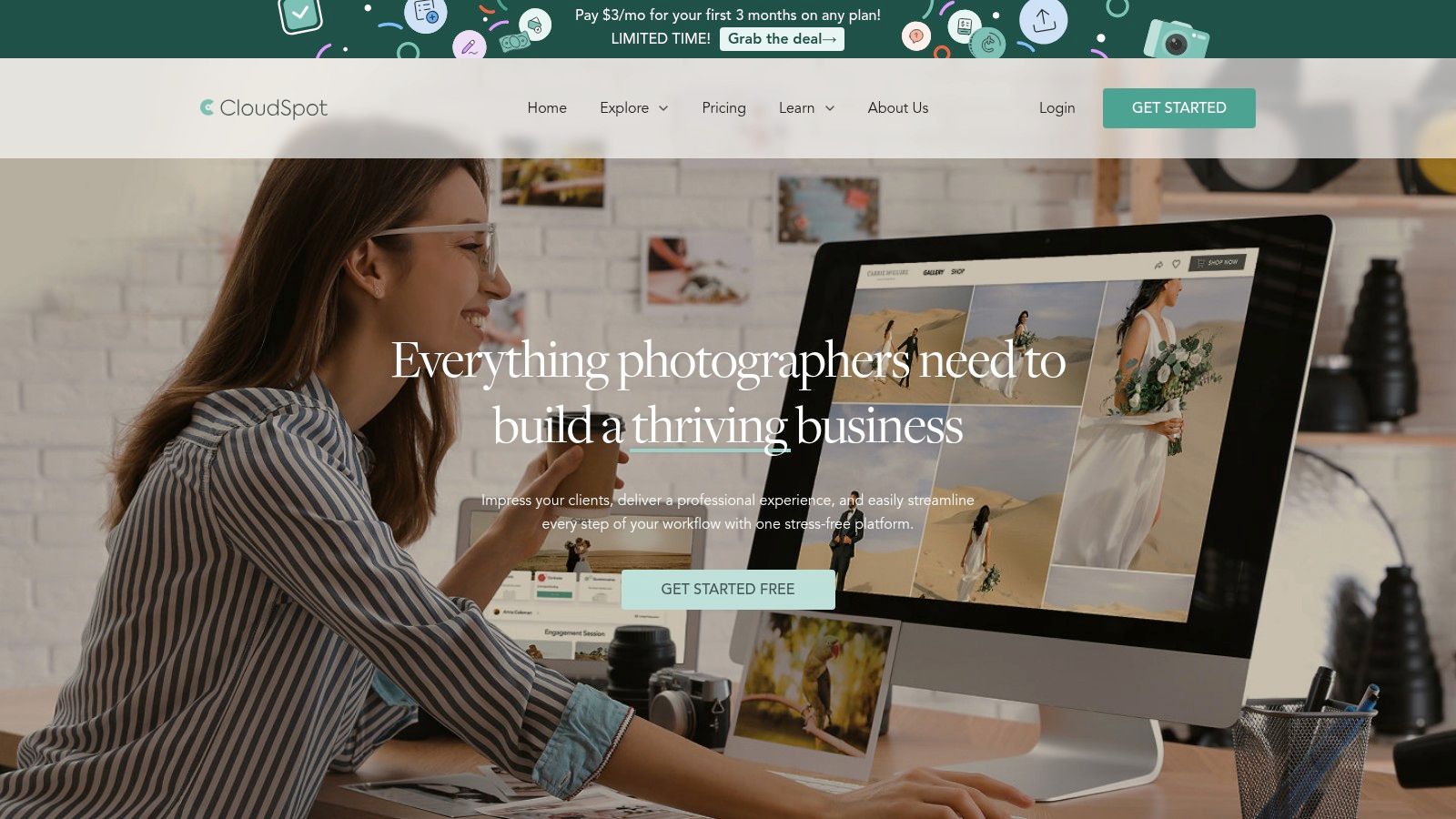
CloudSpot positions itself as an all-in-one studio management and gallery delivery platform, making it a powerful tool for professional photographers. It moves beyond simple photo hosting, integrating client galleries with a full suite of business tools. This makes it one of the more comprehensive sites similar to Flickr for those running a photography business, combining project management, client communication, and sales into a single, streamlined workflow.
Standout Features
The platform’s major differentiator is its integrated Studio Manager, which allows photographers to handle contracts, invoices, scheduling, and even lead capture forms. For its e-commerce function, CloudSpot offers innovative features like an Augmented Reality (AR) wall preview, allowing clients to visualize prints in their own space before buying. Paid plans also offer commission-free sales, a significant advantage over competitors.
Best Use Cases & Limitations
CloudSpot is ideal for photographers who need a robust, end-to-end solution for managing their entire business, from initial client contact to final print delivery. Its fast client shopping experience, complete with abandoned-cart reminders, is designed to maximize print sales. However, its community and discovery features are nonexistent, making it unsuitable for hobbyists seeking social interaction. Additionally, some business tools like integrated payment processing for invoices are limited to US-based users.
| Feature Comparison | CloudSpot |
|---|---|
| Primary Focus | Client Gallery Delivery & Studio Management |
| Storage | 5GB Free; Tiered plans up to Unlimited |
| E-commerce | Built-in, with AR previews & lab fulfillment |
| Community | None; focused on business-to-client interaction |
| Commission | 0% on paid plans; 15% on Free/Entry plans |
While CloudSpot excels at formal client delivery, it's not designed for the instant, collaborative photo gathering needed at live events. For those scenarios, you can create a free Saucial event album to crowdsource guest photos in real-time without the overhead of a full studio management system.
Website: https://www.cloudspot.io
10. Google Photos (Print Store)
While primarily known as a cloud storage solution, Google Photos has evolved into a surprisingly convenient platform for ordering physical prints, making it a viable Flickr alternative for personal use. It leverages its user-friendly interface to create a simple path from digital album to tangible product. For users already embedded in the Google ecosystem, it offers a zero-friction way to create public albums and order prints without needing a separate, specialized service.
Standout Features
The platform’s main advantage is its deep integration with major US retailers like CVS, Walgreens, and Walmart for same-day print pickup. This feature is perfect for last-minute gifts or quick projects. Users can order photo prints, canvas prints, and photo books directly from their Google Photos gallery with per-product pricing (prints start from $0.18 each in the US). A Premium Prints subscription is also available, delivering a curated set of ten high-quality prints to your door each month.
Best Use Cases & Limitations
Google Photos is ideal for consumers who want an easy, accessible way to print personal photos and share casual albums with friends and family. However, it completely lacks the professional tools found on other sites similar to Flickr. There are no client galleries, e-commerce controls, or monetization options for photographers. It’s a consumer-first platform, not a professional portfolio or sales tool.
| Feature Comparison | Google Photos (Print Store) |
|---|---|
| Primary Focus | Personal Photo Printing & Sharing |
| Storage | 15GB free, then paid plans |
| E-commerce | None for photographers |
| Community | Limited to shared albums |
| Commission | N/A (not a sales platform) |
For event professionals who need contributors to add photos easily, Google Photos' album sharing can be clunky. Exploring a system with a more streamlined bulk image uploader can significantly improve the photo collection process for collaborative events.
Website: https://photos.google.com/printing
11. 1x (1x.com)
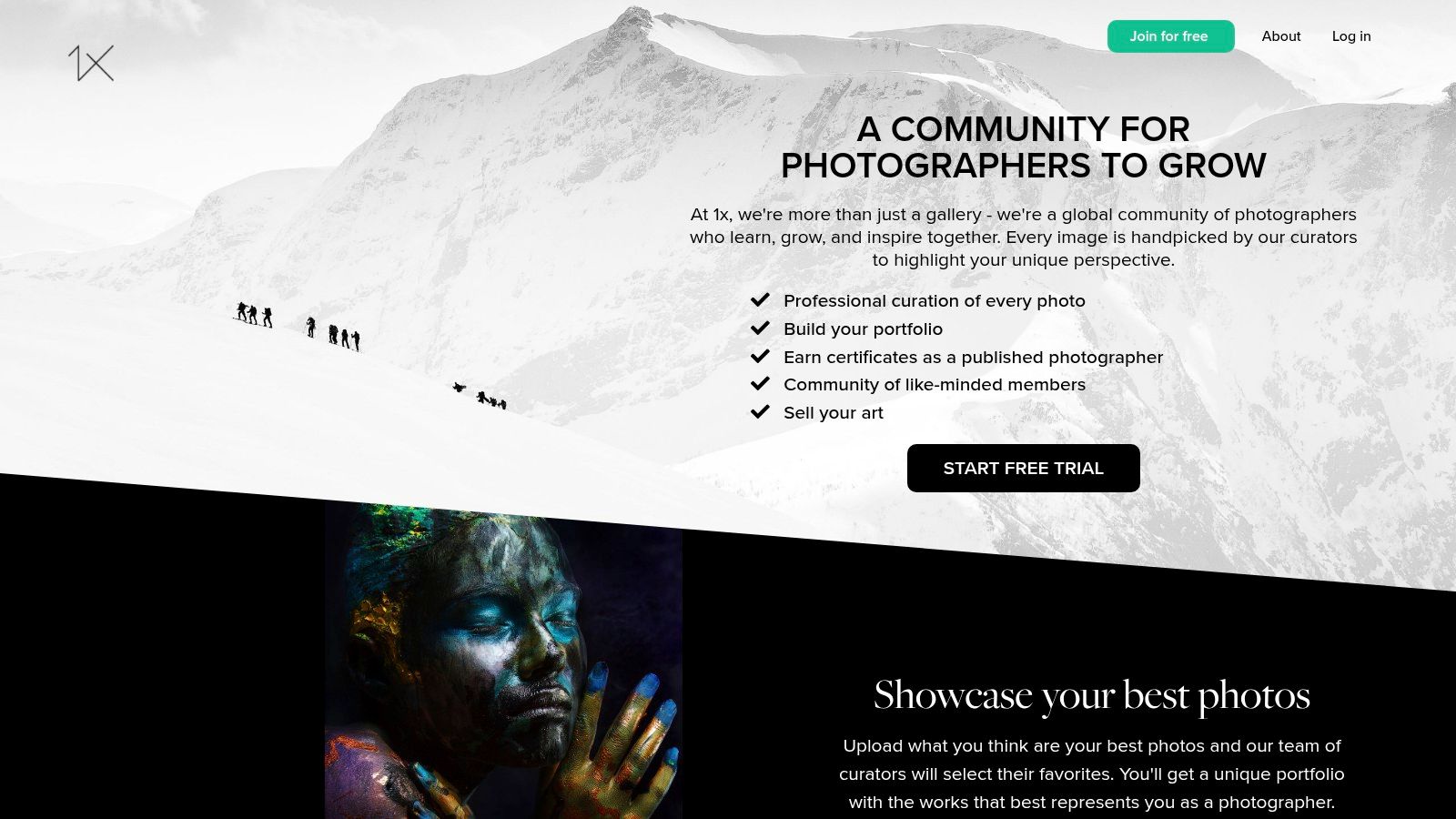
1x positions itself as an exclusive art gallery rather than a simple photo-sharing site, making it a unique alternative for photographers focused on fine art. Unlike the open-upload model of many sites similar to Flickr, every image published on 1x is hand-picked by a team of professional curators. This rigorous selection process ensures an exceptionally high standard of quality, attracting a discerning audience of art buyers and collectors.
Standout Features
The platform's defining feature is its professional curation system, which acts as a gatekeeper to maintain artistic quality. For photographers whose work is selected, 1x offers significant exposure and a built-in e-commerce engine for selling high-quality prints. They manage production and shipping through partnerships with over 120 resellers, providing a generous 50/50 royalty split with the photographer, which is a key differentiator in the market.
Best Use Cases & Limitations
1x is best suited for fine-art photographers seeking critical validation, exposure to a high-signal audience, and a passive income stream from print sales. It's a platform where quality trumps quantity. However, its curated nature makes it entirely unsuitable for bulk storage, client gallery delivery, or casual social sharing. Photographers must have a paid PRO membership to submit photos for curation, and there is no guarantee their work will be published.
| Feature Comparison | 1x (1x.com) |
|---|---|
| Primary Focus | Curated Fine-Art Gallery & Print Sales |
| Storage | Not intended for general storage |
| E-commerce | Built-in, with print fulfillment |
| Community | High-quality, critique-focused |
| Commission | 50% on print sales (50/50 split) |
This platform is not designed for event photo management where collaboration and instant sharing are key. For such needs, you can create a free Saucial event album to experience a system built specifically for real-time, collective photo distribution.
Website: https://1x.com
12. Unsplash
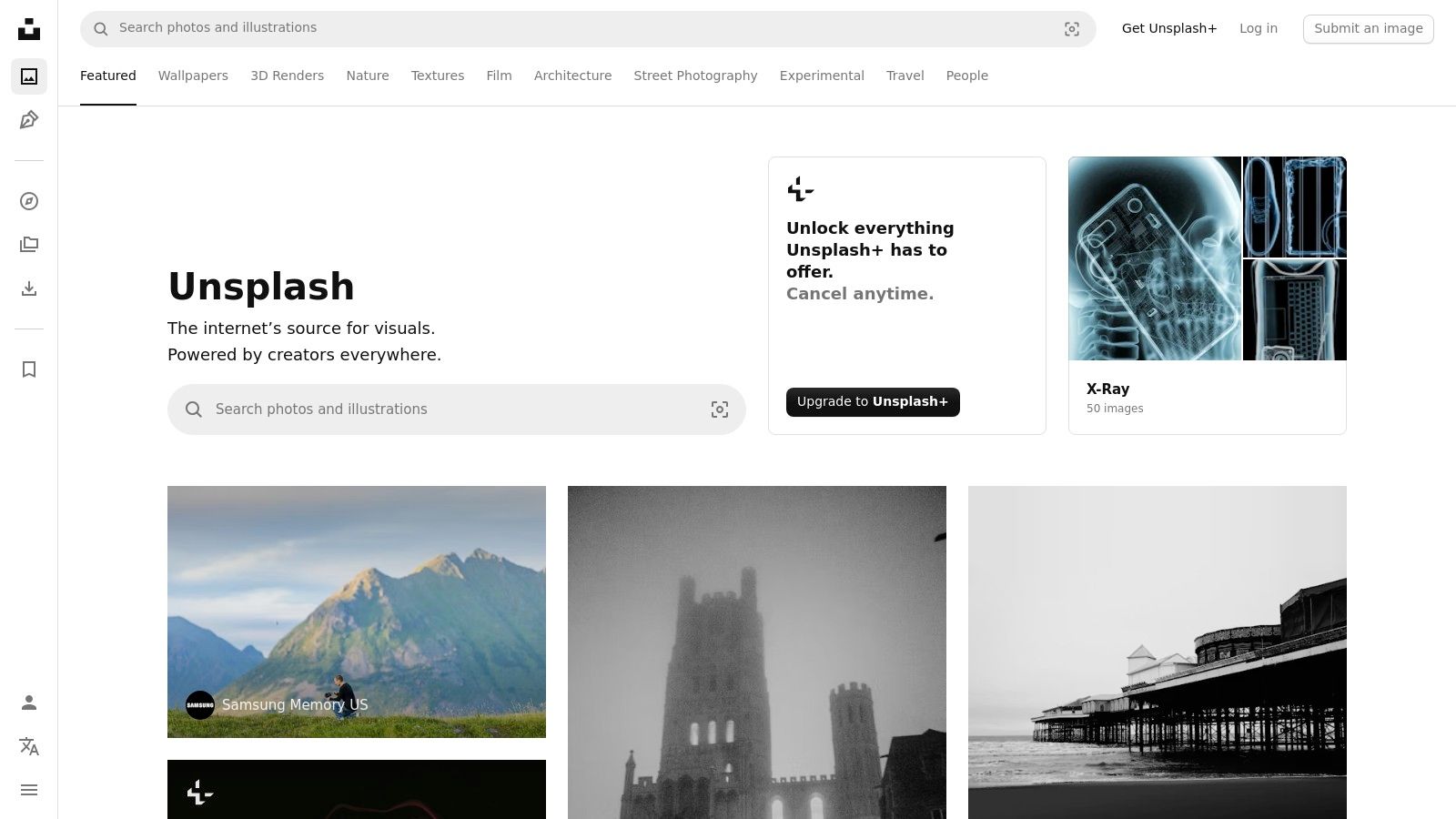
Unsplash has carved out a unique niche as a platform where generosity fuels creativity. It started as a humble Tumblr blog offering free, high-resolution photos and has grown into a massive community-driven library. Unlike traditional sites similar to Flickr that focus on personal storage, Unsplash is primarily a source for beautiful, royalty-free imagery, making it an invaluable resource for creators, marketers, and designers. Photographers contribute their work to gain massive exposure and build their brand.
Standout Features
The platform's core appeal is its vast, high-quality, and free-to-use catalog under the simple Unsplash License. The introduction of Unsplash+ adds a premium layer, offering subscribers access to a curated library with enhanced legal protections, including model and property releases. This dual model allows contributors to gain visibility through free uploads while also having opportunities to get paid for specific briefs and contributions to the premium collection.
Best Use Cases & Limitations
Unsplash is ideal for photographers seeking widespread visibility and for users who need quick access to high-quality stock photos without complex licensing. However, the free license may not suffice for all commercial needs, and photographers cede significant control over their images. The platform is not designed for private storage or client proofing.
| Feature Comparison | Unsplash |
|---|---|
| Primary Focus | Free-to-use Stock Photography & Discovery |
| Storage | Public contribution, not for private storage |
| E-commerce | None (Contributor payments for Unsplash+) |
| Community | Strong contributor community focused on sharing |
| Commission | N/A (Subscription model for Unsplash+) |
For event managers who need to collect photos from guests privately rather than distribute them publicly, a purpose-built platform is more effective. You can explore how Saucial streamlines collaborative event albums for a more controlled and interactive experience.
Website: https://unsplash.com
12 Flickr Alternatives: Feature Comparison
| Platform | Core features ✨ | UX / Quality ★ | Value & Pricing 💰 | Target audience 👥 | Unique selling point 🏆 |
|---|---|---|---|---|---|
| SmugMug | Unlimited storage, Lightroom & lab fulfillment ✨ | ★★★★ — pro delivery & privacy | 💰 Paid plans; platform retains ~15% sales markup | 👥 Pro photographers, client galleries | 🏆 Mature ecommerce + fulfillment integrations |
| Zenfolio | Event/school tools, QR workflows, commerce ✨ | ★★★★ — event-oriented UI | 💰 Subscription + 7% commerce fee | 👥 Sports/school & event photographers | 🏆 End‑to‑end booking + event distribution |
| PhotoShelter | Licensing profiles, merchant-of-record options ✨ | ★★★★ — agency/pro controls | 💰 Tiered plans; transaction fees vary | 👥 Agencies & pros needing licensing | 🏆 Robust commercial licensing tools |
| 500px | Community discovery + partner licensing ✨ | ★★★ — curated community UX | 💰 Free + paid tiers; royalties via partners | 👥 Photographers seeking exposure/stock | 🏆 Distribution to Getty/VCG for stock revenue |
| Pixieset | Client galleries, Studio Manager, coupons ✨ | ★★★★★ — polished client experience | 💰 Free tier; Studio paid tiers (can be pricier) | 👥 Wedding, portrait & event pros | 🏆 All‑in‑one gallery + CRM + storefront |
| ShootProof | Image-count tiers, storefront, business tools ✨ | ★★★★ — simple gallery→sale flow | 💰 Clear tiering incl. Unlimited option | 👥 High-volume event photographers | 🏆 Predictable, scalable pricing by image count |
| Pic‑Time | Sales automations, global labs, AI search ✨ | ★★★★ — powerful sales features (complex) | 💰 Free→Advanced; video storage add‑ons | 👥 Wedding & event pros focused on monetization | 🏆 Strong automation + global fulfillment |
| Format | Portfolio sites, client galleries, commission-free store ✨ | ★★★★ — professional templates | 💰 Subscription; commission-free store (PayPal fees) | 👥 Photographers wanting branded sites | 🏆 Branded portfolio + commission‑free commerce |
| CloudSpot | Client galleries, AR previews, Studio Manager ✨ | ★★★★★ — fast shopping & studio tools | 💰 Free/Entry 15% commission; paid plans commission‑free | 👥 Working photographers & studios | 🏆 AR previews + comprehensive studio suite |
| Google Photos (Print Store) | Consumer albums + prints & same‑day pickup ✨ | ★★★ — zero‑friction consumer sharing | 💰 Low per-item pricing (prints from $0.18 US) | 👥 Consumers & casual event attendees | 🏆 Fast retailer pickup + mass sharing ease |
| 1x (1x.com) | Curated portfolio & print reseller network ✨ | ★★★★ — high‑signal curation | 💰 PRO membership; 50/50 print royalties | 👥 Fine‑art photographers seeking curation | 🏆 Selective, quality‑focused audience & resellers |
| Unsplash | Massive free catalog + Unsplash+ premium ✨ | ★★★ — huge reach; open licensing | 💰 Free model; Unsplash+ for premium protections | 👥 Creatives needing free assets & exposure | 🏆 Unmatched reach & rapid asset access |
Making the Final Choice: Aligning Your Platform With Your Workflow
Navigating the landscape of sites similar to Flickr reveals a fundamental truth: the "best" platform is not a one-size-fits-all solution. Your final decision should be less about replicating a past experience and more about strategically aligning a tool with your specific, future-facing goals. We've explored a dozen powerful alternatives, each excelling in a distinct area, from professional portfolio management to community-driven art curation.
The journey from hobbyist to professional photographer often involves a shift in priorities. While Flickr fostered a vibrant community for sharing and discovery, modern professionals require a more robust, business-oriented toolkit. This is where platforms like SmugMug, Zenfolio, and Pixieset shine, offering integrated solutions for client proofing, print sales, and secure gallery delivery. They are the digital storefronts that empower photographers to monetize their craft effectively.
From Portfolio to Process: A Strategic Framework
Before committing to a new digital home for your images, it's crucial to map out your core needs. A structured evaluation will prevent you from investing time and resources into a platform that ultimately hinders your workflow.
Here is a simple framework to guide your decision:
- For the Business-Focused Professional: If your primary activities involve client work, such as weddings, portraits, or commercial shoots, prioritize platforms with end-to-end business tools. Your key features are client galleries, print labs, invoicing, and contract management. Look closely at Pixieset, ShootProof, and CloudSpot for their comprehensive, client-centric feature sets.
- For the Artist Seeking Community and Curation: If your goal is to gain exposure, receive peer feedback, and be part of a high-caliber artistic community, your choice will be different. Platforms like 500px and 1x offer curated spaces where quality is paramount. These are not business tools; they are stages for your best work.
- For the All-in-One Portfolio Builder: If you need a beautiful, customizable website to serve as your central marketing hub, portfolio builders are the answer. Format and PhotoShelter provide sophisticated website creation tools alongside gallery and sales features, giving you a polished, professional online presence.
The Event Photography Blind Spot
A critical consideration often overlooked in this comparison is the unique challenge of high-volume event photography. For conferences, festivals, weddings, and corporate galas, the traditional gallery model breaks down. Forcing hundreds of attendees to manually sift through thousands of photos to find their own creates friction, diminishes engagement, and leaves a massive marketing opportunity on the table.
This is the specific problem that traditional sites similar to Flickr were never designed to solve. They offer a one-to-many distribution model (one gallery link for everyone), which is inefficient for large crowds. The modern expectation is personalization and immediacy. Guests want their photos, and they want them now. When your objective is to maximize attendee engagement, amplify social sharing, and create new revenue streams through direct-to-guest print sales, a specialized tool is required. This is where the workflow diverges completely from a simple portfolio or client gallery. The focus shifts from showcasing your work to delivering a personalized experience at scale.
Ultimately, choosing your next platform is an investment in your workflow's efficiency and your brand's future. By clearly defining your primary use case, whether it's selling fine art prints, delivering a wedding gallery, or delighting thousands of event attendees, you can confidently select the tool that will not just store your photos, but actively help you achieve your goals.
If your work involves events and you’re looking to solve the photo distribution headache once and for all, traditional galleries fall short. Saucial offers a revolutionary 'Find My Photos' experience using selfie-matching AI, delighting guests and creating powerful engagement opportunities. Discover how you can transform your event photo delivery by visiting Saucial today.


