How to Share Event Photos Effectively for Organizers and Photographers
Sharing event photos used to be a real chore. You'd dump everything into a massive online folder, send out a link, and just hope attendees could be bothered to sift through hundreds of pictures to find themselves. Frankly, that whole approach is dead.
Today, it’s all about creating an experience. Guests expect to find their photos instantly with a quick selfie, and this shift is turning what was once a post-event headache into a massive branding and marketing win.
The Old Way of Sharing Photos is Broken
Let’s be real for a moment. Sending your attendees to a messy Google Drive link or a generic, unbranded gallery is a terrible user experience. We live in an age of instant gratification, and these old methods just create friction, weaken your brand, and leave a bad taste in the mouths of the very people you’re trying to impress.
This isn't just a minor annoyance; it’s a huge missed opportunity. When someone has to endlessly scroll to find a picture of themselves, that initial excitement plummets. What happens next? They give up. That perfect, shareable moment you paid a photographer to capture? Gone forever.
Why Traditional Sharing Fails Everyone
For event organizers, the fallout is obvious. A clunky photo-sharing process sours the post-event experience, undoing all the goodwill you worked so hard to build. It also means you’re missing out on a mountain of authentic, user-generated content that could have kept your event buzzing online for weeks.
And for photographers? It's an administrative nightmare. So much time is wasted sorting, manually tagging, and fielding endless emails asking, "Can you help me find my photo?" Worse, it's a dead end for your business. Once you hand over that drive of photos, you lose all connection to the attendees and any chance to sell prints, premium downloads, or other services.
"Event photography isn’t one client anymore—it’s 1,000 micro-clients. Guests want their photos instantly, personally, and without friction. Delivery is now the experience."
This isn't just a trend; the numbers back it up. The global photo sharing market jumped from $5.38 billion to $5.67 billion just recently. It's on track to hit $7.66 billion by 2029, all because people are demanding smarter, faster ways to get their hands on great content.
To really see the difference, let's compare the old and new ways side-by-side.
Traditional Vs Modern Event Photo Sharing
| Feature | Traditional Method (e.g., Google Drive) | Modern Platform (e.g., Saucial) |
|---|---|---|
| Photo Discovery | Manual scrolling through hundreds/thousands of photos. | Instant "find my photos" with a selfie. |
| Attendee Experience | Frustrating, time-consuming, high abandonment rate. | Fast, personal, and exciting. |
| Branding | Non-existent or generic. Dilutes event brand. | Custom-branded galleries and photo overlays. |
| Sharing Incentive | Low. Friction discourages sharing. | High. Easy access encourages instant social sharing. |
| Organizer Effort | Requires manual sorting and fielding attendee requests. | Automated. The platform handles delivery. |
| Photographer Opportunity | None. The connection to guests is lost. | Direct sales channel for prints, downloads, and tips. |
| Engagement Data | No tracking. Can't measure reach or impact. | Detailed analytics on views, shares, and top influencers. |
The contrast is stark. One method creates work and frustration, while the other creates value and delight.
It's Time for an Instant Experience
The fix is to stop thinking about photo delivery as simple storage and start treating it like a smart distribution system. Modern platforms completely overhaul the workflow by using AI to power an instant "find my photos" experience.
Here’s why it’s a total game-changer:
- Instant Gratification: Guests snap a selfie and immediately get a personal gallery with just their photos. No more searching.
- Branding on Autopilot: Every single photo shared on social media carries your event’s branding, turning attendees into genuine brand ambassadors.
- Effortless Engagement: The easier you make it for people to find their photos, the more they’ll share them. This dramatically boosts your post-event buzz and organic reach.
This is more than just a neat feature; it's a fundamental shift in strategy. By using tools like a QR code photo gallery with selfie-matching, you transform a logistical chore into a memorable, high-impact interaction. You can see how platforms like Saucial are building these seamless experiences for organizers and photographers. This approach makes your visual assets work for you long after the event is over, reinforcing your brand and creating new value.
Laying the Groundwork: Your Event Photography & Distribution Plan
A great photo-sharing experience doesn't just happen by accident—it's engineered. The best strategies are put in place long before the first photo is even taken, weaving photography directly into your event's marketing and communication goals. Honestly, this prep work is what separates a smooth, engaging experience from a post-event logistical nightmare.
The first step is getting your photographer on board with a distribution-first mindset. This goes way beyond a standard shot list. It's about thinking critically about what kinds of images will actually get shared. While posed group shots have their place, the real gold is in the candid moments that tell a story.
Crafting a Share-Worthy Shot List
Work with your photographer to build a shot list that’s designed for instant sharing. You're hunting for photos that capture the energy and emotion of the moment, the kind that attendees can't wait to post.
- Candid Interactions: Forget the stiff, posed pictures. Photos of guests laughing, networking, and genuinely enjoying themselves are far more authentic and shareable.
- Speaker and Panel Moments: Get dynamic shots of speakers in action, engaging with the crowd. These are pure gold for both the attendees and the speakers themselves.
- Sponsor Visibility: Be intentional. Frame shots to subtly (or not-so-subtly) include sponsor logos and branding in the background. This delivers real, tangible value to your partners when those images hit social media.
- Branded Environments: Snap photos of people interacting with your event signage, photo booths, or unique venue features. These shots anchor the memory to your event.
This simple shift in planning turns photo sharing from a passive archive into an active engagement tool.
This flowchart shows just how far we've come—from the frustrating, old-school methods of sharing photos to the modern, AI-powered approach that actually wows attendees.
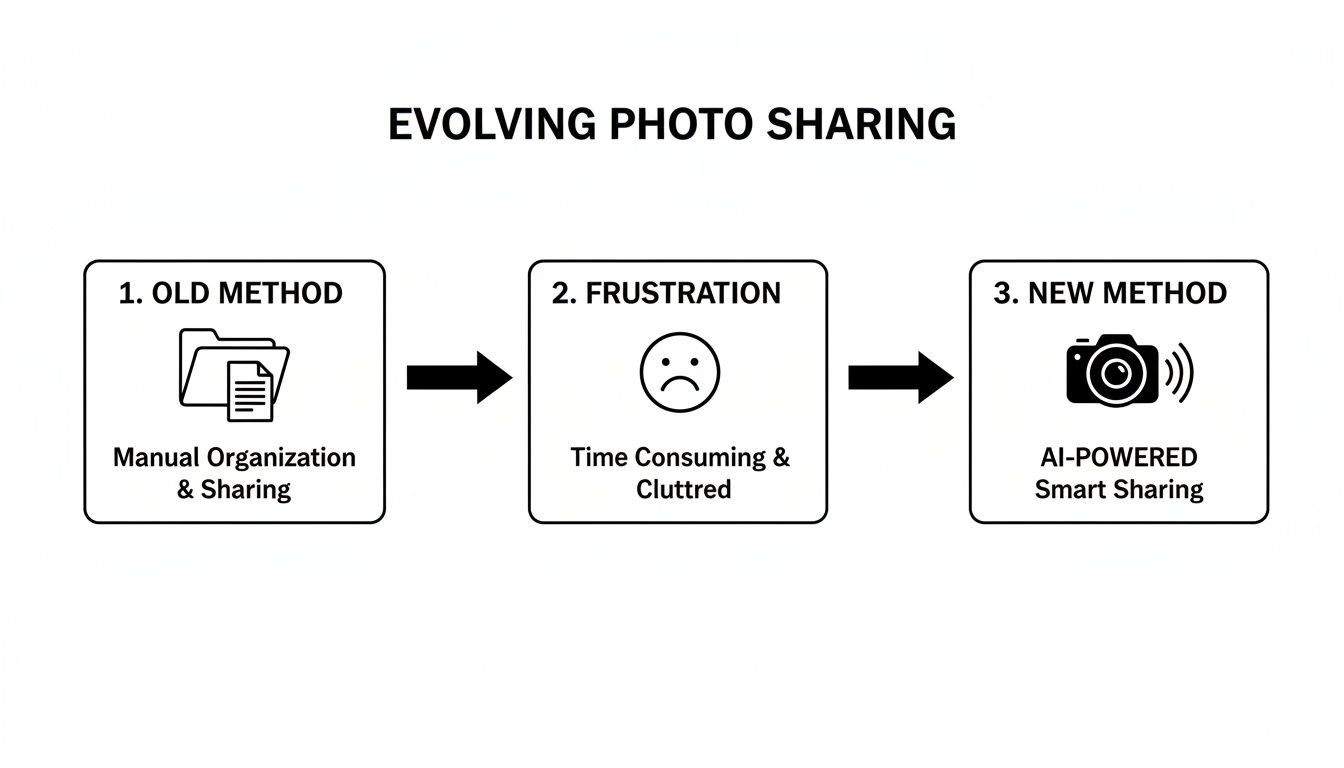
The biggest takeaway here is how much friction is removed for your guests. That directly translates into more social sharing and more buzz for your brand.
Setting Up Your Tech Backbone
With a solid creative plan, it’s time to get the technology ready. Setting everything up beforehand means a flawless execution on event day, so your team can focus on the attendees instead of scrambling to fix tech issues.
First, create and brand your online gallery. A modern platform will let you customize it with your event logo, colors, and even a custom URL. This consistent branding makes the gallery itself a marketing asset, reinforcing your event's identity every time someone views their photos.
Next, lock in your privacy and permission settings. You need to decide: will the gallery be public, password-protected, or only accessible via a direct link? You can also set up rules for photo approval, giving you the final say on what goes live. This control is critical for maintaining brand standards and protecting guest privacy. If you want to see how easy the backend setup is, you can check out the simple steps to upload photos to an event gallery.
Preparing Your On-Site Sharing Tools
Finally, get your on-site assets ready to go. This means creating a simple, memorable share link and its corresponding QR code. A QR code photo gallery is hands-down one of the most effective ways to get people into the gallery right then and there.
Pro Tip: Don't just make one QR code. I always create multiple versions in different sizes and formats (like PNG and SVG). That way, they're ready for anything, from a giant projection on a screen to a tiny printout on a table tent.
When you prepare all these elements in advance, you can hit the ground running. Your photographer knows what to shoot, your gallery is branded and secure, and your sharing tools are ready for action. This is the foundation for turning your event photos into a powerful engine for engagement.
You've done the planning, you've prepped your team, and now it's showtime. This is where the magic happens, turning your photo strategy into a tangible, exciting experience for every single person at your event.
A truly great on-site experience doesn’t just offer one way to get photos; it surrounds attendees with easy, obvious opportunities. The goal is to make finding their pictures feel like a natural part of the event, not a chore they have to figure out later.
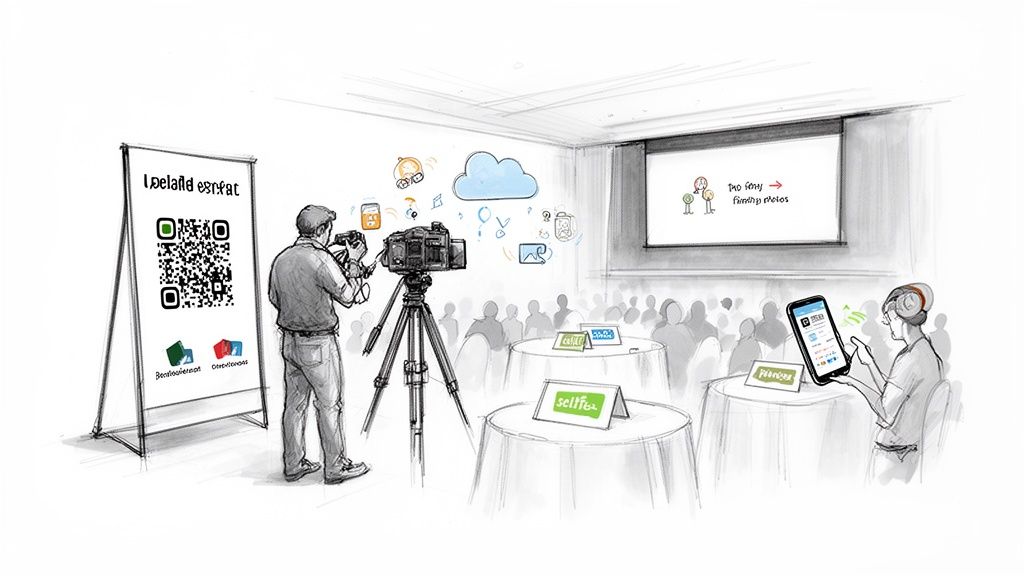
Your best friend here is the QR code that links directly to your photo gallery. But just having one isn't enough—where you put it is everything. You have to think like a guest. Where do they walk? Where do they hang out?
Get Your QR Codes in All the Right Places
To get people to actually scan the code, you need to put it right where their eyes will land anyway. Don't make them hunt for it.
- Go Big on Screens: During breaks or between sessions, splash the QR code across your main projection screens. This is a powerful move that captures a huge, captive audience all at once.
- Think Small on Tables: Put branded table tents with the QR code on every table in the lunch area, at the bars, and in any networking lounges. It’s a personal, can't-miss touchpoint.
- Blend into Signage: Weave the QR code into your welcome banners, the signs at the registration desk, and even the directional posters guiding people around the venue.
- Live in Their Pockets: Make sure the QR code and a direct link are embedded in your event app and printed in the official program. People will naturally check these throughout the day.
By setting up these multiple access points, you make it almost impossible for an attendee to miss out, no matter where they are or what their schedule looks like.
The best time to share event photos is while the event is still happening. When someone finds an amazing picture of themselves while they're still buzzing from the experience, that emotional high makes them incredibly likely to post it on the spot.
This is what modern photo sharing is all about—closing the gap between the moment a photo is taken and the moment it's shared. The workflow is surprisingly simple but incredibly effective. Your photographer snaps away, and between shoots, they upload batches of photos to your platform from a laptop or tablet. The AI gets to work in the background, tagging faces.
From there, any attendee can walk up to a QR code, scan it, and snap a quick selfie. Seconds later, they’re looking at a personalized gallery of every photo they're in. This completely cuts out the post-event wait and transforms photo delivery into an interactive part of the day. You can see just how straightforward it is for guests to get secure access by exploring the user-friendly authentication process for event galleries.
Telling Your Attendees How It Works
Even the most brilliant system will fall flat if nobody knows about it. You can't just expect people to figure it out. You have to tell them, and then tell them again.
A solid communication plan hits attendees from multiple angles:
- From the Stage: Get your MC or event host to make a few high-energy announcements. Something as simple as, "Hey everyone, find any QR code around the venue, take a selfie, and get your professional photos instantly!" works like a charm.
- Direct to Their Phone: Time a push notification through your event app for a key moment, like the start of lunch. "Photos from this morning's keynote are live! Scan any QR code to find yours now." This little nudge creates a sense of excitement.
- Empower Your Team: Make sure your event staff and volunteers know exactly how the photo system works. They're your frontline, and they'll inevitably get questions. A well-informed team member can turn a confused guest into a happy one.
On-Site Photo Sharing Checklist
To make sure nothing slips through the cracks on event day, use a simple checklist. It helps keep everyone on the same page and ensures the attendee experience is as smooth as possible.
| Task | Status (To-Do / In Progress / Complete) | Notes |
|---|---|---|
| Finalize QR Code Design | To-Do | Ensure it includes event branding and a clear call-to-action (e.g., "Scan for Your Photos!"). |
| Print All Signage | In Progress | Includes table tents, posters, and banners. Double-check print quality. |
| Integrate in Event App | Complete | Link and QR code are live on the app's home screen and in the "Photos" section. |
| Brief MC on Announcements | To-Do | Provide a short, simple script. Schedule announcements for 11 AM, 1 PM, and 3 PM. |
| Schedule App Push Notification | To-Do | Message drafted: "Find your photos now! Scan any QR code and take a selfie to see your gallery." |
| Train On-Site Staff | In Progress | Hold a 15-minute briefing before doors open. Provide a one-sheet with FAQs. |
| Test Scans on All Signage | To-Do | A designated person should walk the venue and test QR codes on different phone types. |
This checklist isn't just about ticking boxes; it's your blueprint for a flawless execution that makes attendees feel valued.
This blend of visual reminders (QR codes), verbal cues (MC), and digital nudges (app notifications) creates a foolproof system. The best part? The backend is so simple that your team can focus on running a great event, not wrestling with a complicated photo platform. The result is a seamless experience that feels like magic to your guests but is completely under your control.
Keep the Buzz Going Long After the Event Ends
Don't make the mistake of thinking the event is over once the last guest leaves. In reality, that’s just the beginning of its digital life. This is your chance to take that amazing gallery of photos and turn it into an engine for engagement that runs for weeks, or even months, keeping the conversation alive.
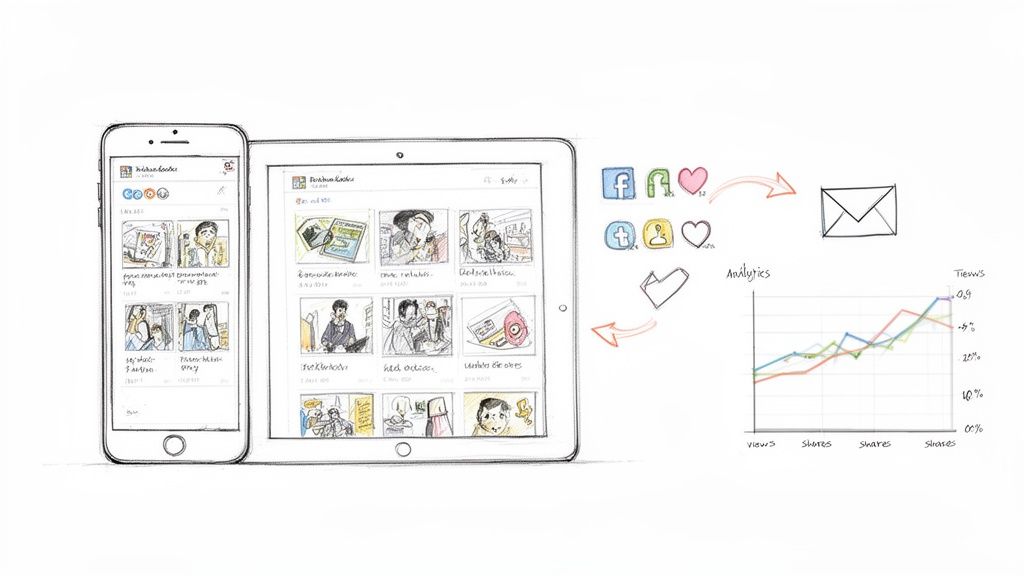
Your branded photo gallery should be the star of your follow-up communications. Forget the generic "thanks for coming" email that everyone expects (and ignores). Instead, send a message that gives them something they actually want. A subject line like, "Your photos from [Event Name] are ready!" is so much more compelling because it’s a direct payoff for attending.
This first email is your golden ticket to drive people back to your branded space. When they click through and find their own pictures in seconds with a quick selfie, they're far more likely to download and share them, spreading the word about your event organically.
Let Your Attendees Do the Talking
The real magic happens when you make it easy for attendees to share event photos on their own social media. Every single photo they post becomes a piece of user-generated content (UGC), which is pure marketing gold. It's a genuine endorsement from a real person, and that carries way more weight than anything you could post from your corporate account.
To make this happen, you have to remove all friction. A good photo-sharing platform will have social sharing buttons built right into the gallery. This eliminates the tedious steps of downloading, finding the photo, and then uploading to social media. It becomes a one-tap process to get their favorite shot onto Instagram or LinkedIn.
The most powerful post-event content isn’t what you create; it’s what your attendees share. Their genuine excitement and personal stories create a ripple effect, showcasing the success of your event to a much wider audience.
Why not build a simple social media campaign around the photos? You could run a contest for the "best photo" shared with your event hashtag or feature a daily "attendee spotlight" on your own channels. This does more than just encourage sharing; it fosters a real sense of community.
Weave Photos into Your Recap Content
Your photo gallery is also a treasure trove for creating compelling recap content. Don't just send out a dry, text-based summary of the event. Bring it to life with vibrant images of people connecting, learning, and having a great time.
Here are a few practical ways I’ve seen this work brilliantly:
- Impactful Newsletters: Embed a collage of the best photos right into your follow-up newsletter. Make sure you have a big, clear call-to-action button that says something like, "See All Your Photos Here," linking straight to the full gallery.
- Engaging Blog Posts: Write a blog post recapping key takeaways or memorable moments. Use the photos to illustrate your points and break up the text. It makes the content far more readable and visually interesting.
- Curated Social Media Albums: Create dedicated albums on platforms like Facebook or LinkedIn. Take the time to tag speakers, sponsors, and attendees (if appropriate), which sends them a notification and encourages them to share it with their own followers.
This approach makes sure the visual assets you invested in are working hard for you, driving traffic and reinforcing your key messages long after the lights go out.
Measuring What Really Matters
Finally, your photo gallery is one of the best tools you have for measuring the true return on investment (ROI) of your event. A modern platform gives you access to analytics that go way beyond a simple headcount. You can track metrics that show the event's lasting impact.
I always recommend focusing on these key data points:
- Total Gallery Views: How many times was the gallery accessed in total?
- Unique Visitors: How many individual people came to see the photos?
- Photo Downloads & Shares: Which pictures were the most popular? How many times were they actually shared out?
- Top Influencers: Who were your power-sharers? Identifying the attendees who drove the most views can be incredibly valuable.
This kind of concrete data is invaluable. It’s what you bring to sponsors and stakeholders to prove the event's success, showing them not just who showed up, but how deeply they engaged with the experience afterward. These insights are also critical for refining your strategy, helping you make sure your next event is even better.
Unlocking New Revenue for Event Photographers
For too long, the business model for many event photographers has felt capped. You charge a flat fee, shoot the event, hand over a folder of images, and that’s the end of the road. But what if photo delivery wasn't just a final step, but the beginning of a powerful, direct-to-attendee sales channel?
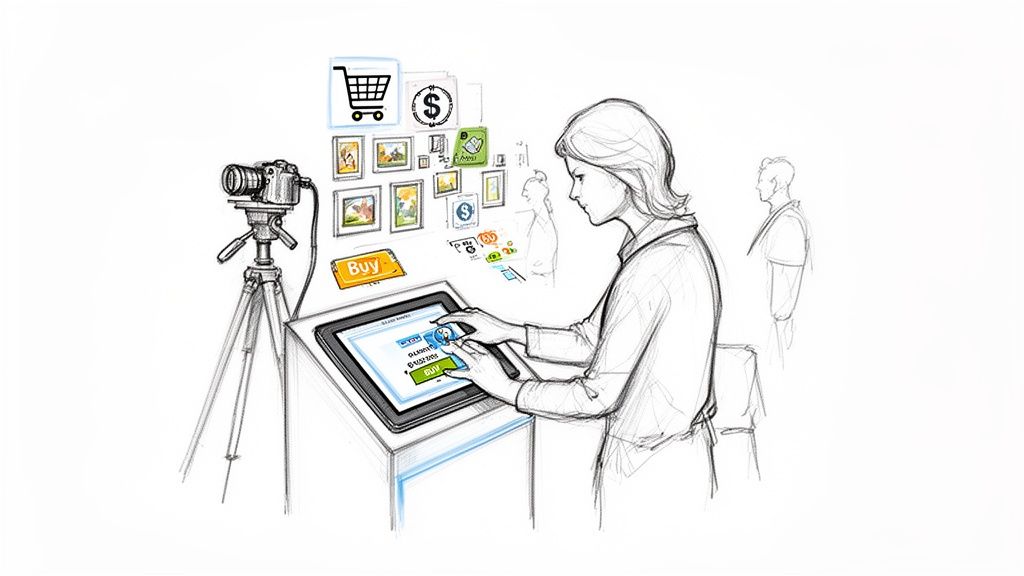
Modern sharing platforms completely flip the script. By automating how you share event photos and giving guests an instant 'find my photos' experience, you forge a direct connection with every single person you photograph. Suddenly, you have a whole new world of monetization opportunities that just aren't possible when you're just sending a Dropbox link to one client.
This isn't some niche idea, either. The market is exploding. The global Event Photography and Videography Service market is on track to nearly double, jumping from US$2.952 billion to an estimated US$5.632 billion by 2032. This surge is fueled by attendees who now expect—and demand—instant, easy access to their professional pictures. You can dive deeper into the market data, but the takeaway is clear: photographers who adapt will thrive.
From Service Provider to Direct Seller
The real change here is a mental one: you're no longer just a hired gun for an organizer. You're a direct-to-consumer business with hundreds, sometimes thousands, of potential customers at every event.
Think about it. When an attendee finds that perfect action shot of themselves at a marathon or a candid laugh at a gala, the emotional connection is instant. That’s the magic moment to offer them something tangible.
A modern, integrated gallery can put this whole sales process on autopilot.
- Sell Digital Downloads: Offer high-resolution, watermark-free downloads for a small fee. This is almost pure profit with zero fulfillment cost.
- Offer Professional Prints: Connect your gallery with a print-on-demand service. Guests can order framed prints, canvases, or photo books with a few clicks, and you never have to see or touch the inventory.
- Upsell Premium Edits: Let attendees purchase advanced retouching or creative edits on their favorite shots as a simple add-on.
This model transforms every person in front of your lens into a potential customer, creating a revenue stream that grows right alongside the event.
By automating the discovery and delivery process, photographers can finally focus their energy on the two things that actually grow their business: building direct relationships with the people in their photos and capturing more incredible images.
Imagine a weekend soccer tournament. A parent finds a killer shot of their kid scoring the winning goal. Instead of having to track you down or sift through a thousand photos, they can buy a framed print right from the gallery on their phone before they even leave the field. That immediacy is what drives sales.
Structuring Your Monetization Strategy
You don't need to roll out a massive product catalog overnight. The key is to match your offerings to the event type and its audience. A tiered approach usually works best, giving attendees great options while maximizing your income.
Here’s how you could structure your sales for different types of events:
| Event Type | Free Offering | Standard Upsell | Premium Upsell |
|---|---|---|---|
| Corporate Gala | Free, low-res branded downloads for social sharing | High-resolution digital downloads for $15 | Professional prints or a custom photo book |
| Sports Event | Watermarked previews available in the gallery | Single high-res digital downloads for $25 | A discounted "Action Pack" of all their photos for $75 |
| Music Festival | Free access to a curated "Best Of" gallery | Individual downloads of their photos for $10 | An all-access digital pass to download any photo they appear in |
This flexible pricing strategy ensures you're providing value upfront while creating clear paths for people to buy products they actually want.
And the best part? The 'find my photos' technology does all the heavy lifting. By using selfie photo matching to instantly create personal galleries, you eliminate the friction that kills impulse buys. You’re no longer just a photographer—you’re a retailer with a captive, emotionally invested audience at every single event.
Answering Your Top Photo Sharing Questions
Switching up how you share event photos can feel like a big move, and it's totally normal to have questions.## Answering Your Top Photo Sharing Questions
Switching up how you share event photos can feel like a big move, and it's totally normal to have questions. I hear the same ones come up all the time from organizers and photographers who are curious about the tech, worried about security, and wondering how to get people to actually use it. Let's tackle those head-on so you can feel confident about making the jump.
These concerns usually surface during the planning phase. People want to know how the selfie magic happens, how much control they really have over the images, and the best ways to get attendees excited about it. Let's break it down.
How Selfie Photo Matching Works and Is It Secure
So, how does a simple selfie find all your photos? It’s pretty clever, actually. The system uses AI-powered facial recognition to map the unique features of an attendee's face from the selfie they upload. It then zips through the entire event gallery, comparing that map to every face in every photo to pull up all the matches.
Of course, the first question on everyone's mind is security. And it should be. Any platform worth its salt is built with privacy at its core. When an attendee uploads their selfie, it’s used only for that specific search. It’s not stored, sold, or added to some creepy database. Think of it as a secure, one-time key that unlocks their photos and is then immediately discarded.
The core principle is simple: the attendee's selfie is a temporary key, not a permanent record. It unlocks their personal gallery for that session and is then discarded, ensuring their data remains their own.
Being transparent about this is key to building trust. When people know their data is being handled responsibly, they're far more likely to jump in and use the feature.
Can I Control Which Photos Are Visible to Attendees
Absolutely. In fact, you should have complete and total control. A professional event photo platform puts you, the organizer or photographer, in the driver's seat. You’re not just dumping photos into a black box and hoping for the best; you're curating an experience.
This means having the power to review and approve every single photo before it ever goes live for attendees. I can't stress how important this is. This curation step is essential for a few big reasons:
- Brand Alignment: You get to pull out any shots that are blurry, have weird expressions, or just don't fit the vibe of your event.
- Privacy Protection: It’s your chance to screen for any potentially sensitive or inappropriate content before anyone sees it.
- Sponsor Visibility: You can make sure to feature photos that show off your sponsors' logos and activations, giving them the exposure they paid for.
This oversight ensures the final gallery is a polished, professional reflection of your event. If you want to dig into the specifics, you can learn more about configuring your event's privacy and sharing settings.
What Is the Best Way to Promote the Gallery at My Event
Getting attendees to actually use the gallery comes down to a simple, consistent promotional push. Your goal is to make finding their photos an unmissable and effortless part of the day. One sign in a corner just won’t cut it.
You need to hit them with reminders at different touchpoints, both in the venue and digitally.
Proven Promotional Tactics:
- Use High-Traffic Screens: Throw the QR code up on the big screens during session breaks, as people are walking in, and during lunch. You’ve got a captive audience—use it.
- Place on Tables: Branded table tents in dining areas or networking lounges are gold. The QR code is right there when people are chilling out and already on their phones.
- Announce from the Stage: Have your MC or host give a few high-energy shout-outs during the day. A quick, "Want your photos? Just scan this code and take a selfie!" works wonders.
- Integrate with Your App: Put the QR code and a direct link right in your event app. Even better, send a push notification at a peak time to get people scanning immediately.
By mixing visual cues with verbal reminders and a digital nudge, you make it feel like a natural and fun part of the experience. This is how you get a huge adoption rate and make sure your photography investment really pays off with amazing attendee engagement.
Ready to create a seamless “find my photos” experience for your next event? With Saucial, you can ditch the messy folders and give attendees instant access to their moments with a simple selfie. Start sharing photos smarter today!


