A Guide to Using a Face Recognition Photo Organizer
A face-recognition photo organizer is a game-changer for events. It takes a massive, jumbled gallery of photos and instantly creates a personal collection for every single guest. Instead of making people scroll for hours, it lets them use a simple selfie to find every picture they're in. It’s that easy.
Why Your Old Photo Gallery Is Broken
We’ve all been there. You attend a fantastic conference or a beautiful wedding, and a week later, you get a link to a cloud folder with a thousand photos. The excitement quickly fades as you start the tedious task of scrolling through a sea of faces, hoping to catch a glimpse of yourself.
This old way of sharing photos is fundamentally broken. It’s frustrating for guests and a nightmare for photographers who get bombarded with "Can you find my picture?" requests. So many great shots end up buried, never to be seen or shared. The value of professional event photography completely tanks when the photos are impossible to find.
The Modern Solution: A Personal Photo Concierge
Now, imagine this instead. A guest at your event pulls out their phone, scans a QR code, and snaps a quick selfie. Seconds later, a personalized gallery appears with every single photo they’re in. That’s what a modern face-recognition photo organizer does. It’s like giving every attendee their own personal photo concierge.
This technology completely flips the script on the post-event experience. It’s all about instant gratification and personalization. No more manual tagging or endless searching. For your guests, the magic of seeing their photos appear almost instantly is a seriously impressive final touch to a great event.
By automating the soul-crushing task of sorting and tagging, a face-recognition photo organizer cuts down photo delivery admin time by over 70%. On top of that, attendees are 3x more likely to share photos when they don't have to work to find them.
This isn't just about saving a bit of time; it creates real, measurable value for everyone.
- For Event Hosts: Engagement skyrockets after the event. Guests eagerly share their personal galleries, giving your brand or event a huge boost on social media.
- For Photographers: This massively simplifies your delivery workflow. It also opens up a direct path to sell more prints and downloads to the people actually in the photos. You can learn more about how to share event photos with attendees using a platform like Saucial.
- For Guests: It’s just… better. Finding their photos becomes a moment of excitement and discovery, not a frustrating chore.
Let's look at a quick comparison to see just how different the two approaches are.
Comparing Traditional Photo Sharing with an AI Organizer
Here’s a quick look at how manual photo sharing stacks up against a modern, AI-powered approach.
| Feature | Traditional Method (Google Drive, Dropbox) | Face Recognition Organizer |
|---|---|---|
| Finding Photos | Manual scrolling through hundreds/thousands of images. | Instantaneous; guests find photos with a selfie. |
| Guest Experience | Frustrating and time-consuming. Low engagement. | Fast, personal, and exciting. High engagement. |
| Admin Time | Hours spent uploading, organizing, and responding to requests. | Minimal; upload once and the AI does the rest. |
| Social Sharing | Low. Most guests give up before finding their photos. | High. Easy access encourages immediate sharing. |
| Monetization | Difficult. No direct link between a photo and the person in it. | Seamless. Guests can buy their own photos directly. |
The difference is pretty clear. While cloud storage has its place, it was never built to handle the unique demands of event photography. An AI-powered system is designed from the ground up to solve this specific problem, making life easier for everyone and adding a ton of value to the event experience.
How Selfie Photo Matching Actually Works
Ever wondered how you can take one selfie and instantly find every single photo you’re in from a huge event gallery? It’s not magic, but it feels like it. The whole process is actually quite simple, transforming a mountain of unsorted images into a personal, easy-to-browse collection. A face recognition photo organizer does the heavy lifting with some clever, privacy-first tech.
It all starts when the photographer or event host uploads their entire photo dump to the platform. We’re talking hundreds, sometimes thousands, of shots from a conference, wedding, or festival. Once those images are up, the AI gets to work.
The Anonymized Digital Fingerprint
Here’s where things get interesting. The system scans every single photo, but not in the way a person would. It’s not looking for people it "knows" or saving actual pictures of faces to a database. Instead, it identifies each face and translates its unique features into a biometric template—basically a long, anonymous string of numbers.
Think of it like a unique fingerprint for a face, but it's a mathematical formula, not a visual print. This is a critical point for privacy. The system never stores an actual image of someone’s face; it only keeps these numerical maps.
This step turns what was once an overwhelming mess of photos into a neatly organized and searchable database, all powered by a quick facial scan.
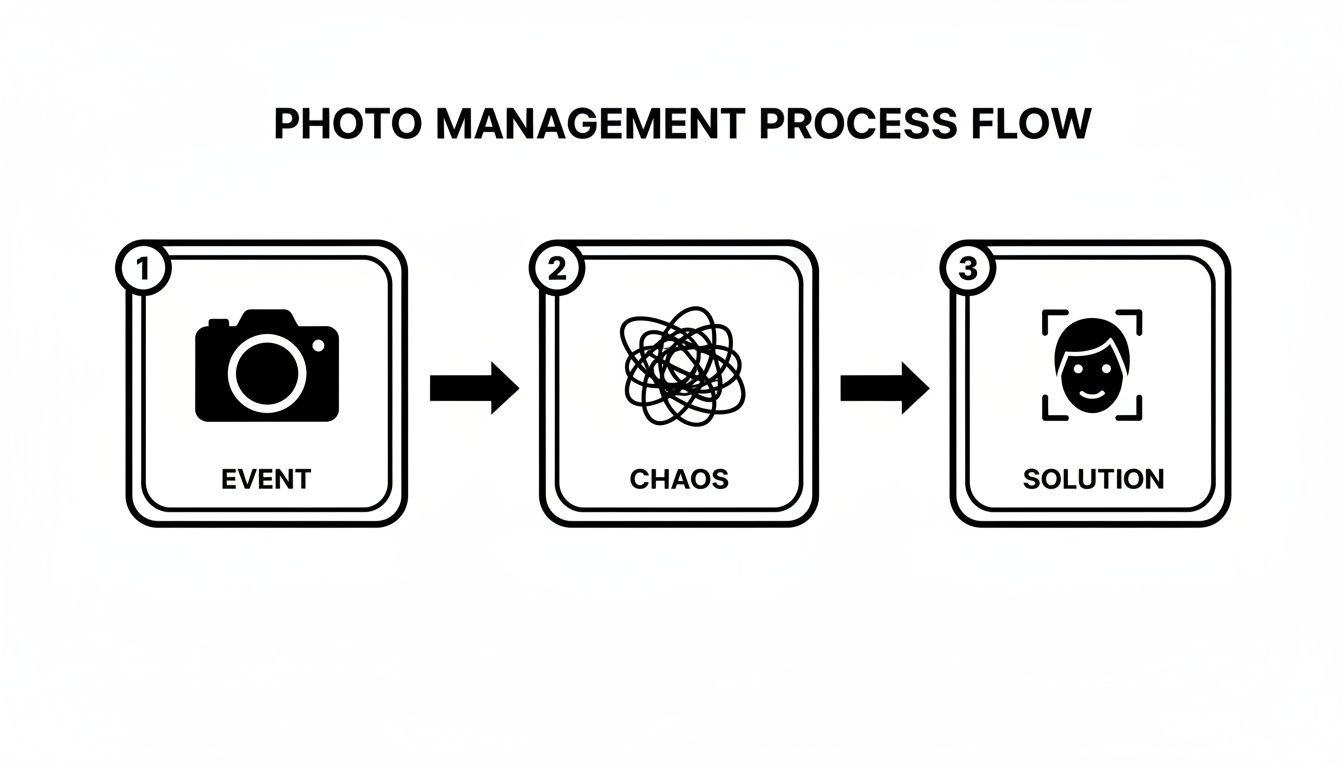
The image above shows this journey perfectly—from the chaos of an event shoot to a beautifully streamlined gallery for every single guest.
The Guest Experience: Finding Their Photos
Now for the fun part. From the attendee's point of view, the process is incredibly smooth. They don’t need to download an app, create an account, or hand over any personal details.
- Scan a QR Code: Guests just scan a QR code they see at the event or in a follow-up email. This link takes them straight to the event’s private gallery.
- Take a Selfie: The platform will ask them to snap a quick selfie. This picture is only used for the search and is never saved or made public.
- The Matching Process: The system analyzes this new selfie and creates a temporary biometric template, just like it did for all the event photos.
- Instant Delivery: It then zips through the millions of data points from the main gallery, finds all the matches, and presents them in a new, curated collection just for that person.
The entire "find my photos" search takes just a few seconds. It’s a genuinely delightful experience that leaves a lasting positive impression.
The whole system is built on consent and convenience. The technology only works when a guest actively chooses to use it by taking a selfie. It’s an opt-in tool designed to serve them, not track them.
This kind of problem-solving is why the technology is booming. The facial recognition market, which powers tools like face recognition photo organizers, grew from just over USD 3 billion in 2019 to a projected USD 10.13 billion by 2026. A huge driver of this growth is its application in photo indexing and sorting, which automates the incredibly tedious job of tagging photos. You can dig into more of the numbers in this market analysis from Global Market Insights.
For photographers and event managers, this tech makes managing massive photo libraries almost effortless. If you want to see just how easy it is, you can try out a simple drag-and-drop photo upload process. At the end of the day, selfie photo matching is about turning a data headache into a human-friendly solution that makes everyone’s life easier.
Turning Attendee Photos into Marketing Gold
For an event organizer, a face-recognition photo organizer isn't just a neat tech trick—it's a marketing powerhouse. The real magic isn't simply about getting photos to people faster; it's about what happens next. This technology can turn a flat, forgotten photo gallery into an engine for engagement that keeps the buzz going long after the event wraps up.
Think about the last time you were sent a link to a massive, unsorted event gallery. You probably scrolled for a minute, got frustrated, and gave up. That’s a huge missed opportunity. By giving guests their own personal collection of photos instantly, you get rid of that friction completely. The "wow, there I am!" moment they get from uploading a selfie creates a genuine connection to your event and your brand.
That immediate, personal experience is the secret to unlocking a wave of post-event engagement. When finding and downloading their best shots is that easy, guests are far more likely to share them everywhere.
Your Guests Become Your Best Marketers
Every time someone shares a photo from your event, they’re acting as a brand ambassador. This isn’t some paid influencer ad; it’s authentic user-generated content (UGC), which is incredibly persuasive to their friends, family, and colleagues. A face-recognition photo organizer is the spark that lights this organic marketing fire.
Imagine the ripple effect. An attendee at your corporate conference shares a professional headshot from the event on LinkedIn. Their entire network sees them participating, learning, and implicitly endorsing your conference. It’s powerful, and it scales.
Instead of a single marketing message from your brand, you suddenly have hundreds of personal testimonials going out all at once. Each one feels real and credible, building a genuine community and buzz around what you do.
From Good Idea to Great Results
Let's look at how this plays out in the real world for different kinds of events:
- Fundraising Galas: A gala's lifeblood is often post-event donations. Sending guests a link to their personal gallery gives you a perfect excuse to get back in touch. You can even place a "Donate Now" button right inside their gallery, catching them while they're reliving the positive emotions of the night.
- Trade Shows & Conferences: This is a goldmine for marketing assets. When attendees share photos, they often tag the event, speakers, and sponsors, massively extending your reach. All that UGC can be used in next year's promotional materials to show off a lively, engaged community.
- Brand Activations: For experiential marketing, instant sharing is everything. Attendees can post their branded photos to social media right from the event, creating real-time buzz and amplifying the activation’s impact as it’s happening.
There's a reason the market for this technology is booming. The global facial recognition market, which powers these face-recognition photo organizers, is projected to hit USD 9.98 billion in 2026. This surge is driven by platforms like Saucial that use advanced photo sorting to create that "find my photos" magic. By automating delivery with selfie photo matching, organizers can slash their administrative workload by 70%. More importantly, post-event engagement goes through the roof, with attendees sharing 3x more when their photos are delivered instantly. You can dive deeper into this expanding market with data from 360iResearch.
By making photo access immediate and personal, you aren't just delivering a gallery; you're delivering a shareable story. Each guest gets to be the hero of their own event experience, and they are eager to share that narrative with the world.
At the end of the day, a face-recognition photo organizer is a strategic move for any event host who cares about ROI. It closes the gap between the live experience and the ongoing digital conversation, making sure the energy of your event continues to pay dividends long after the doors have closed.
Unlocking New Revenue for Professional Photographers
For professional event photographers, a face recognition photo organizer does a lot more than just clean up your delivery workflow. It completely transforms it into a powerful, profitable sales channel. Think about the old way: you hand over a gallery link to the event host and... that's it. You're cut off from the very people who value the photos most—the attendees. This technology rebuilds that bridge, giving you a direct line to every potential customer in the room.
Essentially, this shift takes you from being just a service provider to a direct-to-consumer retailer. Instead of only fulfilling your contract, you're now running a pop-up storefront for every single person at the event. The system does the heavy lifting of sorting and curating, presenting each guest with a personal collection they're already emotionally connected to. That’s the perfect moment to offer a sale.
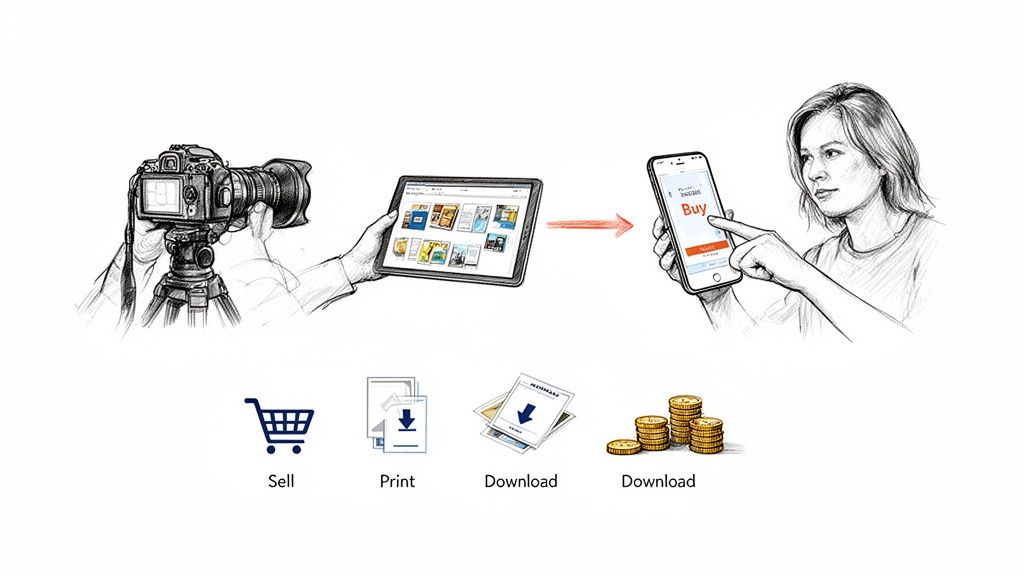
From Photo Delivery to a Digital Storefront
Picture a massive youth soccer tournament. You've got hundreds of players, and even more parents lining the fields. Manually sorting thousands of photos is a nightmare, and if you just send out a generic gallery link, most parents will never find—let alone buy—a single picture of their kid.
Now, imagine this instead: a parent walks up, snaps a quick selfie on their phone, and instantly gets a curated gallery of their athlete in action. That immediate, personal connection is a total game-changer for sales. The platform can then build e-commerce features right into that viewing experience.
By removing the friction of searching, you create a direct path to purchase at the peak of emotional engagement. When a guest sees a fantastic photo of themselves, the impulse to own it is strongest.
This automated process opens up several monetization opportunities that were just too impractical to manage before:
- Digital Downloads: Sell high-resolution digital files for a set price. Perfect for guests who want to share their favorite shots on social media or keep them for personal archives.
- Print Sales: Connect the gallery to a print-on-demand service. Suddenly, you can offer physical prints, canvases, and other photo products without touching any inventory.
- Custom Packages: Create high-value bundles like an "All Your Photos for $XX" package. It’s a simple offer that encourages larger sales.
- Branded Overlays: Team up with event sponsors to offer custom-branded photo frames. This can be a freebie to drive engagement or a premium add-on that creates another revenue stream.
Maximizing Earnings at Every Event
The beauty of this model is its flexibility. It works for almost any kind of event, turning each one into a unique sales opportunity. At a corporate gala? You can upsell professional headshots on the spot. Shooting a charity fundraiser? You can donate a portion of print sales back to the cause, which often encourages even more people to buy.
Even the traditional wedding workflow gets an upgrade. Sure, the photographer might sell an album to the couple, but what about the guests? Hundreds of attendees would jump at the chance to buy a great photo of themselves with friends or family. A face recognition photo organizer makes that happen automatically, with zero extra admin work for you.
This technology fundamentally changes the math of event photography. You’re no longer limited to the fee paid by the event host. Every single attendee is now a potential customer, dramatically increasing your earning potential from each shoot. By turning a simple delivery process into an automated, direct-to-attendee sales experience, you can seriously boost your revenue and build a more scalable business. This is the future of profitable event photography.
Navigating Privacy and Consent with Confidence
Let's be honest: the moment you say "face recognition," the conversation immediately turns to privacy. It's a completely fair question, and one that any worthwhile face recognition photo organizer needs to answer with total transparency.
The key thing to understand is that using this for an event isn't about surveillance—it’s a convenience tool that your guests choose to use.
This distinction is everything. Unlike public security systems, an event photo gallery built on face recognition is purely opt-in. The whole thing kicks off when an attendee decides they want to find their photos. They scan a QR code and take a quick selfie. That simple action is their consent, putting them squarely in the driver's seat.
How Reputable Platforms Protect Attendee Data
Trust is everything, and it’s built on clear communication and solid data protection. The best platforms are designed with privacy at their very core, making sure the tech serves your guests without ever putting their data at risk. This isn't just a promise; it's baked into how the system works.
Here’s a look under the hood:
- It's All Math, Not Photos: The system doesn't actually store a picture of anyone's face. Instead, it analyzes the unique geometry of the selfie and converts it into a complex mathematical code—a biometric template. This string of numbers is anonymous and can't be turned back into an image.
- You're in Control of the Gallery: As the organizer or photographer, you hold all the keys. You decide who gets the link to the gallery, how long it stays online, and what the privacy settings are. You can dive deeper into how to manage your gallery settings and permissions to make sure they match your event’s needs.
- One-Time Use Only: The selfie a guest submits has exactly one job: find their photos in that specific gallery. It’s not used to train AI, it’s not sold to advertisers, and it isn't kept forever.
The entire process boils down to a simple, secure partnership: the attendee starts the search, and the organizer controls the photos. This creates a permission-based system that respects everyone’s privacy while still delivering a seriously cool experience.
The responsible use of this tech is why its adoption is growing so quickly. By 2026, the global facial recognition market is projected to hit USD 10.69 billion. A huge chunk of that growth is coming from media and entertainment, where privacy-first workflows are critical for managing photos from brand events and festivals. You can see the full research on facial recognition applications for a closer look at these trends.
At the end of the day, a well-built face recognition photo organizer lets you offer a genuinely impressive feature without asking your guests to compromise on their trust. By picking a platform that puts consent first and is upfront about how it handles data, you can confidently give your guests a modern photo experience they’ll love.
How to Launch Your First AI-Powered Photo Gallery
It’s one thing to talk about the technology, but putting a modern face recognition photo organizer into practice is where you see the real payoff. The great news? It's designed to slot right into your event workflow without giving you a technical migraine. Think of it as a simple, repeatable plan that makes the entire experience, from the first click of the camera to the last social media share, incredibly smooth.
The whole process boils down to a few key stages, and most of the heavy lifting happens behind the scenes. Your main job is to get the photos into the system and then give your guests one simple link. The AI takes care of everything else.
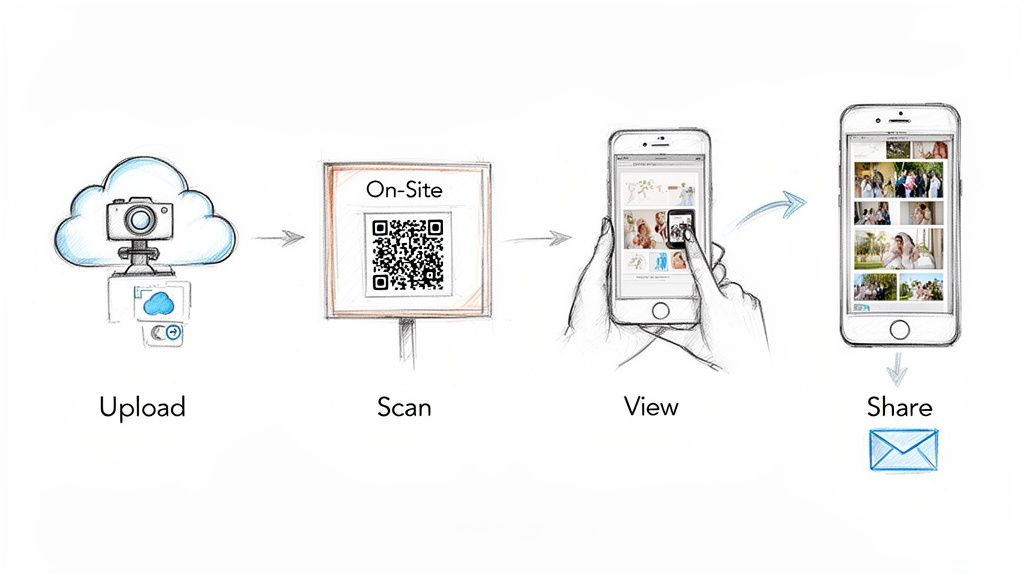
Step 1: The Photographer Uploads the Full Gallery
First up, the photographer dumps all the event photos directly into the platform. This is usually as simple as dragging and dropping a folder. Forget about pre-sorting, renaming files, or manually tagging anything. Just upload the entire, unorganized batch.
As soon as the upload kicks off, the AI gets to work in the background. It meticulously scans every single image, detects all the faces, and starts building the anonymous biometric profiles it needs to power the selfie search. By the time the last photo is uploaded, the gallery is pretty much ready for action.
Step 2: The Organizer Preps the Sharing Link
While the photos are processing, the event organizer can get the sharing logistics sorted. The platform will generate a single, unique link for the event. This is the only link your guests will ever have to worry about.
To make it even easier for people at the event, this link is usually paired with a QR code. Some proven ways to get it in front of people include:
- On-Site Promotion: Plaster that QR code on screens, posters, or table tents throughout the venue. A simple callout like "Scan Here to Find Your Photos!" works wonders.
- Post-Event Email: Send a follow-up email to all your attendees with a big, clear button that takes them straight to the gallery link.
- Social Media and Website: Share the link across your event's social channels or on its website to catch anyone who might have missed it on the day.
The most effective launches I've seen use a mix of methods. When you combine on-site QR codes for instant gratification with a post-event email, you ensure you reach 100% of your audience. This maximizes both engagement and photo sharing.
Step 3: Attendees Find and Share Their Photos
This last part is where the magic really clicks for your guests. They scan the QR code or click the link, and it takes them to a clean landing page. From there, they're prompted to snap a quick selfie. Within seconds, the system serves up their own personal, curated gallery of photos.
They can then download their favorites, share them straight to their social profiles, or even order prints if you have that feature turned on. The whole experience is fast, seamless, and leaves a fantastic impression. This simple, three-step process completely replaces the old, frustrating days of scrolling through endless folders. If you want to see how this works from the platform side, you can learn more about setting up an event photo sharing platform.
Got Questions? We've Got Answers
Even after seeing how it all works, you probably have a few practical questions about using a face recognition photo organizer at your own event. That's completely normal. Let's walk through some of the most common things people ask so you can feel totally confident moving forward.
These systems are designed to be incredibly powerful yet simple to use, but knowing the details helps you squeeze every bit of value out of them.
Just How Good Is the Selfie Matching?
Honestly, it's remarkably accurate. Modern facial recognition software consistently hits over 99% accuracy. What does that mean for your event? It means the system can spot an attendee's face in all sorts of real-world situations—from tricky lighting and different angles to a tiny face in a massive group shot.
The magic happens when the system creates a unique digital signature from a person's selfie and then scans the entire event gallery for that same signature. This level of precision ensures that when a guest looks for their photos, they get a full, nearly flawless collection of their memories. It’s light-years beyond what any human could do manually.
The technology is specifically built for the chaos of live events, so it's designed to handle less-than-perfect photos. That reliability is what creates the "wow" moment for your guests.
What Kind of Events Is This For?
You can add value to almost any event where photos are a big deal, but this technology truly shines at events where sorting pictures by hand would be a complete nightmare.
Think about these types of gatherings:
- Massive Public Events: Sports marathons, music festivals, and huge conferences where photographers snap thousands of pictures.
- Personal and Corporate Events: It's also a game-changer for weddings, company retreats, and black-tie galas where every guest wants to find their personal highlights.
- Events Focused on Photo Sales: For photographers looking to sell prints or digital downloads directly to attendees, this makes finding and buying photos ridiculously easy.
Bottom line: if your event could benefit from happier guests or a smoother way to sell photos, this technology is a fantastic fit.
How Is Everyone’s Privacy Handled?
This is a big one, and any trustworthy platform puts privacy first. The selfie an attendee uploads is only used for one thing: to find their photos from that specific event. That's it. The facial data is used for a temporary match and is never stored long-term or shared.
The system doesn't even store pictures of faces. Instead, it creates anonymous mathematical codes to find a match. Most importantly, you, the event organizer, always have full control over the photo gallery—who sees it and how long it stays online. Always partner with a provider who is upfront about their data policies so that both you and your guests can feel completely at ease.
Ready to see what a better photo experience looks like? With Saucial, you can give guests instant, personal galleries they'll love while making your life easier. Get started with Saucial today!


