Event Photography Package: How to Price and Sell an event photography package
An event photography package isn't just a price list—it’s the promise of an entire experience. It bundles your time on-site, the number of photos you’ll deliver, your editing magic, and, most importantly, how everyone gets to see the final product. Today, the best packages are built around making it incredibly easy and fun for clients and their guests to access and share the memories you capture.
What a Modern Event Photography Package Includes
Long gone are the days of just showing up with a camera and sending a Dropbox link a few weeks later. Clients today, from corporate event planners to private hosts, expect a polished, seamless partnership from start to finish. It’s less of a transaction and more of a full-service experience.
The market backs this up, too. The global photographic services market has ballooned to USD 30.4 billion, with event photography taking up a massive 32.5% share. That growth tells you one thing: people are serious about getting professional photos that keep the buzz going long after an event ends, whether it's a black-tie gala or a bustling trade show. You can dig deeper into the photographic services market trends on market.us.
Beyond the Basics of Coverage
Of course, the hours you'll be there and how many photographers you'll bring are still the foundation of any package. But a truly modern package thinks about the entire journey of the images, from the moment the shutter clicks to the moment a guest proudly shares their photo online.
The real value isn't just in taking great pictures anymore. It's in delivering an experience that makes sharing those pictures effortless and amplifies the event's overall success.
The New Standard of Photo Delivery
The single biggest change in event photography packages is how we deliver the photos. A simple, generic gallery link just doesn't cut it anymore if you want to stand out. The best packages now feature interactive, intuitive, and frankly, impressive delivery systems.
A truly modern package transforms photo delivery from a simple handoff into a memorable post-event experience for every single guest. It’s an opportunity to add value that clients can see and feel long after the event ends.
This is where you can really set yourself apart. Advanced delivery platforms solve that age-old problem of guests endlessly scrolling through a huge album just to find a photo of themselves.
Here’s what that looks like in practice:
- Instant Guest Access: Guests can find their photos almost immediately, not days later.
- AI-Powered Search: A "find my photos" feature that uses facial recognition is quickly becoming the new standard of care.
- QR Code Galleries: Placing QR codes around the venue lets attendees pull up the gallery right on their phones, right then and there.
This is exactly what platforms like Saucial are built for. By integrating this kind of tech into your workflow, you can offer a premium, interactive event photo sharing link that makes your packages feel light-years ahead of the competition. You’re not just handing over files; you're creating a lasting, positive impression that people remember.
Crafting Your 3 Photography Packages: A Practical Guide
The best way to sell your event photography services isn't to throw a long list of options at a client. It’s about guiding them. I’ve found that a three-tiered structure works wonders—it simplifies the decision, prevents analysis paralysis, and clearly demonstrates the value they get by investing more.
Think of it as Essential, Premium, and All-Inclusive. Each tier is built to solve a specific problem for a specific type of event, from a small fundraising gala to a sprawling multi-day conference. This isn't about upselling; it's about matching the right solution to the client's actual needs and budget.
The old model of just delivering a folder of photos is dead. Today, it’s all about creating an experience that lives on long after the event ends.
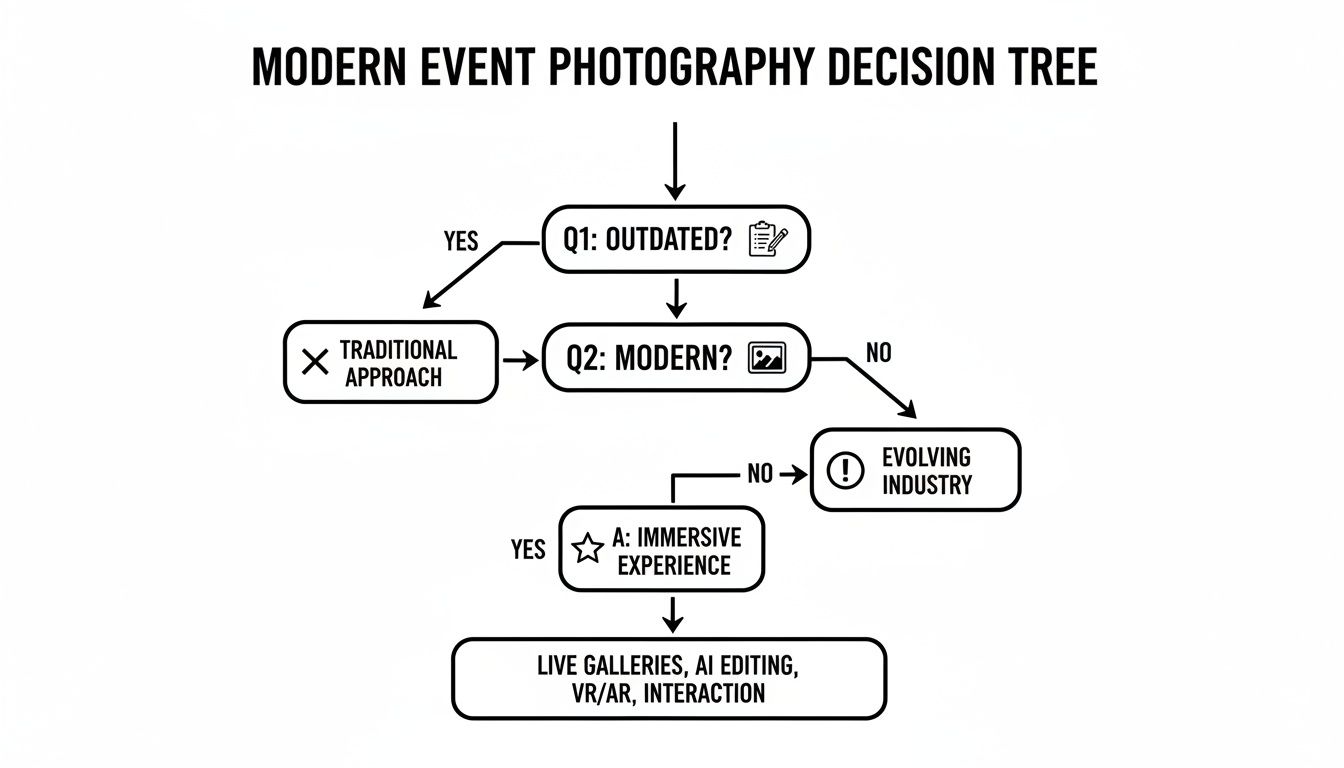
The real value now lies in how you integrate photography into the event itself, making it immersive, interactive, and instantly shareable.
The Essential Package
This is your foundation, the go-to option for smaller, more intimate events. It’s all about covering the fundamentals brilliantly, without any fluff. I typically build this package for clients who need professional documentation but are working with a tighter scope.
What’s inside?
- Up to 4 hours of coverage: Perfect for capturing the core moments of a gala, awards dinner, or a lively networking reception.
- One photographer: This is plenty for events with fewer than 100 guests where the action is mostly in one place.
- Standard professional editing: Every delivered photo gets my full attention with color correction and pro-level adjustments.
- Private online gallery: A simple, password-protected gallery for the client to view and download their high-resolution images.
This tier solves one problem perfectly: getting professional, high-quality photos of an important gathering. It's the straightforward, no-fuss solution.
The Premium Package
This is my bread and butter, and it will likely be yours too. The Premium package is the workhorse, designed for the average corporate conference, trade show, or large-scale party. It’s a significant step up from the basics and offers comprehensive coverage that gives clients real peace of mind.
Here’s where you start layering in more value. You’ll include everything from the Essential tier, but add:
- Up to 8 hours of coverage: Enough to capture a full day, from the opening keynote to the closing reception.
- A second photographer: This is non-negotiable for events with simultaneous activities. While I’m capturing the main stage, my second shooter is getting candid reactions, breakout sessions, and sponsor interactions.
- Advanced editing: This includes light touch-ups on key shots of speakers, VIPs, and award winners.
Adding a second photographer isn't just a line item—it's a promise. It tells the client you won't miss a thing. That assurance is what they're really paying for.
The All-Inclusive Package
Welcome to the top shelf. This is the ultimate, hands-off solution for major events—think multi-day festivals, massive brand activations, or high-profile industry summits. It's designed for the client who wants to make a huge impact and needs photography to be a core part of the attendee experience.
This package bundles everything from Premium and then adds your most powerful, engagement-driving services.
An irresistible All-Inclusive package might feature:
- Multi-day coverage (e.g., 12+ hours): Custom-built for events spanning two or three days.
- On-site photo editor: A game-changer. I'll have an editor on-site culling and editing photos in near real-time, feeding a curated selection to the client’s social media team.
- Instant Guest Photo Access: This is where you really stand out. Using a tool like Saucial, you can set up a QR code photo gallery. Guests scan the code, use selfie photo matching to find their pictures instantly, and share them on the spot.
With this tier, you're no longer just a photographer; you're an engagement partner. You're delivering a tangible return on investment by fueling the post-event social buzz. You can even customize the delivery experience right in your Saucial account settings to match the client's branding.
Sample Event Photography Package Tiers
To see how this all comes together, here’s a table breaking down what these three tiers might look like. This is a great starting point for building your own packages, helping you and your clients clearly see the value at each level.
| Feature | Essential Package (e.g., Small Gala) | Premium Package (e.g., Conference) | All-Inclusive Package (e.g., Multi-Day Festival) |
|---|---|---|---|
| Coverage Hours | Up to 4 hours | Up to 8 hours | 12+ hours (Multi-Day) |
| Number of Photographers | 1 Photographer | 2 Photographers | 2+ Photographers |
| Image Editing | Standard Professional Editing | Advanced Editing (includes key shot touch-ups) | Priority & On-Site Editing |
| Photo Delivery | Private Online Gallery | Branded Online Gallery | Instant Guest Access via QR Code |
| Special Features | - | Pre-event consultation | On-site Social Media selects, Selfie Photo Matching, Post-event analytics |
| Turnaround Time | 5-7 business days | 3-5 business days | Next-day highlights, full gallery within 3 days |
This structure provides a clear path for clients. They can easily identify where their event fits and understand exactly what they’re getting for their investment, making the whole sales process smoother and more transparent for everyone involved.
Pricing Your Packages for Profit and Growth
Nailing down your pricing is easily one of the trickiest parts of running a photography business. If you price too low, you'll burn out fast and leave a ton of money on the table. But if you price too high without showing your value, you'll watch potential clients walk away. The secret isn't just about picking an hourly rate; it's about building a smart strategy that covers your costs, pays you what you're worth, and actually lets your business grow.
The first thing you have to do is stop thinking like an employee who gets a simple hourly wage. You're a business owner now. That means you need to sit down and calculate your real Cost of Doing Business (CODB). This goes way beyond your camera and lenses. It’s your insurance, software subscriptions, marketing budget, website hosting, taxes, and even your retirement savings. Once you know that number, you have a baseline that guarantees every job you take is actually profitable.
Understanding Your True Costs
To build a pricing model that lasts, you have to account for every single minute you pour into a project—not just the hours you're on-site with a camera in your hand. This is where so many photographers get it wrong.
Post-production work often takes at least twice as long as the event itself. So, if you shoot a four-hour gala, you can easily spend another eight hours just culling, editing, and getting the final gallery ready. Forgetting to factor in all that "hidden" time is the single most common mistake I see new photographers make.
Here's a quick look at what absolutely must go into your pricing:
- Total Time Investment: This includes all the back-and-forth emails, travel to and from the venue, the actual shoot, and every minute spent on post-production.
- Business Overhead: Think insurance, software like Adobe Creative Cloud, marketing costs, and gear maintenance.
- Skill and Experience: Your expertise, reliability, and the strength of your portfolio are valuable. Don't be afraid to charge for them.
- Profit Margin: This is the money that lets you grow, invest in better gear, and build a financial safety net. A healthy margin is usually around 20-30% on top of all your costs.
Structuring Your Pricing Model
Once you have a firm grip on your costs, you can start building your packages. For most clients, a flat-rate package is the clearest and most effective way to go. They know exactly what they're paying upfront, which immediately builds trust. For instance, a "Corporate Day Rate" is perfect for conferences with multiple sessions, covering up to eight hours for one simple, predictable fee.
Another great approach is to offer à la carte add-ons. Things like a second shooter, an expedited gallery, or a branded online portal let clients customize their package and give you some fantastic upsell opportunities.
Don’t just sell photos. You’re selling a complete, professional experience. From that first consultation call to a seamless and impressive photo delivery system, every interaction adds to the value you provide and justifies a premium price.
This is more important than ever. The event photography and videography market, currently valued at USD 17.51 billion, is expected to skyrocket to USD 25.98 billion by 2032. This isn't just because people want pretty pictures; it's because they're looking for comprehensive solutions that include smart ways to distribute and even monetize the content. You can dig into more of this data by exploring the event photography market's expansion on 360iresearch.com.
At the end of the day, your pricing needs to reflect the incredible value you bring to an event. A well-crafted event photography package doesn't just deliver files; it preserves critical memories, amplifies a brand's message, and creates a lasting impact. When you learn to communicate that value, you'll find clients are more than willing to make the investment.
Upgrading Your Packages with Modern Photo Delivery
Let’s be honest: how you deliver your photos is just as crucial as the shots themselves. In a world of instant everything, sending a client a generic Dropbox link a week after their event just doesn't cut it anymore. It feels slow, clunky, and frankly, a bit dated. It's time to stop treating photo delivery as an afterthought and start seeing it as a key part of the premium experience you’re selling.
The whole event industry is already on this train. Event photography now makes up a 32.5% slice of the broader USD 30.4 billion services market, and that pie is expected to more than double by 2034. What's driving this? Corporate events, massive trade shows, and galas that demand more than just great images—they want smart, engaging ways to share them. The tech is shifting to meet this need, making things like seamless trade show photo sharing and a simple "find my photos" experience the new standard. You can dig into more of this data on the growing event camera market over at snsinsider.com.
From Logistical Headache to Marketing Tool
When you nail your delivery, you turn a logistical chore into a powerhouse marketing tool for both your client and your own business. Think about it: when guests can get their hands on a stunning, professional photo of themselves almost instantly, what do they do? They share it. Everywhere. They become genuine brand ambassadors for the event, generating the kind of authentic buzz that organizers dream of.
The payoff for you, the photographer, is huge. First, you get back all those hours you used to spend answering endless "can you find my photo?" emails. More importantly, it cracks open new revenue streams you couldn't access before.
The Power of a QR Code Photo Gallery
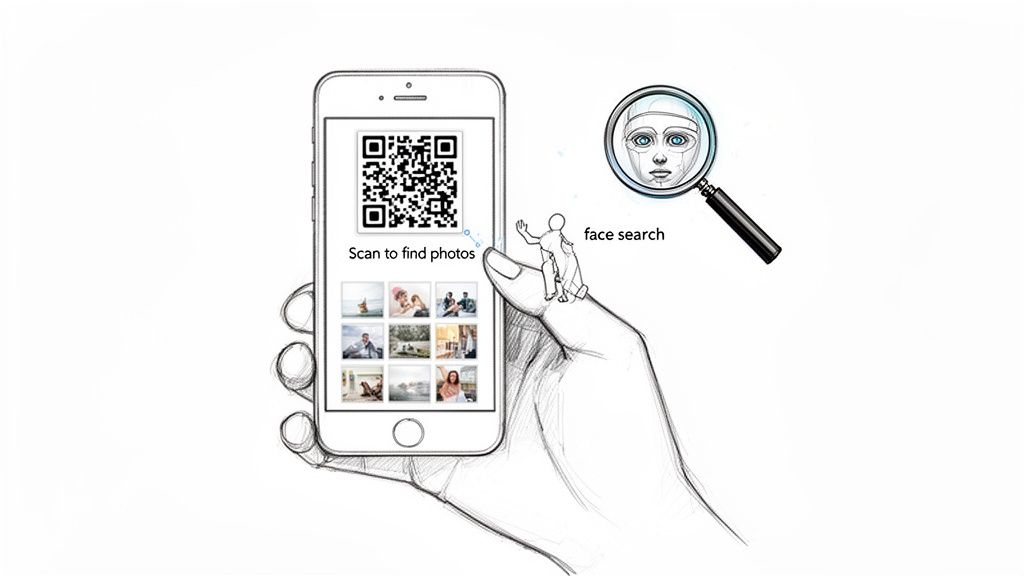
The simplest, most effective upgrade you can make is offering a QR code photo gallery. Picture this: small, branded signs on every table, or a big QR code projected on a screen. Guests pull out their phones, scan the code, and boom—they're in the gallery.
This one little change does so much:
- Sparks Instant Gratification: No more waiting for an email. Guests get their photos while they're still buzzing from the event.
- Makes Sharing a Breeze: The photos land directly on their phone, the one device they use for all their social sharing.
- Looks Incredibly Professional: It shows you’re on top of your game, using current tech to deliver a better experience.
Modern delivery isn't just another line item on an invoice; it's a value proposition. It transforms your photos from a static memory into an active, shareable part of the event itself.
Introducing the "Find My Photos" Experience
Now, here’s where things get really cool. Pair that QR code with AI-powered facial recognition. This creates a "find my photos" experience that feels like pure magic to attendees. Instead of scrolling through hundreds (or thousands) of images, a guest just snaps a quick selfie. The system then instantly pulls up every single photo they appear in.
This is exactly what platforms like Saucial were built for. By adding a service that offers selfie photo matching, you can create a premium add-on that clients will be more than happy to pay for. Suddenly, you're not just selling hours and images; you're selling a frictionless, personalized experience for every single guest. And it’s shockingly simple to set up—you can see how a basic drag-and-drop photo upload is all it takes to get an entire event gallery running.
This level of service turns your delivery from a simple handoff into a direct connection with every attendee. It opens the door for direct print sales and other upgrades while cementing your reputation as an innovative pro who delivers serious value.
Building an Ironclad Client Contract
Let's be honest: your event photography package isn't worth much without a rock-solid contract to back it up. This isn't just a piece of paper; it’s the agreement that protects you, your client, and your business by making sure everyone is on the same page.
A good contract gets rid of assumptions and prevents those dreaded "I thought you were going to..." conversations down the road. It’s your professional roadmap for the entire project, from the first shot to the final photo delivery. Without it, you’re just winging it, and that’s a huge risk when you’re capturing a once-in-a-lifetime event.
Non-Negotiable Contract Clauses
Every single event photography contract I write has a few non-negotiable sections. These are the clauses that prevent the most common headaches and disputes. If you miss these, you're leaving yourself exposed.
At a bare minimum, your contract absolutely must spell out:
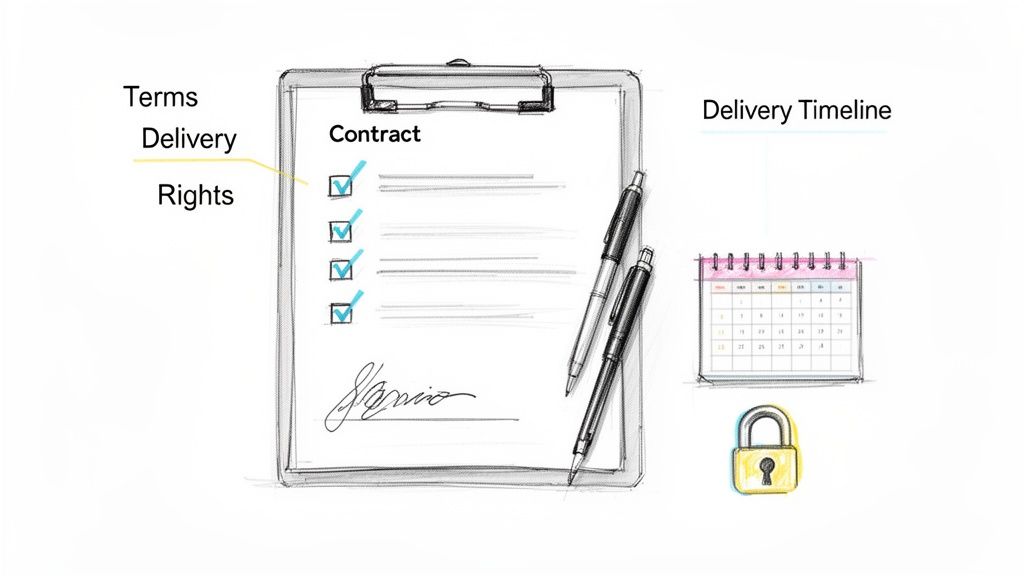
- Services and Deliverables: Get super specific here. Don’t just say "event coverage." List the exact start and end times, the number of photographers on-site, and precisely what they get at the end (e.g., "a high-resolution digital gallery with a minimum of 300 edited images").
- Payment Schedule: Clearly state the total fee, the non-refundable retainer needed to book the date, and when the final balance is due. A 50% retainer with the final 50% due a week before the event is a standard I’ve used for years.
- Cancellation and Rescheduling Policies: Life happens, and events get canceled or moved. Your contract needs to explain what happens if the client cancels, what portion of their payments are non-refundable, and if there are any fees for rescheduling.
Having this all in writing from the get-go builds immediate trust. It shows the client you're a pro who has thought through the entire process.
To make sure you cover all your bases, here's a checklist of the essential clauses you should always include in your agreements.
Essential Contract Clause Checklist
| Clause Category | Key Elements to Include | Why It's Important |
|---|---|---|
| Scope of Work | Exact coverage hours, number of photographers, specific deliverables (e.g., number of photos, gallery type). | Prevents "scope creep" and ensures the client knows exactly what they are paying for. |
| Payment Terms | Total cost, retainer amount (non-refundable), final balance due date, and accepted payment methods. | Secures your booking and guarantees you get paid on time without awkward follow-ups. |
| Cancellation Policy | Clear terms for client cancellation, what happens to the retainer, and any refund eligibility. | Protects your income from last-minute cancellations that leave you with an unfillable date. |
| Rescheduling Policy | Process and any associated fees for changing the event date, subject to your availability. | Provides flexibility for the client while compensating you for the administrative work and potential loss of the original date. |
| Image Rights & Usage | Statement of copyright ownership (you!) and the specific usage license granted to the client (e.g., social media, website). | Clarifies how the client can legally use the photos and protects you from unauthorized commercial use. |
| Delivery Timeline | A specific timeframe for when the client will receive the final edited photos (e.g., "within 14 business days"). | Manages client expectations and prevents them from asking for photos the day after the event. |
| Liability Limit | Clause limiting your financial liability in case of unforeseen issues like equipment failure or data loss. | A standard legal protection that limits your financial risk in a worst-case scenario. |
| Model Release | Permission from event attendees (if applicable/possible) allowing you to use their images in your portfolio. | Gives you the legal right to use your best work for your own marketing materials. |
This table isn't exhaustive legal advice, but it's a solid starting point for a conversation with your lawyer to draft a contract that truly protects your business.
Defining Image Rights and Timelines
Two of the most overlooked—and most important—parts of any photography contract are image rights and delivery timelines. Getting this wrong can sour a great client relationship after the event is over.
A great contract doesn’t just protect you from what could go wrong; it provides a clear, professional framework that helps everything go right. It’s a tool for communication, not just litigation.
You need to state explicitly that you own the copyright to the images. What you are selling the client is a usage license—permission to use the photos in specific ways. For a corporate client, this might cover their website and social media. But if they want to splash those photos on a billboard in Times Square? That's a completely different commercial license that comes with a much higher price tag.
Equally critical is setting a realistic delivery timeline and sticking to it. If you promise the gallery in two weeks, deliver it in two weeks. Being late erodes trust, plain and simple.
This is where you can also define the modern client experience you offer. Instead of a clunky download link, you can specify they will receive a professional event photo sharing link through a platform like Saucial where guests can easily view and save their memories.
Ultimately, a detailed contract isn't about mistrust; it’s about professionalism. It shows you respect your client and your craft enough to get everything right, making it a cornerstone of any high-value event photography package.
Frequently Asked Questions About Photography Packages
When you're hashing out the details of an event photography package, a few questions always seem to pop up. Whether you're the client or the photographer, getting these points clarified right from the start is the secret to a great working relationship. It's all about making sure everyone is on the same page.
Let’s walk through the most common questions I hear. We'll cover everything from how many photos you can expect to how modern tech is shaking things up.
How Many Photos Will I Receive?
This is usually the first thing a client asks, but there’s no single magic number. A good rule of thumb is to expect around 40-60 fully edited, top-notch images for every hour of shooting.
But honestly, the focus shouldn't be on a specific count. The real goal is to get a gallery that tells the complete story of your event. I'd much rather deliver 300 incredible photos that capture the energy and key moments than 1,000 "meh" snapshots that just fill up a folder. It’s always about quality over quantity.
Can I Get a Custom Package?
Of course. Think of the packages I offer as a starting point, not a strict menu. Every single event has its own quirks and needs, and a true pro knows how to adapt. Building a custom quote shows you're listening and focused on what the client actually needs, not just what you want to sell.
I can't tell you how many times a quick discovery call has led to a completely custom package. Maybe they need a second shooter just for the awards ceremony or want to tack on a headshot station. Being flexible is what gets you the gig.
This willingness to tailor your services is often the deciding factor. It proves you're a partner in their event's success, and it ensures they're only paying for the coverage they truly need.
How Do Image Rights Work?
This is a big one, and there's no room for ambiguity here. Your contract needs to be crystal clear: as the photographer, you retain the copyright to every image you create. What you're giving the client is a usage license, which details exactly how and where they can use the photos.
For most corporate clients, a standard license is perfect. It usually covers things like:
- Internal Use: Popping photos into company newsletters, annual reports, or internal presentations.
- Web and Blog: Featuring the event on their official website or blog.
- Social Media: Posting the images on their branded social media accounts.
Now, if a client wants to use a photo in a national print ad or on a billboard, that’s a whole different ballgame. That requires a commercial license, which should always be priced as a separate, premium add-on to their package.
How Does New Tech Change My Package?
It completely changes the game. Modern tools can elevate your service from simply delivering photos to creating a full-blown experience. A platform with a "find my photos" feature using selfie photo matching isn't some far-off concept anymore—it's a massive value-add you can offer right now.
Think about it: by including a QR code photo gallery in your top-tier package, you're not just sending a link to a folder. You're giving every single guest instant, personalized access to their own moments from the event. This kind of tech lets you offer premium features that absolutely justify a higher price point.
This approach makes photo delivery an exciting part of the post-event buzz. With a tool like Saucial, you can easily deliver that premium experience, wow your clients and their guests, and open up new doors for your business. Check them out and see how it works.


