Elevate Attendee Moments with the event photo sharing platform
Ever had that sinking feeling after a great event, knowing you have to hunt for your photos in a massive, chaotic online folder? We've all been there. An event photo sharing platform is designed to kill that chaos for good. Using tech like AI face recognition, it automatically finds and delivers photos directly to each guest.
Instead of scrolling through a sea of faces, attendees can find every picture they're in almost instantly, often with just a quick selfie.
Moving Beyond Clunky Photo Sharing Methods
Let's be real: sharing event photos with a generic Google Drive link or a massive Dropbox folder is a broken system. These tools are fine for storing files, but they completely fail at creating a memorable post-event experience.
Nobody wants to scroll through hundreds, or even thousands, of images just hoping to spot themselves. It’s a tedious process that drains all the excitement out of the moment. The result? Most of those amazing photos a photographer worked so hard to capture are never even seen, let alone shared.
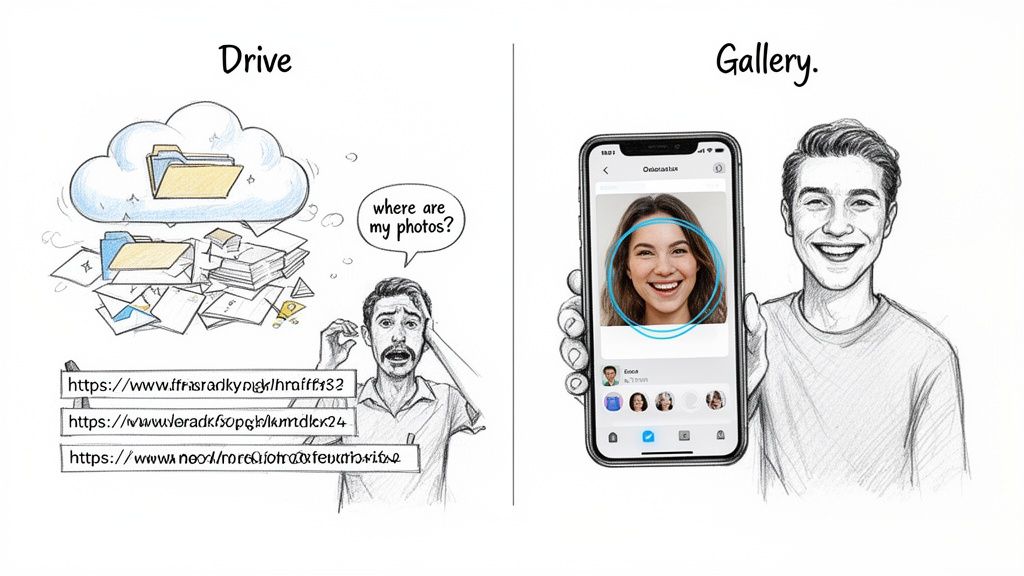
This old-school approach is a headache for everyone. Event organizers get bombarded with "where are my photos?" emails, and photographers lose precious hours manually sorting and tagging. All that potential for social media buzz and brand exposure just evaporates because finding and sharing photos is way too much work.
The Shift to a Smarter Solution
This is exactly where a modern event photo sharing platform steps in. It’s built from the ground up to turn photo delivery from a chore into a genuinely fun and personal experience. By using AI-powered face recognition, these platforms handle all the heavy lifting of sorting and organizing.
Here’s how it changes the game for everyone:
- For attendees: They get a simple, magical "find my photos" button. No more hunting. A selfie is all it takes to see a curated gallery of every photo they're in.
- For organizers: They reclaim hours of their time and offer a high-tech perk that keeps people talking about the event long after it's over.
- For photographers: Tedious post-production work is a thing of the past. They can deliver photos faster and even create new sales opportunities by connecting directly with attendees.
The real magic is turning a passive, messy photo dump into an active, engaging experience. It’s about getting personal moments to the people who care about them most, right away.
To really see the difference, let’s compare the old way with the new.
Traditional vs Modern Photo Sharing Methods
| Feature | Traditional Methods (e.g., Google Drive, Email) | Modern Platform (e.g., Saucial) |
|---|---|---|
| Photo Discovery | Manual scrolling through a single, massive album. | AI-powered face recognition finds photos for you. |
| Attendee Experience | Frustrating and time-consuming; low engagement. | Instant, personal, and highly engaging. |
| Delivery Time | Days or weeks, depending on manual sorting. | Minutes or hours after the photos are uploaded. |
| Social Sharing | Cumbersome. Users must download then re-upload. | Frictionless one-click sharing to social media. |
| Organizer Workload | High. Involves fielding requests and managing links. | Low. The platform handles delivery and communication. |
| Brand Exposure | Minimal. Photos are rarely found or shared. | Massive. Easy sharing turns attendees into advocates. |
The contrast is pretty stark. One method creates bottlenecks and frustration, while the other creates delight and shareable moments.
Immediate Value and Lasting Impact
Making the switch to a dedicated platform is more than just a convenience—it's a smart strategy. When guests can instantly find and share their favorite photos, they become your best marketers.
Every post they make extends the reach of your event, showing off the amazing experiences you create. Platforms like the Saucial AI-powered event photo sharing platform are built to make this process completely seamless.
This instant access to personalized content leaves a lasting positive impression, building attendee loyalty and giving you a goldmine of authentic content for promoting your next event. The difference is clear: one method creates work, while the other creates value.
What Makes These Platforms Different? Core Features That Change the Game
A real event photo sharing platform is so much more than a Dropbox folder with a public link. It’s a complete toolkit built to solve the biggest headaches in event photography: speed, engagement, and privacy. These features are what separate a generic photo dump from a personalized, high-touch experience for every guest.
It all starts with AI-powered face recognition. This isn't just a cool tech demo; it’s the secret sauce that ends the most frustrating part of any event for an attendee—the endless, mind-numbing scroll to find their own pictures.
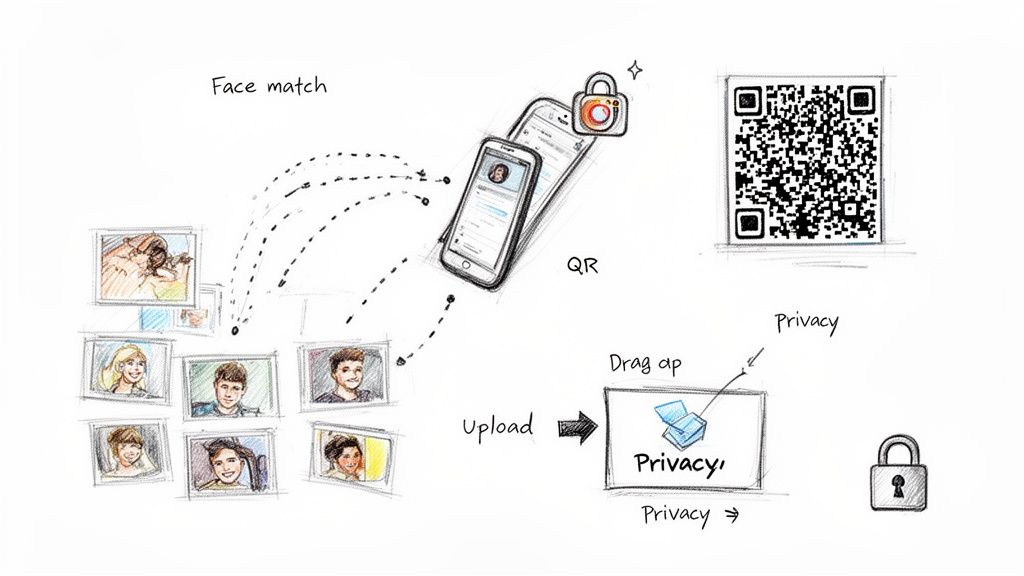
Picture a guest at a huge conference or a music festival. Instead of sifting through a gallery of 2,000 photos, they just pull out their phone, scan a QR code, and snap a quick selfie. Seconds later, the platform shows them a personal gallery with every single photo they're in. That’s it. This selfie matching turns a tedious chore into a "wow" moment.
Getting Photos to People Instantly with a Single Link
Another huge piece of the puzzle is dead-simple distribution. Forget about juggling email lists, managing access permissions, or dealing with complicated download instructions. A modern platform gives you a single, shareable link that opens the door to the entire event gallery.
This one link is incredibly versatile. You can get it in front of people in a bunch of different ways:
- QR Codes: Slap a branded QR code on projection screens, event signage, or even cocktail napkins. Guests can scan it right then and there.
- Email & SMS: Drop the link into your post-event follow-up email or text message for instant access.
- Social Media: Share the link across your social channels to boost engagement and let everyone know the photos are ready.
This approach means anyone who wants their photos can get them immediately, no app downloads or account creation required.
Putting Privacy and Control Front and Center
Let's be honest: in today's world, privacy is everything. A top-tier photo sharing platform is built from the ground up with security in mind, offering a level of control that basic cloud storage just can't touch. As the organizer, you have the final say on which photos are public and which are private.
The best systems are designed around consent. Facial recognition is only used to help people find their own photos, not for tracking or identification. This builds trust and makes guests feel safe.
When attendees know their images aren't just being tossed out onto the public internet, they're far more likely to engage. For corporate events, this isn't just nice to have; it's a must for protecting your brand and staying compliant.
A Smoother Workflow for Photographers and Organizers
Finally, let's talk about the behind-the-scenes magic. The days of photographers spending all night tagging photos or organizers drowning in "where are my pictures?" emails are over. The entire process becomes incredibly efficient.
Photographers can drag and drop entire folders, and the platform's AI handles the heavy lifting in the background. If you're curious, you can see just how quick this is by checking out a simple photo upload workflow to understand the process.
This automation frees up everyone's time. Photographers can move on to their next shoot, and organizers can focus on post-event strategy. The best part? Photos get into the hands of your attendees while the excitement of the event is still fresh.
How Everyone Wins With a Modern Photo Platform
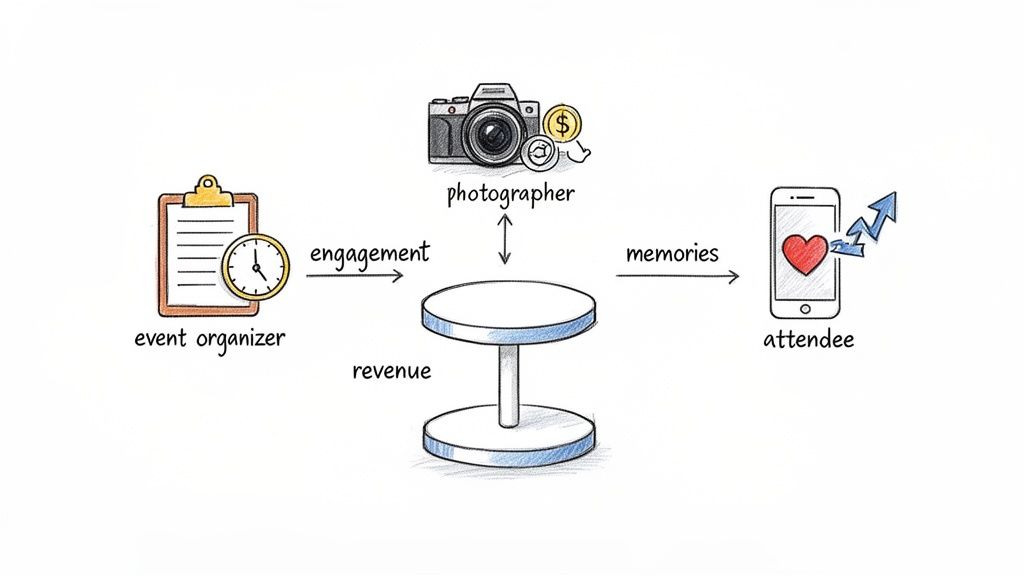
A great event photo sharing platform does more than just deliver pictures; it creates a thriving ecosystem where everyone involved gets something valuable out of it. This isn't just a tool, it's a strategic shift that benefits organizers, photographers, and attendees alike. It turns the often-clunky process of getting photos to people into a smooth, rewarding experience that starts a positive feedback loop.
This kind of tech couldn't come at a better time. The events industry is absolutely booming, with the global market expected to rocket from USD 736.8 billion in 2021 to a staggering USD 2.5 trillion by 2035. As you can see from recent event industry statistics, that massive growth means expectations are higher than ever, and a modern photo platform is key to meeting them.
More Engagement and Less Work for Event Organizers
If you're an event organizer, the payoff is immediate. The biggest relief? A huge drop in administrative busywork. You can finally say goodbye to the constant flood of "where are my photos?" emails and the hours spent manually building and sending out galleries. A good platform automates the entire delivery process, which frees you and your team to focus on what really matters—planning your next amazing event.
But it's not just about saving time. A dedicated platform is a powerhouse for post-event engagement. When your attendees can instantly find and share their photos, they naturally become your best brand ambassadors. Imagine a conference attendee sharing a great shot from your booth on LinkedIn, or a wedding guest posting their favorite candid moment to Instagram. That's organic marketing that extends the buzz and reach of your event long after the doors have closed.
New Opportunities for Professional Photographers
For photographers, this changes the whole game. The most obvious win is cutting out hours of unpaid, tedious work. Instead of spending an entire day sorting, tagging, and emailing individual photo requests, you can just upload the full gallery and let smart AI handle the rest.
That reclaimed time is huge, but the real breakthrough is the potential for new revenue streams. The right platform builds monetization tools right into the gallery experience, giving photographers the power to:
- Sell high-resolution digital downloads directly to guests who want a perfect copy.
- Offer professional prints, canvases, and other physical products.
- Create premium photo packages as an upsell for attendees looking for something extra.
This approach flips the script. Instead of just handing a drive of photos to the organizer, photographers can open a direct sales channel to every single attendee, tapping into a market that was previously impossible to reach.
A Delightful Experience for Attendees
At the end of the day, none of this works if the attendees aren't happy. This is where a modern platform truly excels. For guests, the magic is in the "find my photos" experience—it's fast, simple, and feels almost effortless.
No more scrolling through a gallery of a thousand photos hoping to spot yourself. An attendee simply uploads a selfie and instantly sees a curated gallery of just their pictures. No apps to download, no accounts to create, and zero frustrating searches. This immediate, private access makes them far more likely to save their photos and share them with friends. It turns a potential headache into a moment of pure delight, leaving them with a fantastic lasting impression of your event.
A Practical Checklist for Choosing Your Platform
Picking the right photo sharing platform for your event isn't just another box to check. It directly shapes how your guests experience the day, how they view your brand, and frankly, how much work lands on your team's plate. With a flood of new options out there, it’s easy to get overwhelmed. Let's cut through the noise and figure out what actually matters.
The market for these kinds of tools is exploding—it's projected to hit a staggering USD 41.12 billion by 2035. That's not just a passing trend; as you can see from these market growth projections, instant, personal photo delivery is becoming a standard expectation. Choosing a future-proof solution is key.
Start with Security and Privacy
Before you even glance at the flashy features, you need to dig into the platform's security. This is the bedrock. For corporate events, weddings, or anything involving kids, it’s absolutely non-negotiable. Your guests are handing over their trust along with their images, and one slip-up can shatter that trust for good.
Get straight to the point and ask potential providers:
- How are you storing and protecting attendee data? You're looking for specifics here, like end-to-end encryption. Vague answers are a red flag.
- What’s the consent process for face recognition? It must be an opt-in model. Guests should be actively providing a selfie to find their photos, not passively scanned.
- Can I wipe all event data for good after the event? You need to own the data lifecycle, especially to stay compliant with privacy laws like GDPR.
Can It Handle the Heat? Scalability and Performance
The platform you choose has to be just as reliable for your 10,000-person music festival as it is for your 100-person company retreat. A system that buckles under pressure on event day is a complete disaster.
Think about these critical performance factors:
- Turnaround Time: How fast do photos show up after they’re uploaded? For a live event, you need that "wow" factor of near-instant delivery to keep the energy high.
- Volume Handling: Ask if the platform can chew through thousands of high-res photos without grinding to a halt. Don't be shy about asking for case studies from large-scale events they've powered.
Pro Tip: Always run a small, low-stakes test event first. Use it for a small internal meeting or even just a team get-together. This is the best way to spot any hitches in the upload process or user experience before you're in front of a thousand paying guests.
How Does It Actually Feel to Use?
A platform is worthless if nobody uses it. The entire experience—from your photographer uploading shots to a guest finding their picture—needs to be dead simple. Any hint of friction, and you'll see adoption rates plummet.
- For Your Guests: Can they really find their photos in a second? Do they have to download an app or create an account? The answer to both of those last questions should be a hard no.
- For You and Your Team: Take a look at the admin side. Is uploading a gallery a simple drag-and-drop, or is it a 10-step nightmare? This tool should be saving you time, not becoming another chore. If you want a sense of what a truly simple backend looks like, you can get started with a free account and see the workflow for yourself.
The Bottom Line: Pricing and Integrations
Finally, make sure the price makes sense for you. Steer clear of platforms with convoluted credit systems or surprise fees. Look for straightforward pricing—whether it's per-event or a subscription—that you can easily budget for.
It's also worth checking if it plays nicely with the other software you already use. An integration with your event registration platform or marketing tools can connect the dots and make your entire event tech stack work a whole lot smarter.
Real-World Examples of Smart Photo Sharing
It's one thing to talk about technology in theory, but it’s another to see it work in the real world. When you see how an event photo sharing platform solves actual problems for different kinds of events, its value really clicks.
These aren't just hypotheticals. I've seen organizers use these tools to completely transform how they handle photos, turning a logistical headache into a major win.
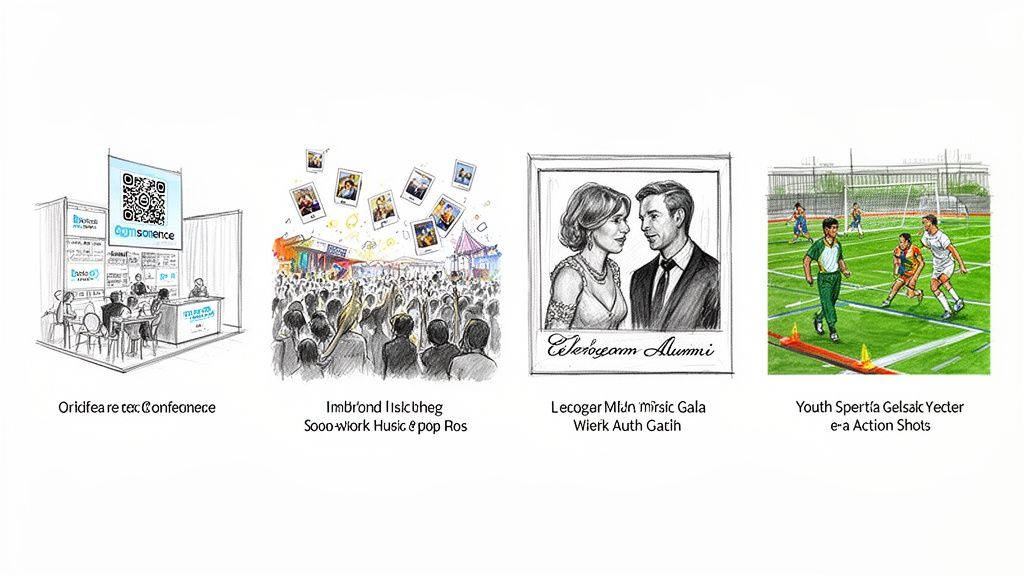
Let’s walk through a few scenarios where this approach makes a huge difference. We’re moving beyond just dumping photos in a folder and into creating experiences that people actually want to share.
The Corporate Conference
The Pain Point: Picture a big annual tech conference. The organizers want everyone buzzing about it on LinkedIn afterward. The problem? They’d always just sent out a link to a massive, generic gallery with thousands of photos. Unsurprisingly, almost no one shared anything because who has the time to hunt for a needle in a haystack?
The Smart Solution: This time, they put branded QR codes everywhere—at the coffee stations, in breakout rooms, near the main stage. Attendees just scan a code, snap a quick selfie for the system, and instantly get a private, curated gallery of every professional shot they're in.
The Outcome: The "find my photos" process was so seamless that social media shares jumped by 300% compared to the year before. Keynote speakers, award winners, and everyday attendees started posting their best moments, giving the conference’s brand a massive, organic boost long after the event ended.
The Multi-Day Music Festival
The Pain Point: A three-day music festival with 20,000 people is pure chaos in the best way. But for the photo team, it’s a nightmare. How do you deliver thousands of amazing shots to attendees while the energy is still high? You can't just post them all to Instagram, and waiting weeks to release them means you've lost all the momentum.
The Smart Solution: The festival displayed a single QR code photo gallery link on the main stage screens between band sets. As photographers uploaded photos in batches throughout the weekend, festival-goers could scan the code anytime, take a selfie, and see new pictures of themselves and their friends pop up.
This is all about instant gratification. People don't have to wait. They get their memories in near real-time, which fuels a constant wave of social media posts and keeps the festival trending all weekend long.
The University Alumni Gala
The Pain Point: A university is hosting a big fundraising gala to reconnect with its alumni. The photographer is capturing priceless moments of old friends catching up after years apart. The organizer knows these photos are gold, but a single gallery would be useless. The real magic is in the personal connections.
The Smart Solution: The post-event "thank you" email included a special event photo sharing link. When alumni clicked it, they were prompted to use the selfie-matching feature. In seconds, they were looking at a personalized collection of photos featuring them and their old classmates. It turned a standard follow-up email into a personal, engaging experience.
The Outcome: The personalized galleries brought all that nostalgia rushing back. The university saw a huge spike in traffic to the alumni association’s website and a tangible increase in donations. People were reminded of their positive experience, making them far more likely to give back.
Answering Your Top Questions About Event Photo Platforms
Whenever you're thinking about bringing a new piece of tech into your workflow, you're going to have questions. It's only natural. Let's walk through some of the most common things event pros ask when they're looking at a smarter way to deliver photos.
How Does the AI Face Recognition Actually Work? Is It Secure?
The term "AI face recognition" can sound a little intimidating, but the way it's used here is built entirely around privacy and user consent. The technology doesn't store a picture of someone's face. Instead, it creates a unique mathematical map—a string of numbers—that represents a person's facial features.
When an attendee snaps a selfie, the platform just compares the number-map from that selfie to the maps it created for all the faces in the event photos. It's a simple, incredibly fast matching game.
The most important thing to know is that this is 100% opt-in. The system only finds photos for people who choose to participate by taking a selfie. This data is used for one thing and one thing only: finding their pictures. It isn't shared or sold, making the whole experience secure and trustworthy from the ground up.
Can I Brand the Gallery to Match My Event?
Absolutely. In fact, you should demand it. Any professional-grade platform will let you make the gallery an extension of your event's brand. You can typically upload your company or event logo, match the color scheme perfectly, and even add custom messages or sponsor banners.
This is a huge deal because it transforms the gallery from just a folder of pictures into a polished, branded touchpoint that keeps the event experience going long after the doors have closed.
What’s the Setup Process Like for My Team and My Photographer?
This is where these platforms really shine—they're built to be simple and save you a ton of time. The workflow is usually just a few quick steps:
- Create Your Event Gallery: You'll set up the event in your dashboard, which usually takes just a minute or two.
- Upload the Photos: Your photographer can simply drag and drop the entire batch of high-res photos directly into the web uploader. No more clunky file transfers.
- Share the Link: Once the platform works its magic, you get a single link and a QR code. That's it. You share that with your attendees, and they're good to go.
The system handles all the heavy lifting in the background, from sorting the images to running the face recognition.
Can We Collect Photos From Our Guests, Too?
Yes, and this is a fantastic feature. Many modern platforms also let you gather user-generated content (UGC). You can create a central spot where guests can easily upload their own photos right from their phones.
This gives you a chance to collect and approve a huge library of authentic moments from every perspective, not just the professional photographer's. It's a goldmine for seeing the event through your attendees' eyes.


