10 Corporate Event Planning Tips That Will Transform Your Attendee Experience
Corporate event planning has evolved far beyond booking a venue and arranging catering. Success is now measured by engagement, shareability, and the lasting impression you leave on attendees long after the lights go out. While flawless logistics are the foundation, the real magic happens in the moments guests capture and share, turning a one-time gathering into a lasting brand asset. Unfortunately, many event strategies fall short here. Old methods of sharing photos, like sending links to cluttered cloud folders days later, create a disconnect and leave valuable engagement on the table.
This guide provides a modern, strategic framework with actionable corporate event planning tips focused on maximizing the impact of your event's visual content. You will learn how to move beyond basic logistics and implement a sophisticated photo distribution strategy from the very beginning. We will cover how to leverage technology to not only delight your guests with instant access to their memories but also to create measurable return on investment (ROI).
These aren't generic suggestions; they are specific, tactical steps to amplify your brand, build a stronger community, and prove the value of your event. From pre-event workflows with photographers to post-event engagement metrics, you'll discover how to transform event photography from a simple deliverable into a powerful marketing and community-building engine. Each tip is designed to be immediately usable, helping you plan and execute events that resonate and deliver tangible results.
1. Create a Post-Event Photo Distribution Strategy Before the Event Starts
One of the most overlooked yet high-impact corporate event planning tips is to map out your photo distribution plan before a single picture is taken. Instead of scrambling to collect, sort, and share images days later, a proactive strategy ensures attendees receive their photos almost instantly, maximizing post-event buzz and engagement. This involves pre-determining the exact channels, timeline, and technology you will use to deliver photos, transforming a logistical headache into a powerful marketing and relationship-building tool.
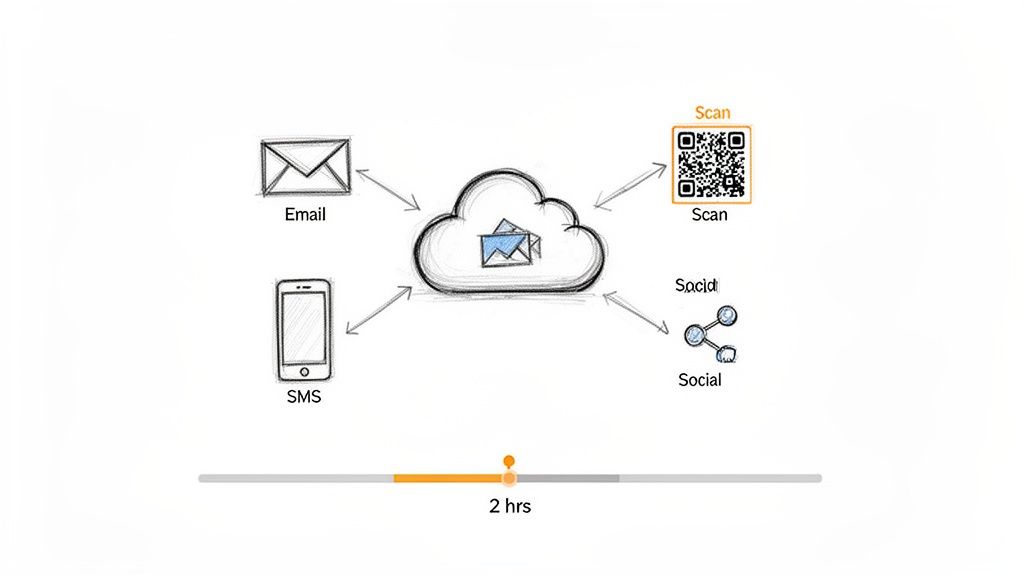
This approach works by automating the delivery process. Photographers upload images to a pre-configured platform during or immediately after the event. The system then automatically distributes them to attendees through their preferred channels, often within hours of the event's conclusion.
Why This Strategy Is Essential
Waiting days to share photos means missing the peak of attendee excitement. Immediate delivery capitalizes on this enthusiasm, leading to higher open rates, more social shares, and stronger brand recall. It also dramatically reduces the administrative burden on your team, freeing them from the manual work of sorting and emailing photos.
Actionable Implementation Steps
- Communicate Clearly and Early: Inform attendees how and when they will receive photos. Add a note in pre-event emails and display clear on-site signage, such as "Scan the QR code at your table after the final toast to access all event photos instantly!"
- Brief Your Photographers: Provide photographers with upload instructions and deadlines at least one week before the event. This ensures they are prepared to transmit images quickly and efficiently.
- Test Everything: Before the event, thoroughly test your QR codes and shareable links on multiple devices (iOS and Android) to guarantee a seamless user experience for all guests.
- Set Realistic Expectations: Clearly state the delivery timeline. A simple message like, "Your photos will be in your inbox within 2 hours of the gala's conclusion," prevents confusion and enhances attendee satisfaction.
2. Implement Selfie-Based Photo Matching to Eliminate Manual Tagging
A groundbreaking corporate event planning tip that enhances guest experience is to use selfie-based photo matching. This technology allows attendees to take a quick selfie on their device to instantly find every photo they appear in from the entire event gallery. It completely eliminates the tedious process of manual tagging and the frustrating experience of scrolling through hundreds of irrelevant images, delivering a highly personalized and efficient photo retrieval system.
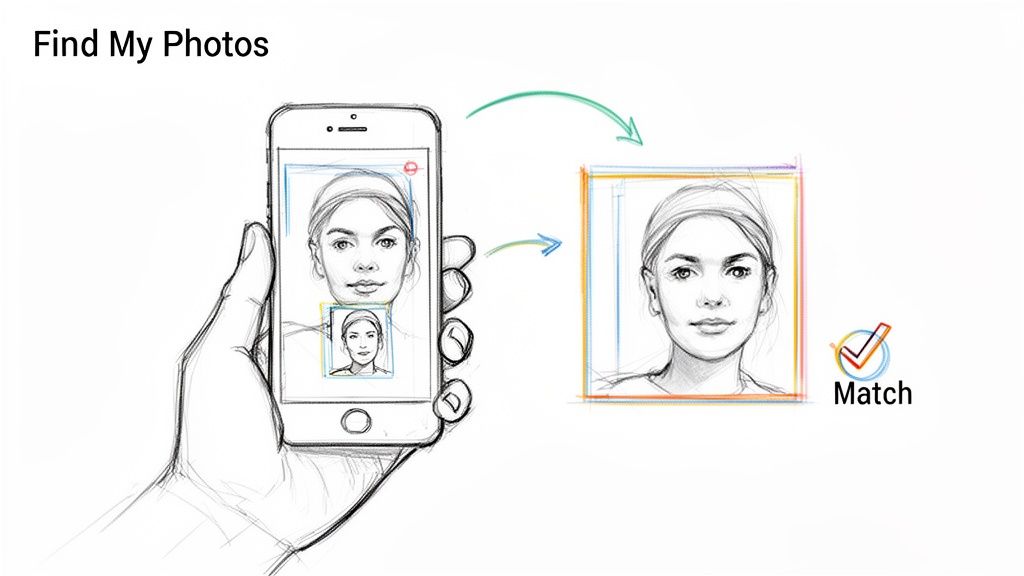
This self-service model leverages facial recognition to scan the event's photo library and present a curated collection directly to the user. For a 500-person gala with 2,000 photos, this means zero manual tagging is required, saving your team countless hours while providing immediate value to guests.
Why This Strategy Is Essential
In the age of personalization, attendees expect instant, relevant content. Selfie matching meets this expectation by providing a frictionless way for guests to access their moments. This not only increases engagement with event photos but also significantly boosts social sharing rates, as guests are more likely to post pictures of themselves. Furthermore, it's a privacy-friendly approach, as the matching can be performed on the attendee's device without storing their selfie.
Actionable Implementation Steps
- Promote the Feature in Advance: Build excitement by including instructions in pre-event communications. A simple message like, "Finding your photos is easy! Just take a selfie at the event link to see all your pictures instantly," prepares attendees to use the feature.
- Prioritize Privacy and Consent: Display clear on-site messaging explaining how the technology works, such as, "Your selfie is used only once to find your photos and is never stored." This transparency builds trust and encourages participation.
- Offer a Backup Option: While selfie matching is powerful, always provide a traditional gallery browsing option as a fallback. This ensures attendees who opt out or experience technical issues can still access their photos.
- Conduct Pre-Event Testing: Thoroughly test the facial recognition technology with a diverse group of people in various lighting conditions to ensure high accuracy rates and prevent false matches or missed photos during the live event.
3. Design On-Site Signage and a Branded Mobile-First Photo Experience
A seamless photo delivery strategy is only effective if attendees know how to access it. Integrating highly visible, branded signage with a mobile-optimized photo gallery is a crucial corporate event planning tip that bridges the gap between photo capture and attendee engagement. This involves placing clear calls-to-action, such as QR codes and simple instructions, throughout your venue to guide guests to a custom-branded, easy-to-navigate digital experience where they can instantly find and share their photos.

This method works by transforming passive event spaces into active engagement points. For example, a QR code on a table centerpiece at a gala links to a gallery styled with the event's logo and color scheme. Guests can scan, view, and share their memories in just a few taps, reinforcing your brand identity with every interaction.
Why This Strategy Is Essential
Effective on-site promotion dramatically increases the adoption of your photo gallery, maximizing the return on your event photography investment. A branded, mobile-first experience ensures a professional and cohesive look that extends your event's theme into the digital realm. This consistency strengthens brand recall and encourages social sharing, as attendees are more likely to post photos from a polished, easy-to-use platform.
Actionable Implementation Steps
- Place Signage Strategically: Position QR codes and instructions at high-traffic, natural congregation points like registration desks, bars, exit doors, and even on the back of restroom stall doors.
- Design for Visibility: Use large, bold fonts and contrasting colors that align with your event's branding to ensure signage is readable from a distance. A simple, direct CTA like "Scan Here to Get Your Photos!" is most effective.
- Provide Branding Assets Early: Send your logo, color palette, and any event-specific graphics to your photo platform provider at least two weeks in advance to ensure the gallery is fully customized and tested.
- Test Across Multiple Devices: Before the event begins, scan your QR codes and navigate the gallery on various iOS and Android devices. This guarantees a smooth, responsive experience for every guest, regardless of their phone.
4. Leverage Photo Galleries as Post-Event Engagement and Community Reinforcement
One of the most strategic corporate event planning tips is to view your photo gallery not just as a delivery mechanism but as a long-term engagement hub. This approach transforms a simple collection of images into a dynamic tool for reinforcing community bonds, extending the event's lifecycle, and creating powerful social proof. Instead of a one-time photo drop, you cultivate a living asset that continues to generate value and conversation long after the event concludes.
This method works by strategically sharing and repurposing event photos across multiple channels over time. By curating highlights for social media, featuring galleries in newsletters, and creating dedicated webpages, you continually draw attendees back to the event's key moments. This keeps the experience fresh in their minds and encourages ongoing interaction with your brand and fellow attendees.
Why This Strategy Is Essential
A static photo gallery is a missed opportunity. An active engagement strategy turns attendees into brand ambassadors. When they see themselves and their colleagues celebrated in official post-event communications, they are far more likely to share the content, strengthening their connection to the community and amplifying your event's reach. This also provides a rich source of authentic marketing material for promoting future events.
Actionable Implementation Steps
- Create and Promote a Hashtag: Establish a unique, branded event hashtag and promote it heavily before and during the event. Encourage attendees to use it, creating a user-generated content stream you can incorporate into your official gallery.
- Share Highlights Immediately: Within 24 hours, identify the 5-10 most compelling photos and share them on your primary social media channels. For instance, a gala organizer can post a carousel of highlights on Instagram, driving a 45% click-through rate to the full gallery.
- Tag and Acknowledge Attendees: When sharing photos on platforms like LinkedIn, tag attendees or their companies (with permission). An alumni association sharing event photos and tagging participants can generate over 300 engagements from just 50 attendees.
- Integrate into Post-Event Communications: Embed a link or a few select images in your post-event thank-you emails and newsletters. A corporate fundraiser that includes attendee moments in their follow-up email can see a measurable increase in early registrations for the next year's event. You can learn more about creating powerful, engaging galleries on saucial.app that make this process seamless.
5. Coordinate with Photographers Early to Establish Upload and Delivery Workflows
One of the most critical corporate event planning tips for ensuring a smooth visual content pipeline is to establish detailed workflows with your photographers well before the event. Instead of assuming photographers will intuitively know your delivery needs, a formal coordination process aligns expectations on deadlines, file specifications, and upload methods. This proactive briefing ensures that content from multiple photographers is consistent, high-quality, and delivered on schedule, preventing post-event delays and miscommunications.
This strategy involves creating a clear, written agreement or briefing document that outlines every step of the photo capture and delivery process. From file naming conventions to the specific platform they will use for uploads, every detail is defined upfront, transforming a potentially chaotic process into a streamlined and predictable operation.
Why This Strategy Is Essential
Without clear instructions, each photographer may deliver files in different formats, sizes, and timelines, creating a logistical nightmare for your marketing team. A coordinated workflow guarantees that all visual assets are uniform and ready for immediate distribution. This not inly speeds up your post-event marketing but also ensures a consistent and professional brand image across all shared photos.
Actionable Implementation Steps
- Create a Photographer Briefing Document: Prepare a comprehensive guide covering file formats (JPEG vs. RAW), resolution requirements, naming conventions (e.g., EventName_PhotographerInitials_001), and editing expectations.
- Set Firm Deadlines: Clearly state the upload deadline in the contract. For example: "All final, edited images must be uploaded to the designated platform no later than two hours after the event concludes."
- Provide Platform Training: If using a specific photo delivery system, provide photographers with login credentials and a brief training session or guide at least a week in advance. You can learn more about streamlined photographer upload workflows to see how modern platforms simplify this.
- Schedule a Pre-Event Call: Hold a brief 15-minute call a day or two before the event to walk through the workflow, confirm they have all necessary credentials, and answer any last-minute questions.
6. Enable Optional Photo Monetization to Create Photographer Revenue Streams
Transforming event photography from a cost center into a potential revenue stream is one of the more innovative corporate event planning tips. You can empower photographers to sell premium products directly to attendees through the photo gallery. This approach offers guests optional upgrades like prints, high-resolution digital downloads, or custom edits, while ensuring basic photo access remains completely free. It creates a valuable, non-intrusive sales channel that benefits both the photographer and attendees looking for high-quality keepsakes.
This model works by integrating e-commerce capabilities directly into the event's photo delivery platform. While all attendees can view and download complimentary, web-sized images, they also see options to purchase premium items. For example, a guest at a formal gala can instantly order a canvas print of their portrait, or a conference attendee can buy a high-resolution version of their headshot for professional use.
Why This Strategy Is Essential
This strategy provides photographers with a significant incentive to capture the highest quality images possible, as their potential earnings are tied to the appeal of their work. For event organizers, it adds a layer of value for attendees without any additional cost or aggressive sales tactics. It respects the guest experience by making all purchases completely optional, ensuring those who simply want a free digital souvenir are satisfied, while those who want more have an easy way to get it.
Actionable Implementation Steps
- Clarify Monetization Terms Upfront: Discuss the revenue-sharing model (e.g., 70-80% to the photographer) and product offerings during the initial contract negotiations to ensure complete alignment.
- Maintain Brand Control: Use a platform that allows you to approve which products are offered for sale. This ensures all monetized items, like branded merchandise, align with your corporate event's standards and brand identity. You can learn more about enabling optional photo monetization on Saucial.app and how to configure these controls.
- Emphasize "Optional" in Communications: Clearly communicate to attendees that free digital photos are available to everyone. Frame the paid options as premium, optional upgrades for those who want a special memento.
- Promote Subtly Within the Gallery: Integrate the upsell options naturally within the photo viewing experience. A simple "Buy a Print" or "Get Full-Resolution" button next to an image is more effective than disruptive pop-ups.
7. Set Realistic Timelines and SLAs for Photo Delivery and Access
A crucial element in managing attendee experience is to establish and communicate a clear Service Level Agreement (SLA) for photo delivery. Instead of leaving guests wondering when they'll see their pictures, a defined SLA sets a firm expectation, builds trust, and provides your photography team with a concrete deadline. This corporate event planning tip transforms photo access from an ambiguous afterthought into a reliable, professional service.
This strategy works by defining a specific timeframe for when photos will be available post-event. For example, a fast-paced corporate gala might have a 2-hour SLA, while a multi-day conference requiring more culling and editing might have a 24-hour SLA. Communicating this timeline upfront prevents a flood of inquiries and ensures the post-event experience is as smooth as the event itself.
Why This Strategy Is Essential
Uncertainty creates frustration. An SLA manages expectations proactively, demonstrating a high level of organization and respect for your attendees' time. For photographers, it provides a clear performance benchmark, aligning their delivery schedule with your event's goals. This process significantly reduces the "Where are my photos?" support requests and strengthens your event's reputation for professionalism.
Actionable Implementation Steps
- Choose the Right SLA for Your Event: Tailor your timeline to the event type. Set a 1-hour SLA for a sporting event where immediacy is key, a 24-hour SLA for an alumni dinner where guests expect photos the next day, or a 48-hour SLA for a high-profile fundraiser requiring detailed photo editing.
- Communicate the SLA Everywhere: Announce the delivery timeline prominently on the event website, in pre-event emails, and on-site signage. A clear message like, "All photos from today's trade show will be live in the gallery by 5 PM," is highly effective.
- Build in a Buffer: Always add a 30- to 60-minute buffer to your internal deadline. If you promise photos in 2 hours, instruct your photographer to deliver them in 90 minutes. This accounts for unexpected technical glitches or upload delays.
- Create a Contingency Plan: If you miss the SLA, communicate immediately. Send a brief email update acknowledging the delay and providing a new, firm delivery time. Transparency is always better than silence.
8. Measure and Optimize Photo Engagement Metrics to Demonstrate ROI
Proving the value of an event often comes down to data, and your photo strategy is a goldmine of measurable ROI. Instead of treating event photography as just a sunk cost, track key performance indicators (KPIs) related to photo engagement. This allows you to demonstrate the tangible value of your investment, identify optimization opportunities, and make data-driven decisions for future events. It transforms your photo gallery from a simple album into a powerful analytics tool.
This process involves using a photo distribution platform with built-in analytics to monitor how attendees interact with their pictures. By tracking metrics like gallery views, unique visitors, photo downloads, social media shares, and even sales revenue, you can quantify the post-event impact and brand reach generated directly from your event photos.
Why This Strategy Is Essential
Tracking photo engagement provides concrete evidence of your event's success beyond attendance numbers. For example, knowing that an alumni event’s photo gallery link achieved a 58% email open rate (compared to the typical 22%) proves its high value to the audience. These metrics justify budget allocation for professional photography and advanced distribution tools, showcasing how they directly contribute to marketing goals like brand impressions and lead generation.
Actionable Implementation Steps
- Define KPIs Before the Event: Establish clear success metrics upfront. Are you aiming for a specific number of social shares, a target for gallery views, or a certain revenue from photo sales? Set goals to measure against.
- Use Trackable Links: Implement UTM parameters in your photo gallery links. This allows you to track which channels (email, social media, QR codes) are most effective at driving attendees to view and download their photos.
- Monitor Social Media: Track your event hashtag for 2-3 weeks post-event to capture user-generated content that originates from your official photos. This helps quantify organic brand reach and online sentiment.
- Create Simple Reports: Compile key metrics into a concise report for stakeholders. Highlight figures like total photo downloads, social shares, and revenue generated. For a trade show, a simple statement like, "Photo downloads increased 45% year-over-year after implementing instant delivery," clearly demonstrates strategic improvement and success.
9. Establish Privacy and Permission Protocols for Photo Sharing
In an age of digital privacy concerns, one of the most critical corporate event planning tips is establishing clear consent mechanisms for photo sharing before the event. This means creating a formal process to inform attendees how their images will be captured and used, and giving them an explicit choice to opt in or out. A proactive approach builds trust, ensures legal compliance, and respects attendee privacy, turning potential liabilities into a demonstration of corporate responsibility.
This process works by integrating consent into the registration or check-in flow. Attendees are presented with a clear, easy-to-understand statement about photography and image usage. Their consent (or lack thereof) is documented, and on-site staff and photographers are briefed on how to respect these preferences throughout the event.
Why This Strategy Is Essential
Ignoring photo consent can lead to guest complaints, negative social media feedback, and potential legal issues related to privacy and data protection regulations like GDPR. A transparent protocol not only protects your organization but also enhances the attendee experience by showing you value their personal boundaries. It fosters a safer, more respectful environment where guests feel comfortable.
Actionable Implementation Steps
- Integrate Consent into Registration: Add a mandatory checkbox to your online registration form. Use clear language like, "I consent to my photo being taken and used in event galleries and for future marketing promotions."
- Provide On-Site Signage: Place prominent signs at all entrances stating, "Photography in progress. By entering, you consent to being photographed. If you do not wish to be, please see the registration desk for an identifier."
- Use Visual Opt-Out Cues: For attendees who do not consent, provide a discreet identifier like a different colored lanyard or a small sticker on their name badge. Inform photographers to avoid capturing individuals with these cues. You can learn more about how secure platforms manage user permissions and privacy settings on sites like Saucial.
- Train Staff and Vendors: Brief your photographers, videographers, and on-site staff on your specific privacy protocols. Ensure they know how to identify and respect attendees who have opted out.
10. Plan for Multiple Event Types and Photo Volumes with Scalable Infrastructure
A crucial yet often overlooked corporate event planning tip is to select a photo distribution platform with infrastructure that scales effortlessly. Whether you're managing a 50-person executive dinner or a 10,000-attendee conference, your technology must handle varying photo volumes and peak usage without compromising performance. A scalable system ensures a consistent, high-quality experience for every guest, regardless of event size or complexity.
This approach means choosing a single, robust platform that can be your go-to solution for an entire event calendar. For example, the same system should seamlessly manage the immediate delivery of a few hundred photos for an intimate alumni dinner and the real-time uploads from multiple photographers at a sprawling trade show with thousands of concurrent attendees accessing galleries.
Why This Strategy Is Essential
Using a non-scalable or fragmented approach creates significant operational risks. A system that works for a small event may crash during a large one, leading to attendee frustration and damaging your brand's reputation. A scalable solution provides reliability and efficiency, allowing your team to use a familiar workflow for every event, which drastically reduces setup time and the potential for human error.
Actionable Implementation Steps
- Vet Vendor Capabilities: Before committing, ask potential platform vendors for load testing data. Ask direct questions like, "Can your system handle 10,000 simultaneous users accessing a gallery?" and "What is your uptime guarantee?"
- Test with Realistic Volumes: Don't just test if a QR code works. Perform a stress test by uploading a high volume of high-resolution images and having multiple team members access the gallery simultaneously to simulate real-world conditions.
- Start Small to Scale Smart: Use your chosen platform for a smaller, low-stakes event first. This allows your team to learn its features and identify potential bottlenecks before deploying it for your flagship conference or gala.
- Plan for Peak Usage: When planning, assume that peak photo uploads will coincide with peak attendee access, such as right after a keynote or during the closing reception. Your infrastructure must be able to handle this combined load.
10-Point Corporate Event Photo Strategy Comparison
| 🔄 Implementation complexity | ⚡ Resource requirements | ⭐ Expected outcomes | 📊 Ideal use cases | 💡 Key advantages / Tips |
|---|---|---|---|---|
| Moderate — pre-event coordination across teams and platforms | Photo platform, QR/email/SMS channels, minimal dev/training | ⭐⭐⭐⭐ Faster delivery and higher attendee engagement | Galas, trade shows, sports awards where quick access matters | 💡 Communicate plan pre-event; test QR codes and links |
| High — requires facial-recognition integration and privacy design | On-device matching capability, robust backend for simultaneous requests | ⭐⭐⭐⭐⭐ Instant self-serve discovery; eliminates manual tagging | Conferences, parent-heavy sports events, large candid-photo events | 💡 Make optional; test across skin tones; clear privacy messaging |
| Low–Moderate — design, printing, and placement logistics | Printed signage, digital displays, mobile-optimized gallery | ⭐⭐⭐⭐ Increased photo discovery and social sharing | Galas, fundraisers, trade shows, any mobile-first audience | 💡 Place QR codes at exits; use high-contrast design; update displays |
| Low — curation and social management work | Shareable gallery tools, social channels, newsletter integration | ⭐⭐⭐⭐ Extends event lifecycle; generates UGC and marketing value | Alumni events, festivals, fundraising campaigns | 💡 Promote a branded hashtag; select top photos within 24 hrs |
| Moderate — contracts, SLAs and standardized workflows | Time for briefings, onboarding, standardized upload platform | ⭐⭐⭐⭐ Consistent quality and predictable delivery timing | Multi-photographer events, large galas, tournaments | 💡 Provide briefing docs; set upload deadlines; hold short pre-event calls |
| Moderate — payments, fulfillment and organizer approval | E‑commerce/payment integration, print fulfillment partners | ⭐⭐⭐⭐ New revenue stream for photographers; optional for attendees | Sports events, weddings, galas with keepsake demand | 💡 Keep free access; use subtle upsells; define revenue splits |
| Low–Moderate — expectation setting and contingency planning | Coordination with photographers, clear communication channels | ⭐⭐⭐⭐ Reduces support requests; builds credibility when met | All event types (set according to scale and edit needs) | 💡 Publish SLA widely; include buffer time; release in batches |
| Moderate — analytics setup and ongoing review | Analytics dashboard, UTM tracking, social monitoring tools | ⭐⭐⭐⭐⭐ Demonstrates ROI; reveals channel and content performance | Recurring events, marketing-driven conferences and fundraisers | 💡 Define KPIs pre-event; collect baselines; report regularly |
| Moderate — legal review and consent workflows | Consent capture (registration/check-in), signage, opt-out systems | ⭐⭐⭐⭐ Builds trust and legal compliance; may reduce usable photos | Corporate, family events, GDPR-sensitive regions | 💡 Use plain-language consent; make opt-out easy; train staff |
| High — architecture and load testing for varied scales | Scalable platform, load balancing, integrations and testing | ⭐⭐⭐⭐⭐ Consistent performance from small dinners to 10k+ festivals | Organizers running mixed-size events and high-traffic venues | 💡 Test realistic volumes; request vendor load tests; plan 2–3x peak |
From Planning to Lasting Impact: The Future of Event Engagement
The journey through the intricacies of modern corporate event planning reveals a powerful, unifying thread: the experience doesn't end when the lights go down. The traditional model of event management, which often treated post-event activities as an afterthought, is rapidly being replaced by a more holistic, strategic approach. As we've explored, the key to unlocking lasting impact lies in a proactive mindset that integrates every phase of the event lifecycle, from initial strategy to long-term community building. This is where mastering a few crucial corporate event planning tips can transform a good event into an unforgettable brand-building opportunity.
At the core of this evolution is the strategic use of event photography. We've moved far beyond simply hiring a photographer and waiting weeks for a link to a generic gallery. Today's most successful events turn photos into an immediate, personalized, and interactive asset. This shift requires a fundamental change in planning, demanding that organizers think about photo distribution, privacy, and engagement before the first guest even arrives. By establishing a clear photo strategy from the outset, you are no longer just documenting an event; you are engineering a powerful marketing and community-building engine.
Key Takeaways for the Modern Event Planner
To truly elevate your next corporate event, it's essential to internalize the core principles we've discussed. These aren't just isolated tips; they are interconnected components of a comprehensive engagement strategy.
Proactive Planning is Non-Negotiable: The most significant takeaway is the need to plan your photo and content strategy from day one. This includes coordinating with photographers on delivery workflows, designing branded digital experiences, and setting clear timelines. Waiting until after the event to figure out photo distribution is a recipe for missed opportunities and diminished attendee satisfaction.
The Attendee Experience is Paramount: Every decision should be viewed through the lens of your guests. Implementing technologies like selfie-based photo matching isn't just a technical solution; it's a commitment to providing an effortless, magical "Find My Photos" experience. This focus on individual delight is what turns attendees into enthusiastic brand advocates.
Measurement is the Key to Proving Value: In the corporate world, demonstrating return on investment is critical. By tracking photo engagement metrics, such as shares, downloads, and gallery views, you can provide concrete data that proves the event's reach and impact. These analytics transform your event from a cost center into a quantifiable marketing success.
Your Actionable Next Steps
Armed with these insights, it's time to put theory into practice. Don't try to overhaul everything at once. Instead, focus on implementing a few key changes for your next event.
- Schedule a Pre-Event Photo Strategy Meeting: For your very next event, make this a mandatory item on your checklist. Meet with your photographer and marketing team to explicitly define the photo delivery workflow, branding for the gallery, and the desired attendee experience.
- Audit Your On-Site Communication: Review your plans for signage and on-site announcements. How will you clearly communicate to attendees how they can access their photos instantly? Create a simple, clear message and integrate it into your event's key touchpoints.
- Define Your Post-Event Follow-Up: Map out a communication plan that leverages your photo gallery. Plan an email or social media post to be sent within 24-48 hours of the event, driving traffic back to the branded gallery and reigniting the excitement.
Ultimately, the future of corporate event planning hinges on creating seamless, engaging, and memorable experiences that deliver measurable business results. By embracing these corporate event planning tips and shifting your perspective from simple logistics to strategic engagement, you position yourself and your organization as leaders in the industry. You stop just hosting events and start building lasting connections, powerful brand moments, and vibrant communities.
Ready to eliminate manual photo tagging and deliver an instant, personalized photo experience at your next event? Discover how Saucial uses AI-powered face matching to connect attendees with their photos in seconds, saving you time and amplifying your brand's reach. Explore the future of event engagement at Saucial and see how our platform aligns perfectly with these advanced corporate event planning tips.


