10 Innovative Branding Photoshoot Ideas to Boost Engagement in 2026
In a visually saturated market, generic stock photos and repetitive headshots fail to capture attention. A strategic branding photoshoot is no longer a luxury; it's a fundamental component of building a memorable identity. It’s about crafting a narrative, establishing trust, and creating a visual language that connects deeply with your ideal audience. Powerful brand photography tells your story, highlights your core values, and can convert passive browsers into engaged community members.
The challenge, however, is moving beyond the obvious. How do you generate fresh, impactful concepts that truly reflect your brand's unique essence? This is where a well-defined visual strategy becomes critical. Simply taking pictures isn't enough; you need a plan that aligns every shot with your business goals, whether that's boosting event engagement, monetizing creative work, or fostering a stronger community.
This guide provides a comprehensive list of actionable branding photoshoot ideas designed to elevate your visual content and deliver tangible results. We will explore ten distinct concepts, each complete with a practical blueprint covering everything from mood and props to lighting and strategic distribution. You’ll learn not just what to shoot, but how to execute it effectively and how to use tools like Saucial to maximize the reach and impact of every image. Prepare to transform your brand’s visual presence from forgettable to iconic.
1. Branded Frame Overlays and Event-Specific Filters
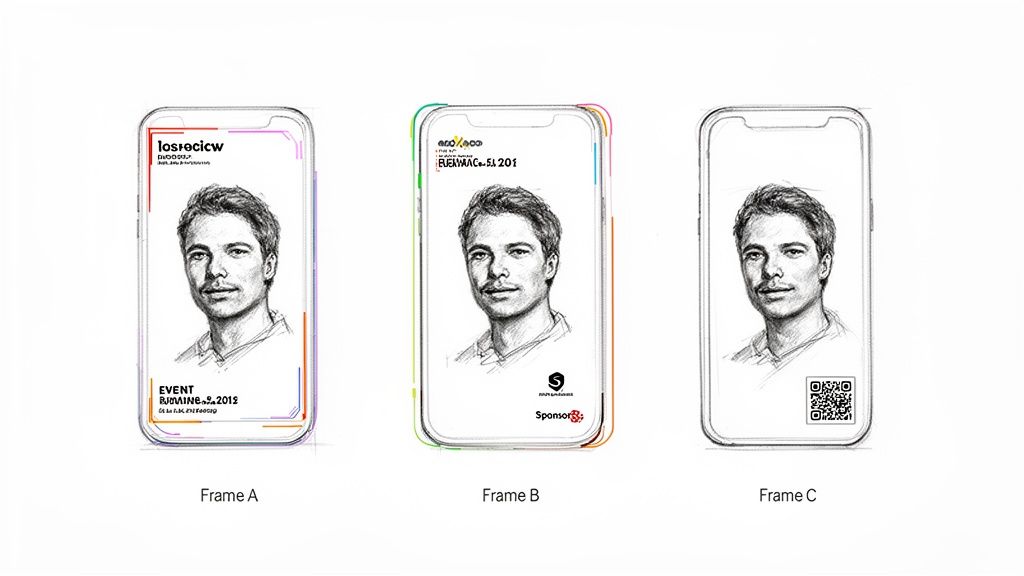
One of the most effective branding photoshoot ideas for live events involves transforming attendee photos into powerful marketing assets. This technique adds custom digital frames, logos, or themed filters directly onto photos taken at your event. When guests access their images, each one is already polished with your event’s name, date, sponsor logos, or unique graphical elements, turning every social media share into a piece of organic advertising.
This method seamlessly integrates your brand into the attendee's personal experience. Instead of just a great photo, they receive a branded keepsake that tells a story. This reinforces brand identity and provides a measurable return on investment as your event’s visual signature spreads across social platforms.
Target Use-Cases
This strategy is highly versatile and delivers immense value in various settings:
- Corporate Galas & Conferences: Add sponsor logos and event themes to photo booth pictures, providing tangible value to partners.
- Trade Show Booths: Overlay your company logo and a call-to-action on every photo taken at your booth to increase lead generation and brand recall.
- Nonprofit Fundraisers: Include the event hashtag, organization's logo, and a "thank you for your support" message to foster community and encourage donations.
- Weddings & Private Parties: Create custom filters with the couple's names and wedding date for a personalized, shareable memory.
Quick Execution Guide
- Mood: Professional, festive, and cohesive. The design should enhance the photo, not distract from it.
- Props: The digital frame is the prop. No physical items are needed, making this a streamlined, scalable option.
- Lighting: Ensure your general event photography lighting is flattering. Good lighting makes the subject look great and ensures the overlay is crisp and clear.
- Implementation Tips:
- Keep it Minimal: Position logos or text in corners or along a single edge to avoid obscuring faces.
- Offer Variety: Provide two or three frame options to give attendees a sense of choice and personalization.
- Stay On-Brand: Use colors and fonts that align with your event’s brand guidelines for a consistent look.
- Include a QR Code: Consider embedding a small QR code in the frame that links back to the full event gallery on a platform like Saucial.
- Test Before Launch: Always test your overlay designs on a few sample photos to check for visibility and placement issues before the event.
Platforms can automate this process, allowing for custom settings to be applied effortlessly. To get a deeper look at how to configure these features for your event, you can explore event branding settings and options to see how simple it is to implement.
2. Selfie-to-Photo Matching for VIP and Attendee Recognition
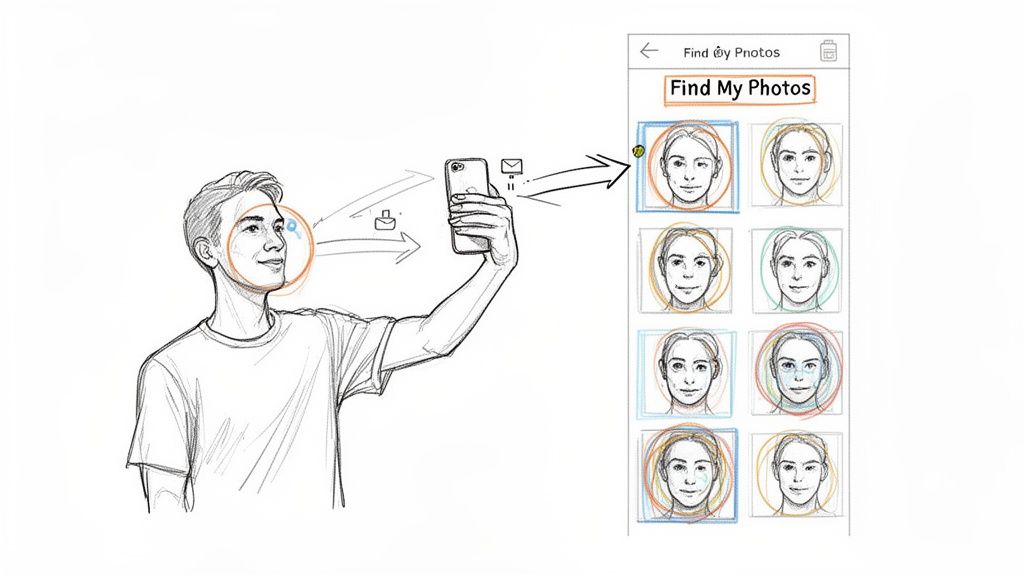
A groundbreaking branding photoshoot idea for modern events is leveraging facial recognition to deliver a hyper-personalized photo experience. This technology allows attendees to take a quick selfie and instantly see every photo they appear in from the entire event gallery. It eliminates the tedious process of scrolling through hundreds of images, transforming photo retrieval from a chore into a magical "wow" moment.
This method delivers immense value by creating a frictionless and delightful user experience. When attendees can find their photos in seconds, they are far more likely to engage with, download, and share them. This immediate gratification boosts social media velocity and connects the positive, high-tech experience directly to your brand.
Target Use-Cases
This technology is a game-changer for large-scale or fast-paced events where finding specific individuals is challenging:
- Large Conferences & Trade Shows: Allow booth visitors or session attendees to instantly find their professional headshots or candid networking photos without administrative overhead.
- Sporting Events & Tournaments: Enable athletes and fans to retrieve their action shots from thousands of photos captured during the event simply by submitting a selfie.
- University & Alumni Galas: Help hundreds of guests find their pictures from the evening, significantly boosting engagement compared to traditional gallery links.
- Corporate Fundraisers & Retreats: Provide VIPs and donors with an exclusive, seamless way to access their photos, reinforcing their importance and encouraging shares that amplify the event's reach.
Quick Execution Guide
- Mood: Innovative, personal, and efficient. The experience should feel effortless and almost magical for the user.
- Props: A smartphone or kiosk for selfie capture is all that’s required. Clear signage with a QR code to access the photo-matching page is crucial.
- Lighting: Ensure the selfie capture station is well-lit to get a clear reference image for the AI. Similarly, good event lighting helps the facial recognition algorithm perform accurately.
- Implementation Tips:
- Communicate Clearly: Use on-site signage and pre-event emails to explain how the selfie-to-match process works and address privacy.
- Provide Assistance: Have staff on hand to guide attendees through the selfie capture process, ensuring a high-quality photo for the best matching results.
- Test Extensively: Before the event, test the system with sample photos taken in various lighting conditions to gauge its accuracy.
- Include a Fallback: Offer a manual search or gallery browse option for any users the system can't confidently match.
- Ensure Privacy Compliance: Be transparent about how photo and selfie data is used and stored, ensuring you comply with all relevant privacy regulations.
Platforms like Saucial integrate this technology directly, automating the entire process. Attendees can visit a branded gallery, take a selfie, and see their personal collection appear in seconds, creating a powerful and memorable brand touchpoint.
3. Photo Sales and Print Monetization for Photographers
One of the most powerful branding photoshoot ideas for professional photographers is to transform event galleries into a direct revenue stream. This approach involves setting up a system where attendees can purchase digital downloads, high-quality prints, canvases, or other photo products directly from the event gallery. By offering these options immediately after an event, you capitalize on peak excitement and engagement.
This strategy converts a one-time service into a long-term sales opportunity, creating a win-win scenario. Attendees get a seamless way to acquire professional keepsakes, and the photographer generates additional income without any sales management from the event organizer. For example, a gala photographer can generate thousands in post-event sales by offering premium prints to guests who want to commemorate the evening.
Target Use-Cases
This monetization model is highly effective in environments where attendees have a strong personal connection to the photos:
- Weddings & Private Events: Offer guests the ability to buy professional prints or digital downloads of their favorite moments, moving beyond the traditional photographer package.
- Sports Tournaments: Allow athletes and their families to purchase high-resolution action shots directly from the gallery, often at a premium price.
- Corporate Headshot Stations: Provide a low-resolution digital file for free and offer high-resolution versions or premium edits for purchase, a popular upsell.
- Charity Galas & Fundraisers: A portion of print or digital sales can be donated back to the cause, encouraging purchases and increasing the event’s overall fundraising total.
Quick Execution Guide
- Mood: Professional, exclusive, and seamless. The purchasing experience should feel like a premium, integrated part of the event service.
- Props: The "props" here are the products themselves: high-quality paper for prints, well-crafted canvases, and secure digital delivery.
- Lighting: Flawless, professional lighting is non-negotiable. The quality of the photos is the primary driver of sales, so every shot must look its best.
- Implementation Tips:
- Offer Tiered Pricing: Start with a low-cost digital download as an easy entry point, then price prints and canvases as premium options.
- Curate "Best Of" Galleries: Highlight a curated selection of the best photos to guide attendees toward high-impact images and drive impulse purchases.
- Create Urgency: Use a countdown timer or state that the gallery will only be available for a limited time (e.g., "30 days") to encourage immediate action.
- Start Small: Begin by offering just two or three popular products, like digital downloads and a standard print size, before expanding your catalog.
- Brand Your Gallery: Include your photography brand, logo, and social media handles in the gallery’s footer to build brand recognition.
Modern platforms can facilitate this entire process, integrating e-commerce directly into photo galleries. To see how you can set up a monetized gallery for your next event, you can discover tools for photographers that simplify sales and delivery.
4. Multi-Photographer Collaboration and Attribution
For large-scale events, one of the most complex branding photoshoot ideas involves managing multiple photographers. This strategy streamlines the process by creating a single, unified gallery where several photographers can upload their work. Each contributor receives proper credit for their images, and attendees can easily find their photos in one central location, regardless of who took the picture. This prevents fragmented galleries and ensures a cohesive brand experience.
This method transforms a logistical challenge into a powerful asset. By providing a seamless "find my photos" experience, you enhance the attendee journey and ensure all visual content is consolidated. It also respects the creative ownership of photographers by automatically attributing their work, which is critical for maintaining professional relationships and showcasing the collective talent that captured your event.
Target Use-Cases
This collaborative approach is essential for events where comprehensive coverage is key:
- Music Festivals & Multi-Day Events: Assign photographers to different stages or days, allowing them to upload to a central hub where attendees can find all their pictures from the entire event.
- Large Corporate Conferences: Enable the main event photographer, sponsor photographers, and even select attendees to contribute to a single, searchable gallery.
- Sporting Tournaments: Have photographers cover different fields, courts, or heats, with all action shots flowing into one unified album for athletes and families to access.
- Nonprofit Galas: Combine photos from a hired professional with shots from volunteer photographers to capture every moment without creating multiple, confusing galleries.
Quick Execution Guide
- Mood: Cohesive, organized, and collaborative. The final gallery should feel like a single, unified story despite multiple creative inputs.
- Props: The focus is on coordination, not physical props. Key tools include shared folders, communication channels, and a robust gallery platform.
- Lighting: Varies by photographer and location. The primary goal is to ensure each photographer is equipped to handle their specific environment's lighting conditions.
- Implementation Tips:
- Establish Clear Guidelines: Before the event, create a document outlining file naming conventions, resolution requirements, and content priorities.
- Assign Specific Zones: Give each photographer a designated area or role (e.g., "stage right," "roaming crowd shots," "keynote speaker") to minimize overlap.
- Use Metadata for Attribution: Leverage platforms that read photographer metadata to automatically tag and credit photos in the final gallery.
- Stagger Upload Times: To prevent server lag, schedule upload windows for each photographer, especially during or immediately after the event.
- Set Up a Review Workflow: If brand consistency is paramount, use a system where an event organizer must approve photos before they go live in the public gallery.
Platforms designed for this purpose simplify photographer management. You can set up individual photographer access to see how each contributor can upload to a shared event gallery while maintaining their attribution.
5. QR Code Gallery Distribution and Venue Activation
One of the smartest branding photoshoot ideas for live events focuses not on the photo itself, but on how effortlessly guests can access and share it. By generating a QR code that links directly to the event photo gallery, you can eliminate friction and dramatically increase engagement. Instead of typing URLs or searching for links, attendees simply scan a code to instantly find their photos.
This strategy transforms physical spaces within your venue into digital gateways. Placing these scannable codes at key touchpoints ensures that the excitement of the event translates directly into online sharing. This method is exceptionally effective for driving immediate, post-event traffic to your branded gallery, ensuring your content is seen and shared while the experience is still fresh in attendees' minds.
Target Use-Cases
This approach delivers exceptional results by meeting attendees where they are:
- Galas & Fundraisers: Place large QR codes on screens near the exit, so departing guests can scan and access their photos on the way out, leading to high adoption rates.
- Trade Show Booths: Display a QR code prominently on booth signage to give visitors an easy way to find pictures taken with your team, capturing leads and extending brand interaction.
- Festivals & Concerts: Print QR codes on wristbands, programs, and signage at vendor stands or scoreboards to maximize visibility and scans throughout the event.
- Corporate Conferences: Include a unique QR code on each attendee's nametag, linking them directly to photos where they are tagged, offering a highly personalized experience.
Quick Execution Guide
- Mood: Convenient, modern, and interactive. The goal is to make photo access feel seamless and tech-savvy.
- Props: The QR code itself is the main element. Display it on digital screens, printed signs, table tents, or even merchandise.
- Lighting: Ensure printed QR codes are placed in well-lit areas to guarantee scannability. For digital screens, adjust brightness to avoid glare.
- Implementation Tips:
- Strategic Placement: Position QR codes at natural stopping points like registration desks, exit doors, bars, or restroom mirrors.
- Size Matters: Make the code large enough to be easily scanned from a distance of 3-5 feet. A minimum size of 2-3 inches is a good starting point.
- Add a Clear Call-to-Action: Pair the code with simple, direct text like "Scan for your photos" or "Find yourself in the gallery!" to instruct attendees.
- Brand Your Code: Customize your QR code with your brand's colors or a small logo in the center to increase trust and recognition.
- Test Extensively: Before the event, test the QR code with multiple phone types (iPhone and Android) under various lighting conditions to ensure it works flawlessly.
Platforms like Saucial can generate a dedicated QR code for your event gallery, streamlining this entire process. To see how you can create and manage a gallery for your next event, you can explore event management features and discover how easy it is to connect your guests to their photos.
6. Alumni and Community Engagement Through Photo Recognition
This powerful branding photoshoot idea transforms event photography from a simple recap into a dynamic tool for fostering long-term community. Instead of just posting an album, you create an interactive gallery where attendees can easily find photos of themselves. This act of self-discovery deepens their personal connection to the organization, reinforcing a sense of belonging and community pride.
By leveraging platforms with smart search, attendees can instantly locate their own moments, turning a passive viewing experience into an active, engaging one. This process not only strengthens emotional ties but also provides a natural opportunity to grow your marketing database, as attendees opt-in for updates while accessing their cherished photos.
Target Use-Cases
This strategy excels at building and maintaining relationships within established communities:
- University & Alumni Events: Allow graduates to find reunion photos, strengthening their connection to the institution and encouraging future participation.
- Community Fundraisers: Enable attendees to tag themselves and friends, creating viral sharing loops and gathering opt-ins for next year’s event.
- Professional Associations: Create searchable galleries from conferences or networking events, making it easy for members to find and share professional headshots on platforms like LinkedIn.
- Large-Scale Reunions: Organize decades of archived photos, letting members discover images of themselves across different eras, fostering nostalgia and lifelong loyalty.
Quick Execution Guide
- Mood: Nostalgic, celebratory, and personal. The gallery should feel like a shared digital yearbook.
- Props: Focus on candid moments and authentic interactions. The 'prop' is the genuine connection between attendees.
- Lighting: Capture the natural ambiance of the event. A mix of professional portraits and well-lit candid shots works best to fill the gallery.
- Implementation Tips:
- Build Anticipation: Send a pre-event email hinting at the interactive photo gallery to get attendees excited.
- Encourage Social Sharing: Prompt users to find their photos and share them on social media with the event hashtag and a tag for your organization.
- Feature Community Leaders: Create a "Featured Alumni" or "Community Spotlight" section within the gallery to highlight influential members.
- Integrate a Call-to-Action: Include an optional donation link or a membership upgrade prompt within the gallery interface.
- Follow Up Swiftly: Send a follow-up email within 48 hours to attendees who viewed their photos, asking for event feedback or inviting them to the next gathering.
7. Sponsored Photo Moments and Brand Activation Photography
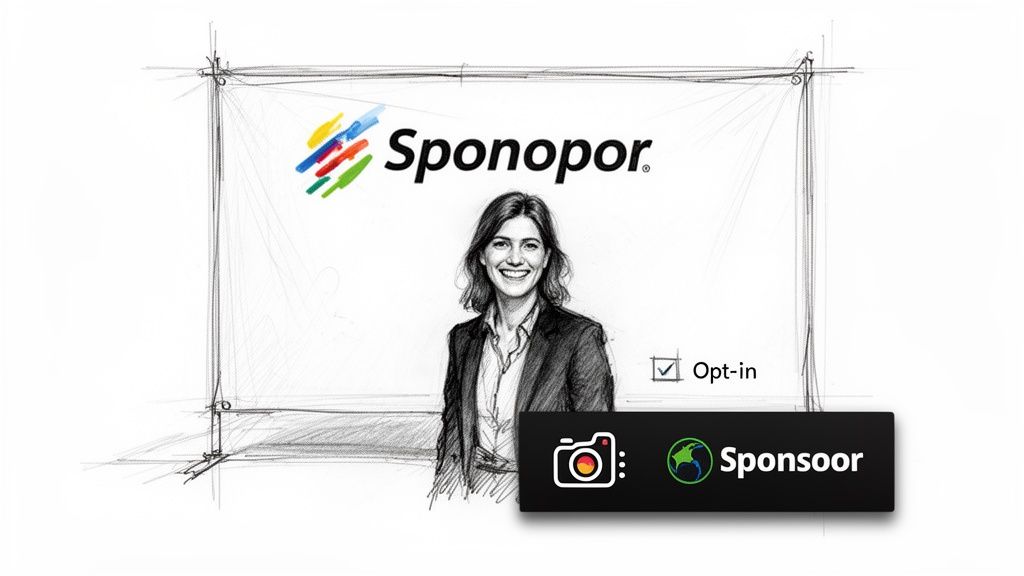
This powerful branding photoshoot idea transforms event photography into a direct revenue stream and a high-value asset for sponsors. It involves creating dedicated, visually appealing photo "moments" or backdrops where sponsors are prominently featured. When attendees take photos in these zones, their images can be automatically tagged with sponsor logos or branded overlays, turning each picture into a measurable marketing touchpoint.
This strategy offers a clear return on investment for partners, who gain significant brand exposure and, with explicit attendee consent, valuable lead-generation data. For organizers, it provides a premium sponsorship package, while attendees receive a professionally captured, fun memory from the event. It’s a symbiotic relationship where sponsors fund an enhanced guest experience and receive tangible results.
Target Use-Cases
This approach is especially effective for events looking to monetize their photography and provide sponsors with concrete ROI:
- Trade Shows & Expos: A sponsor pays for a branded photo booth and in return receives attendee photos tagged with their logo and a high opt-in rate for follow-up marketing.
- Corporate Galas & Awards Nights: A bank sponsors a "champagne toast" moment. All photos of guests cheering are branded with the bank’s logo, generating dozens of social shares that amplify sponsor visibility.
- Tech Conferences: A sponsor’s product demo booth includes a photo activation. The majority of booth visitors are photographed, with images receiving a branded overlay showcasing the product.
- Nonprofit Fundraisers: A luxury brand sponsors a VIP lounge. Photos taken in this exclusive area are co-branded, providing the sponsor with high-value contacts and positive brand association.
Quick Execution Guide
- Mood: Experiential, premium, and engaging. The photo moment should feel like a special feature, not just an advertisement.
- Props: Branded backdrops, custom neon signs with sponsor logos, or physical products that attendees can interact with.
- Lighting: Use professional studio lighting (key, fill, and backlights) to make the sponsored area look polished and ensure both attendees and branding are perfectly illuminated.
- Implementation Tips:
- Prioritize Attendee Appeal: Design a backdrop so stunning that guests want a photo there. The sponsorship element should be integrated tastefully, not be the sole focus.
- Keep Branding Subtle: Limit sponsor branding to 10-15% of the overall photo space to avoid it feeling intrusive or overly commercial.
- Provide Clear Metrics: Use a platform that offers real-time analytics to show sponsors how many photos were taken, shared, and viewed.
- Ensure Data Privacy: Be transparent with attendees about data collection and get clear sponsor consent on privacy policies and data handling.
- Staff the Activation: Have a photographer or brand ambassador on-site to guide attendees, encourage engagement, and ensure perfect positioning.
By leveraging a smart gallery platform, you can automate photo tagging and deliver detailed reports to your sponsors, proving the value of their investment. To see how these features can be managed, you can explore the capabilities of a modern event photography platform that connects sponsors, organizers, and attendees.
8. Sports Tournament Action Shot Galleries and Athlete Engagement
For athletic events, one of the most powerful branding photoshoot ideas is to capture high-energy action shots and organize them for easy access. This strategy focuses on creating dedicated galleries where participants can quickly find, purchase, and share photos of themselves competing. By structuring photos by athlete, team, or competition round, you transform a chaotic event into a personalized, high-value experience for every participant.
This approach taps into the deep emotional connection athletes have with their performance. A photo of them crossing the finish line or scoring a goal is a powerful keepsake. When these moments are easy to find and share, they become potent user-generated content, spreading brand awareness for the event, sponsors, and organizers across social networks. For example, a marathon runner can instantly find their finish-line photo and share it, showcasing both their achievement and the event's brand.
Target Use-Cases
This method is exceptionally effective for any event centered around athletic performance and competition:
- Marathons & Races: Use selfie-matching technology so thousands of runners can instantly locate their photos from various points along the course.
- Team Sports Tournaments: Organize galleries by team, allowing coaches and parents to easily find and purchase photos of their players, driving significant print and digital sales.
- Fitness Competitions: Link photos directly to leaderboards, letting CrossFit athletes or weightlifters buy action shots of their personal record lifts while the excitement is still fresh.
- School & University Athletics: Provide a seamless way for parents and students at a large track meet to find and purchase photos the same evening, creating a new revenue stream for the athletic department.
Quick Execution Guide
- Mood: Energetic, powerful, and triumphant. The photos should capture the peak emotion and physical effort of the competition.
- Props: The action itself is the focus. Gear like race bibs, team jerseys, and event-specific equipment naturally serve as props.
- Lighting: Use fast shutter speeds (1/1000s or faster) and adjust ISO as needed to freeze motion and capture crisp, clear action shots, even in challenging lighting conditions.
- Implementation Tips:
- Strategic Photographer Placement: Station photographers at key moments like the starting line, finish line, major obstacles, or scoring zones.
- Rapid Delivery is Key: Upload and organize photos within 4-6 hours of the event to capitalize on peak participant excitement.
- Organize for Simplicity: Structure the gallery by heat, round, team, or bib number so athletes can find their images in seconds, not hours.
- Offer Bundles: Create discounted packages like "Your Top 5 Action Shots" to encourage larger purchases and increase the average order value.
- Streamline the Upload: A fast and efficient upload process is crucial for timely delivery. You can learn how to quickly upload large galleries to ensure photos are available while participants are still on-site or just getting home.
9. Conference and Trade Show Lead Capture and Follow-Up
Transform your event photography from a simple gallery into a powerful lead generation engine. This strategy embeds optional contact information collection directly into the photo-viewing experience. When attendees find their photos from a conference or trade show, they are given a value-driven reason to share their details, such as receiving high-resolution downloads, getting prints delivered, or opting into sponsor communications.
This approach creates a list of warm, engaged leads for organizers and exhibitors. Unlike cold badge scans, this method captures individuals who are actively interacting with your brand post-event. It provides immediate value to attendees (their photos) while generating a high-quality contact list, making it one of the most effective branding photoshoot ideas for demonstrating ROI.
Target Use-Cases
This lead generation strategy is exceptionally effective in professional and recruitment environments:
- B2B Trade Shows: Exhibitors can capture hundreds of warm leads by offering attendees a branded headshot or team photo in exchange for their contact information, far exceeding traditional booth interactions.
- Tech & Industry Conferences: Grow your event's email list significantly by gating full-gallery access or high-resolution downloads behind a simple, optional contact form.
- Career Fairs & Recruitment Events: Connect candidates with recruiters by offering professional headshots. Attendees can opt-in to share their photo and contact details directly with hiring managers.
- Sponsor Activations: Provide sponsors with a tangible lead list by allowing attendees to opt into specific sponsor communications when they access their photos taken at a sponsored booth.
Quick Execution Guide
- Mood: Professional, value-driven, and seamless. The process should feel like a helpful service, not a transaction.
- Props: The photo itself is the main draw. Props could include branded backdrops, company swag, or professional headshot equipment.
- Lighting: Crisp, professional lighting is crucial, especially for headshots. Ensure subjects are well-lit to enhance the perceived value of the photo.
- Implementation Tips:
- Frame it as a Benefit: Instead of "Enter Your Email," use calls-to-action like "Get Your Free Headshot" or "Receive Recruiter Follow-Up."
- Make it Optional: Always provide a free preview of the photos. Requiring information upfront can create friction and reduce engagement.
- Offer Granular Opt-Ins: Allow attendees to choose which sponsors they want to hear from, rather than forcing a blanket consent. This increases trust and lead quality.
- State Your Intentions: Clearly explain how their contact information will be used to maintain transparency and comply with privacy regulations.
- Follow Up Fast: Capitalize on the engagement by following up with leads within 24 hours, while the positive experience of the event is still fresh in their minds.
10. UGC Curation, Event Hashtag Integration and Post-Event Engagement Loop
One of the most powerful branding photoshoot ideas extends beyond professional shots by transforming your entire community into brand photographers. This strategy involves creating a unified gallery that combines official event photos with attendee-submitted images and social media content pulled from a specific event hashtag. This approach doesn't just capture moments; it builds a rich, authentic visual narrative co-created by you and your audience.
By centralizing all event content, you give every attendee a reason to visit and engage with your branded gallery. This visit becomes the first step in a powerful post-event engagement sequence. After finding their photos, attendees can receive targeted follow-ups, like feedback surveys or invitations to the next event, creating a loop that drives community growth and boosts long-term loyalty.
Target Use-Cases
This community-driven approach is ideal for large-scale or highly engaged events:
- Music Festivals & Large Conferences: Aggregate thousands of attendee photos with official shots to create a comprehensive and dynamic gallery that captures the event's full scale and energy.
- Corporate Team-Building Events: Encourage employees to share their candid phone photos, fostering a sense of camaraderie and giving their contributions equal billing with professional shots.
- Nonprofit Fundraisers & Galas: Use a social hashtag to gather supporter content, reaching donors who couldn't attend but can experience the event's success through authentic user-generated photos.
- Alumni & Community Gatherings: Drive unprecedented engagement by sending a link to a unified gallery, achieving much higher open and view rates compared to standard alumni communications.
Quick Execution Guide
- Mood: Authentic, collaborative, and community-focused. The goal is to celebrate shared experiences.
- Props: The attendees' cameras and smartphones are the primary tools. Encourage participation with signs displaying the event hashtag.
- Lighting: Varies by submission. Your professional photos should be well-lit to anchor the gallery with high-quality content.
- Implementation Tips:
- Create a Simple Hashtag: Keep it short, memorable, and unique to your event (e.g., #SaucialSummit24).
- Communicate Clearly: Set clear submission guidelines and let attendees know their photos could be featured.
- Moderate Submissions: Quickly review and approve hashtag submissions to maintain a live, curated feel.
- Act Fast: Send the gallery link within 24 hours while memories are fresh and engagement intent is at its peak. Use a subject line like, "Your photos from [Event Name] are here!"
- Segment Your Follow-Up: Send different messages to those who viewed the gallery versus those who didn't to personalize your post-event communication.
- Get Permission: Always obtain explicit permission before reposting attendee photos on official brand channels or marketing materials.
10-Point Branding Photoshoot Comparison
| Item | 🔄 Implementation Complexity | ⚡ Resource Requirements | 📊 Expected Outcomes | 💡 Ideal Use Cases | ⭐ Key Advantages |
|---|---|---|---|---|---|
| Branded Frame Overlays and Event-Specific Filters | Medium — design templates + photographer workflow coordination | Low–Medium — designer time, template assets, minor automation | Higher social shares and sponsor visibility | Corporate galas, trade shows, fundraisers | ⭐ Increases branded UGC and measurable sponsor ROI |
| Selfie-to-Photo Matching for VIP and Attendee Recognition | High — facial-recognition models, accuracy calibration, consent flows | High — compute, testing, privacy/legal resources | Instant personalized retrieval; large engagement lift | Large conferences, VIP events, festivals, sports | ⭐ Fast, frictionless personal photo discovery; reduces manual tagging |
| Photo Sales and Print Monetization for Photographers | Medium — e‑commerce integration and fulfillment setup | Medium — payment processing, fulfillment partners, product catalog | Direct revenue capture at peak engagement | Weddings, sports, event photographers | ⭐ Turns galleries into direct sales channel; higher conversion |
| Multi-Photographer Collaboration and Attribution | Medium — role permissions, metadata standardization, duplicate handling | Medium — coordination, uploader access, metadata tools | Unified gallery with correct credits; less admin consolidation | Multi-day festivals, large conferences, multi-vendor events | ⭐ Scales coverage while preserving attribution and reducing duplicates |
| QR Code Gallery Distribution and Venue Activation | Low — QR generation and print placement | Low — print/signage and basic tracking | Immediate access driving higher scan engagement | Venue exits, sponsor booths, on-site signage | ⭐ Zero‑friction access with trackable engagement metrics |
| Alumni and Community Engagement Through Photo Recognition | Medium — curation, opt‑in capture, archival setup | Medium — tagging, archive management, outreach tools | Increased retention, opt-ins, community sharing | Alumni reunions, homecomings, community galas | ⭐ Strengthens long‑term engagement and builds opt‑in lists |
| Sponsored Photo Moments and Brand Activation Photography | Medium–High — sponsor coordination, consent and branding rules | Medium — backdrop design, staffing, sponsor dashboard | Sponsor impressions, lead capture, branded shares | Trade shows, sponsor booths, VIP lounges | ⭐ Direct sponsor ROI via photos + opt‑in lead capture |
| Sports Tournament Action Shot Galleries and Athlete Engagement | High — rapid processing, action sequencing, athlete indexing | High — multiple photographers, fast turnaround, storage | High purchase intent and athlete sharing; quick sales | Marathons, tournaments, races, school sports | ⭐ High attach/purchase rate; great upsell potential for athletes |
| Conference and Trade Show Lead Capture and Follow-Up | Medium — CRM integration and consent workflows | Medium — CRM, sponsor mapping, data export | Warm, higher-quality leads tied to attendee engagement | B2B expos, career fairs, industry conferences | ⭐ Efficient lead generation from engaged attendees |
| UGC Curation, Event Hashtag Integration and Post-Event Engagement Loop | High — moderation, rights management, social API integration | Medium–High — moderation team, automation/CRM, legal review | Large UGC volume, extended reach, higher retention | Festivals, large consumer events, community-driven gatherings | ⭐ Scales content cheaply and amplifies social reach and retention |
From Photoshoot to Brand Asset: Your Next Steps
The journey from a creative concept to a powerful brand image doesn't conclude when the final shutter clicks. As we've explored through a diverse range of branding photoshoot ideas, the true power of your visual content is unlocked in the moments, days, and weeks that follow. A successful photoshoot is merely the first step; the strategic deployment and leveraging of those images is what truly builds brand equity, fosters community, and drives tangible results.
From sponsored brand activations and dynamic sports galleries to intimate behind-the-scenes glimpses, the common thread is a focus on authenticity and engagement. The goal is no longer just to capture a moment, but to create an experience that resonates with your audience and invites them to become part of your brand's story. This requires a shift in mindset: viewing your photo library not as a static archive, but as a living, breathing ecosystem of potential touchpoints.
Key Takeaways: From Image Capture to Impact Creation
The concepts covered in this guide underscore a fundamental evolution in brand photography. To truly maximize your investment, it's essential to move beyond traditional thinking and embrace a more integrated approach.
- Experience Over Everything: Modern branding photography is experiential. Whether it's a sponsored photo moment at a festival or an interactive QR code gallery at a venue, the focus is on creating a memorable interaction that deepens the connection between the individual and your brand.
- The Power of Personalization: Generic photo dumps are a thing of the past. The future lies in delivering personalized content directly to your audience. Technologies like selfie-to-photo matching transform the post-event experience, making attendees feel seen and valued, which in turn dramatically increases social sharing and engagement.
- Monetization and Value Exchange: Your photos are valuable assets. For professional photographers, this means leveraging tools for direct print sales and upsells. For event organizers and brands, the value comes from lead capture, sponsored visibility, and enhanced attendee data, creating a clear and measurable return on investment.
- Community is Your Biggest Amplifier: Every photo has the potential to be a conversation starter. By facilitating user-generated content (UGC) curation and seamless sharing, you empower your community to become your most effective marketers. Alumni networks, conference attendees, and sports fans all become active participants in amplifying your brand's reach.
Your Actionable Roadmap for a High-Impact Photoshoot
Now, it's time to put these ideas into action. Your next steps should be focused, strategic, and aligned with your overarching brand goals. Begin by revisiting your brand's core mission. What story are you trying to tell? Who is your audience, and what motivates them? Use the answers to these questions to select the photoshoot concepts that will resonate most deeply.
Next, plan your distribution strategy before you even pick up a camera. How will your audience find and interact with their photos? Will you use QR codes for instant gallery access? How will you integrate a hashtag strategy? Thinking about the end-user experience from the very beginning is the most critical step you can take. This proactive planning ensures that every photo captured has a clear purpose and a pathway to making an impact. By thoughtfully implementing these branding photoshoot ideas, you can elevate your visual content from a simple marketing expense into a powerful, revenue-generating, and community-building asset that delivers lasting value.
Ready to transform your event photography from a static gallery into an interactive, engaging, and monetizable experience? Saucial uses powerful AI photo matching to instantly deliver personalized galleries to every attendee, making it effortless for them to find, share, and purchase their photos. Explore how you can elevate your next event at Saucial.


