Finding the Best Way to Send Photos to Clients in 2024
So, the event's a wrap, the photos are edited and looking sharp. What's next? The old standby—a single cloud drive link blasted out in an email—might seem like the easiest route, but honestly, it’s often the worst way to get photos to your clients and guests. The best way to send photos to clients isn’t just about delivery; it’s about crafting a memorable post-event experience that gets people excited, sparks social sharing, and even creates new income opportunities.
The Hidden Costs of Outdated Photo Delivery
Sending a bulk link to a cloud folder feels efficient on the surface, but it has hidden costs that can chip away at your brand and your bottom line. Think about it from the attendee's perspective: they have to endlessly scroll through hundreds, sometimes thousands, of images just to spot themselves. That friction is a killer for engagement and a huge missed opportunity.
Let's put some numbers to it. Picture a fundraising gala with 400 guests. You send out a generic Google Drive link. Industry data from platforms like Bizzabo suggests that on average, only about 52% of recipients will even open a post-event email link. That's a massive drop-off right from the start. Most of your incredible shots go completely unseen, and that post-event buzz you were counting on? It never happens.
Beyond the missed engagement, this old-school process is an administrative nightmare. Photographers and event organizers get bogged down with a flood of "Can you find my photo?" requests. You end up wasting hours manually digging through folders and responding to one-off emails. It’s a reactive, time-sucking loop that distracts you from what really matters. You can get ahead of this by tightening up your client communication settings from the beginning.
The real cost of a poor delivery method isn't just wasted time; it's the lost potential for brand amplification, attendee satisfaction, and future revenue. Every photo that goes unseen is a missed connection.
Ultimately, we need to shift our thinking from simple delivery to creating a valuable, interactive experience after the event. A modern approach transforms a basic photo gallery into a powerful tool that can:
- Boost social sharing: When attendees can find and download their photos in seconds, they’re far more likely to post them online. That means free, organic promotion for your event or brand.
- Enhance the attendee experience: A personalized, seamless "find my photos" journey leaves a lasting positive impression and builds genuine loyalty.
- Open new revenue streams: For photographers, a smart gallery can integrate print sales or premium downloads, turning photo delivery from a chore into a profit center.
Comparing Photo Sharing Methods From Email to AI
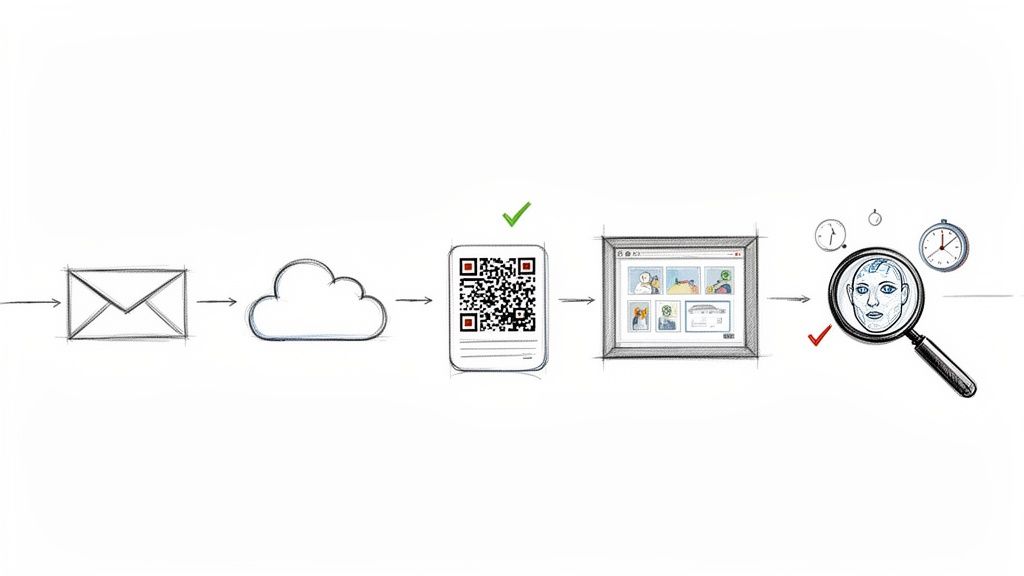
Picking the right way to get event photos to clients is a balancing act. You have to consider your client's experience, your own time, and the overall impression you want to make. The old-school methods are familiar, but new tech is changing the game entirely. Let's walk through the options, from the simplest to the most sophisticated.
H3: The Old Guard: Email and File Transfer
Sending photos as email attachments is direct, but that's about its only virtue. It’s incredibly restrictive. Most email services choke on large files, forcing you to compress images, which tanks the quality. For any serious photographer or event, it just doesn't look professional.
File transfer services like WeTransfer are a marginal improvement. They can handle big files, but the experience feels cold and transactional. Worse yet, the links usually expire. This creates a frantic rush for clients to download everything, and you'll inevitably get emails asking you to re-upload files they missed. There's also zero opportunity for branding or sales.
H3: The Standard Go-To: Cloud Storage Folders
For a long time, cloud folders on Google Drive or Dropbox have been the default choice. You get plenty of space and the links don't expire, which is a clear win over file transfers. But for event attendees, this is where the experience falls apart.
Imagine being a guest at a conference and having to sift through thousands of photos just to find the two you're in. It’s a huge ask, and most people simply won't bother. This friction kills engagement and leaves people frustrated. You get almost no branding control and no real way to sell prints or other services.
The big miss with cloud folders is that they treat photo delivery as a storage problem, not an experience problem. They put the burden of finding the photos squarely on the shoulders of the attendee.
H3: A Big Step Up: Static Online Galleries
This is where things start to get professional. Dedicated online gallery platforms like Zenfolio or Pixieset are a massive upgrade. They present your work in a polished, branded interface that looks infinitely better than a list of files in a folder.
These services usually come packed with features built for photographers: client proofing, password protection, and built-in storefronts for selling prints and digital downloads. This makes them a fantastic option for one-on-one work, like a portrait session or a small wedding where you're delivering a curated collection to a specific client.
H3: Getting Warmer: QR Code Photo Gallery Systems
QR codes brought a sense of immediacy to live events. Guests can scan a code on a sign or screen and instantly land in a photo gallery. It’s a great way to drive traffic and works especially well for things like photo booths or specific brand activations during the event itself.
The problem is, what happens after the event? The QR code often just points to another massive, unsorted gallery. While it's a better starting point than waiting for an email link, it still doesn't solve the core "find my photo" challenge. At a big festival or corporate event, that's the biggest hurdle for attendees.
H3: The Modern Solution: AI-Powered 'Find My Photos' Platforms
The most powerful approach today uses AI and face recognition to completely flip the script. With a platform like Saucial, the experience is centered entirely around the attendee. They just snap a quick selfie, and the system instantly pulls up a personalized gallery of every photo they appear in.
This is a total game-changer. For attendees, it’s a "wow" moment that feels like magic, which massively boosts engagement and social sharing. For photographers and event organizers, it saves an incredible amount of time by automating what was once a manual, tedious process. The ability to handle a bulk photo upload and have the system do the sorting is a lifesaver.
This is the only method that directly solves the attendee's biggest pain point. It also opens up the most potential for branding, gathering marketing insights (with proper consent), and creating new revenue streams by selling directly to attendees.
Photo Delivery Methods at a Glance
To make the decision clearer, here’s a quick breakdown of how these methods stack up against each other based on what matters most to event professionals.
| Method | Best For | Attendee Experience | Monetization Potential | Time Investment |
|---|---|---|---|---|
| Email/File Transfer | Quick, one-off file shares for 1-2 people | Poor & Impersonal | None | Low |
| Cloud Storage | Internal team sharing or simple client delivery | Frustrating | None | Low |
| Static Galleries | Weddings, portraits, one-on-one client work | Professional | High (Prints/Downloads) | Medium |
| QR Code Galleries | Live event activations, photo booths | Good (Initial Access) | Low to Medium | Medium |
| AI-Powered Platforms | Conferences, festivals, brand events, races | Excellent & Personalized | Very High (Sponsorships/Sales) | Low (Post-Setup) |
Ultimately, the best method comes down to your event's scale and your goals. For direct client work, a static gallery is a solid professional choice. But for any event with a crowd, an AI-powered solution delivers an experience that no other method can touch, creating happier attendees and a much more valuable asset for event stakeholders.
How AI-Powered Galleries Completely Change the Game
AI-powered galleries are a massive leap forward in how we deliver event photos. They flip the old model on its head, moving us away from passive, one-to-many photo dumps and into a truly active, engaging experience for every single person. Instead of making your guests dig through a giant, unsorted folder hoping to find a picture of themselves, this tech delivers their personal photos right to them.
For you, the photographer or event host, it couldn't be simpler. You just drag and drop all the event photos into the system. From there, the AI takes over, scanning every image to identify and index the faces within them. This is the magic behind the curtain—turning a single batch of photos into hundreds of perfectly curated, individual galleries.
The Attendee Experience: A New Standard
For an attendee, the experience is incredibly smooth. They'll get a link or scan a QR code, which then asks them to snap a quick selfie. The best part? There are no apps to download and no accounts to create, which gets rid of all the usual friction.
In just a few seconds, the system matches their selfie with all the photos from the event. It instantly builds a private, personal gallery showing every single image they're in. That immediate payoff is what drives huge post-event buzz and engagement.
The core shift is from "Here are all the photos, good luck finding yours" to "Here are your photos, ready to share." This fundamentally alters how guests see the experience, making photo delivery a memorable highlight instead of an afterthought.
This is hands-down the best way to send photos to clients and attendees at scale because it's built around respecting their time. When people can find their photos instantly, they are far more likely to post them on social media, giving your event or brand a massive boost in organic reach. The whole process is seamless, private, and gives everyone exactly what they want without any work. If you're curious to see it in action, platforms like Saucial are a great example of this attendee-first approach.
Full Control with a Privacy-First Design
While the front-end experience for your guests is beautifully automated, you still hold all the cards. You have complete control over which photos get uploaded and what content becomes available. The facial recognition data is used for one thing and one thing only: matching guests to their photos within that specific event gallery.
This privacy-first design gives guests peace of mind. Their selfie is just a temporary key to unlock their personal photo collection and isn't used for anything else. It's a thoughtful approach that turns a once-tedious administrative chore into a powerful, secure, and incredibly effective engagement tool that leaves everyone happy.
Choosing the Right Method for Your Event
Figuring out the best way to send photos to clients isn’t a one-size-fits-all problem. The right answer really hinges on the event's goals, its size, and who you're delivering the photos to. What works brilliantly for an intimate portrait session will completely fall apart at a huge corporate conference. The trick is to align the delivery experience with the event's specific context.
For something small, like an internal company get-together or delivering a few headshots, a shared cloud folder from Google Drive or Dropbox is usually all you need. The audience is small and easy to reach, and the main goal is just getting the files from A to B. You don't need fancy branding or ways to make money, so a simple shared link does the job just fine.
But the game changes entirely when you’re dealing with larger, public-facing events where the guest experience and brand exposure are top priorities.
Matching the Method to the Occasion
Think about a big wedding. Every guest is emotionally invested and dying to find pictures of themselves, their friends, and of course, the couple. If you just send them a link to one massive gallery, you’re forcing them to scroll endlessly, which quickly turns excitement into frustration. This is the perfect use case for an AI-powered "find my photos" platform. Guests get their own personal moments instantly, which fuels social sharing and makes the entire post-event experience feel special.
This same thinking applies to corporate events, trade shows, and music festivals. For these types of events, organizers are under pressure to prove ROI, and photo delivery can be an incredibly powerful tool to help them do just that.
When attendees can find and share their photos without any hassle, they essentially become your brand ambassadors. The organic reach you get from this provides real, measurable engagement data that’s far more valuable than just knowing the files were delivered.
At a trade show, you can even get a sponsor for the AI gallery, turning a necessary expense into a new revenue stream. For a fundraising gala, giving donors instant access to their photos keeps the excitement going long after the event is over, which helps strengthen those important relationships.
This flowchart shows just how simple and effective the workflow for an AI gallery really is.
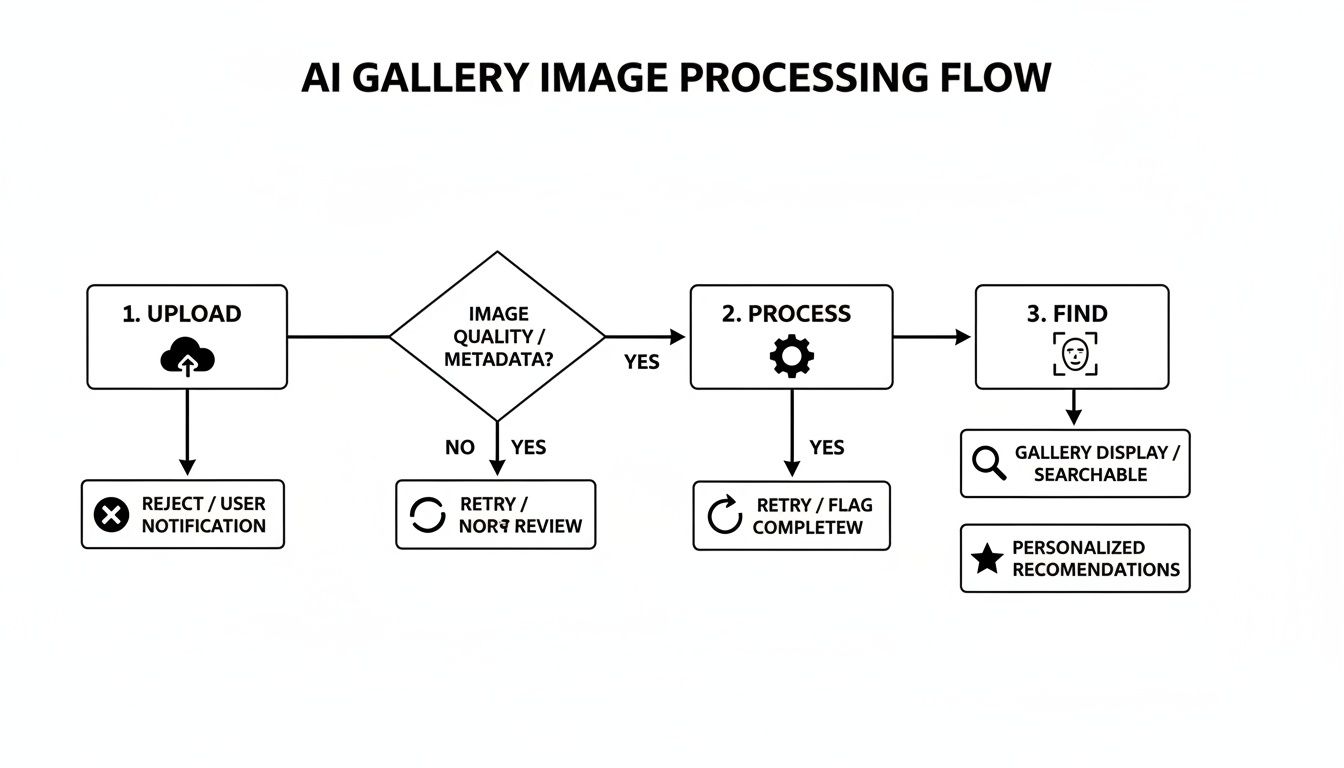
As you can see, it’s a pretty straightforward three-step process: you upload the photos, the AI processes them, and then attendees can find their images instantly. No more manual sorting.
A Practical Decision Framework
To make the choice easier, just ask yourself a few key questions:
- Who is the main audience? Is it a single client, a small internal group, or hundreds (or thousands) of individual attendees?
- What's the primary goal? Are you just delivering files, or are you trying to promote a brand, sell photos, or maximize guest happiness?
- How much friction is acceptable? Can you really ask guests to hunt for their photos, or is instant access absolutely essential to the event's success?
For any event where every single attendee's experience is important, investing in a smarter system will pay off in a big way. Platforms that use selfie matching simply provide a better service that saves organizers time and leaves guests feeling great. To see exactly how this works, you can walk through the steps of setting up an AI-powered event gallery and experience the difference yourself. Ultimately, picking the right tool is a strategic move that has a direct impact on how happy your attendees are and how successful your event is.
Turning Photos Into a Revenue and Engagement Engine
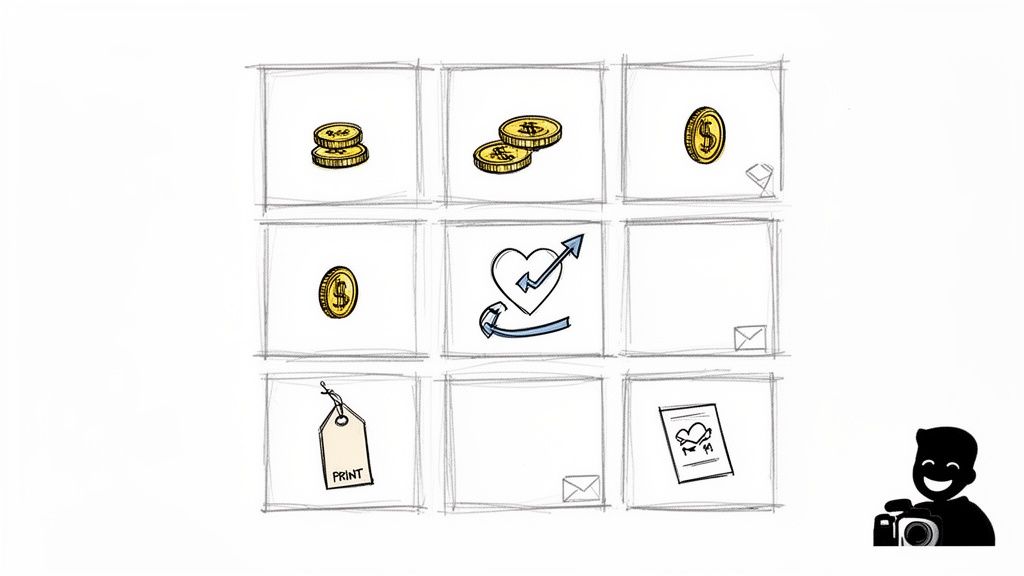
When you move past basic photo delivery, your event images stop being simple keepsakes and become a powerful strategic asset. For event organizers, the goal is no longer just to share pictures; it’s about sparking conversations, extending brand reach, and strengthening community connections. When your attendees can find and share their photos in seconds, they become your best marketers.
This instant, personalized access creates a ripple effect across social media. Every share is a personal endorsement of the event, generating authentic user-generated content that builds loyalty and pushes your marketing reach far beyond the original guest list. The best way to send photos to clients is one that converts passive viewers into active brand advocates.
Unlocking New Revenue for Photographers
For photographers, this modern approach opens up direct-to-attendee sales channels that were impossible with generic cloud folders. You're no longer limited to a single transaction with the event host; now, you can create multiple revenue streams from the attendees themselves.
This shift turns your service from a one-time fee into an ongoing sales opportunity. Within each guest's private gallery, you can seamlessly integrate options for them to purchase products and services right away.
- Print Sales: Offer high-quality prints, canvases, and photo books directly through the gallery.
- Digital Downloads: Sell high-resolution digital files for personal use.
- Premium Edits: Provide advanced retouching services as an upsell.
- Sponsored Frames: Partner with event sponsors to offer branded digital frames.
This model is particularly powerful for large-scale events. Photographers at trade shows or fundraisers face a tough reality; while 49% of attendees value discounts and giveaways, traditional photo delivery via shared drives results in less than a 25% conversion to paid upsells. A face recognition event gallery completely changes this dynamic by connecting the right product to the right person at the peak of their excitement. You can find more insights on this topic in a great article from Marketing Dive about social media's impact on live events.
Building a Self-Sustaining Engagement Loop
Ultimately, a smart photo delivery system creates a virtuous cycle. Attendees get a fantastic, personalized experience that they are eager to share, which in turn drives organic marketing for the event organizer.
By making photo delivery an experience rather than a chore, you create a powerful engine for engagement and profit. The focus shifts from "files sent" to "value created" for everyone involved.
This synergy massively boosts the perceived value of both the event and the photography service. For organizers, it delivers measurable social engagement and stronger attendee relationships. For photographers, it unlocks revenue that was previously out of reach, turning the simple act of sharing photos into a profitable, growth-driving machine.
Common Questions About Modern Photo Sharing
Making the switch to a new photo-sharing platform is a big move, and it's smart to have questions. I often hear photographers and event organizers express concerns about privacy, how complicated the setup is, and whether these systems can really handle big events. Let's tackle those head-on so you can feel confident about finding a better way to deliver photos.
How Is Attendee Privacy Protected?
This is, without a doubt, the most critical question. The answer lies in the system's design: privacy comes first. When an attendee snaps a selfie to find their photos, that image is used for one thing and one thing only—matching them to their pictures from that specific event. It's not stored long-term or used for anything else.
As the photographer or event host, you always have full control over the master photo library. Think of the platform as a secure delivery service, not a social network.
Modern platforms treat an attendee's selfie like a temporary key, not a permanent profile picture. It unlocks their private gallery for that event and is then effectively discarded. Guest privacy is respected at every turn.
Is the Setup Process a Headache?
Not at all. In fact, one of the best things about AI-powered galleries is how simple they are. The entire workflow is built to save you time, not create more tech problems.
You can break the whole process down into three straightforward steps:
- Create an Event Gallery: Just give your event a name and a date.
- Upload Your Photos: Drag and drop all your edited event photos in one go. The system takes it from there and does all the heavy lifting in the background.
- Share Your Link: You get a single link and a QR code. Share it with guests through email, social media, or even printed signs at the event itself.
The best part? There are no apps for guests to download and no clunky software for you to manage. It's all web-based, works on any phone or computer, and is incredibly easy for everyone to use.
Can These Platforms Handle Large Events?
Absolutely. These systems are built to scale, which makes them perfect for large events like conferences, music festivals, charity galas, and sports tournaments. They're engineered to process tens of thousands of photos and serve hundreds or even thousands of attendees at the same time without breaking a sweat.
Picture a fundraiser with 500 guests. Trying to manually sort and email photos would be an absolute nightmare. An AI system automates the entire discovery and delivery process, giving every single person a personalized experience, no matter how big the crowd. This kind of scalability removes the bottlenecks that make old-school photo delivery methods so painful for large events.
Ready to turn your photo delivery from a chore into a highlight of the event? With Saucial, you can give every attendee their own personal gallery in seconds. Discover how our AI-powered platform can save you time, drive engagement, and open up new revenue streams. Learn more and get started at Saucial today!


