The Best Way to Collect Photos from a Group Made Simple
The absolute best way to collect and share photos from a group is with an AI-powered platform that handles all the heavy lifting—from ingestion and facial processing right through to distribution. This creates a slick 'find my photos' experience for guests using a simple link or QR code. It completely gets rid of the friction that comes with old-school methods like shared drives and, better yet, delivers real, measurable results.
Moving Past Shared Drives to Modern Photo Collection
Let's be honest: the old method of dumping every event photo into a shared Google Drive or Dropbox folder is officially broken. It’s a terrible experience. Attendees are forced to scroll through hundreds (sometimes thousands!) of unrelated images just to find a few of themselves. Photographers lose hours manually tagging shots, and event organizers miss out on a massive opportunity for post-event engagement.
This outdated process just creates headaches for everyone and completely fails to capitalize on the excitement of the moment.
A modern, automated approach flips the script entirely. It shifts the focus from a passive photo dump to a genuinely interactive and valuable touchpoint with your attendees. Instead of making guests hunt for their pictures, a smart workflow delivers a personalized gallery directly to them. This is what today's guests expect—instant gratification and a personal touch.
A New Workflow for a Better Experience
Think about how people already manage their own photos. The average smartphone user has 952 photos stored, but that number varies wildly. For instance, women tend to save about 24% more photos than men, and people aged 25-44 store the most, often because they're documenting major life events.
This diversity is precisely why a one-size-fits-all shared folder is doomed to fail. Different people have completely different expectations for how they want to find and save their memories.
The real problem with traditional photo sharing isn't just the manual labor. It's the massive disconnect between the effort of capturing amazing moments and the terrible experience guests have trying to find them. A great photo that's never found might as well not exist.
The flowchart below shows just how different the old, clunky method is compared to a new, effortless approach.
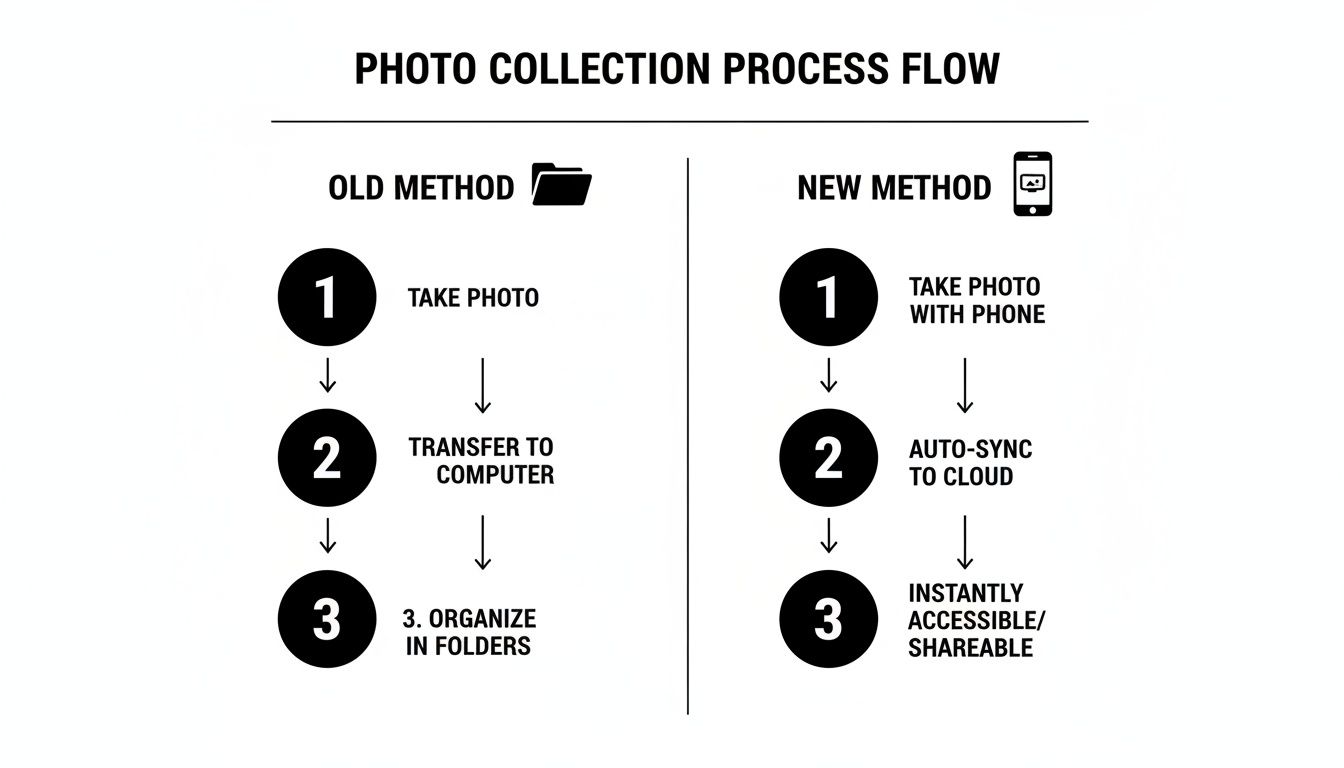
As you can see, a modern platform automates the most tedious steps. It transforms photo sharing from a chore into a seamless, engaging experience that puts your attendees first. When you adopt a system built for this, you turn photo delivery from an afterthought into a powerful asset. To see it in action, you can check out how an AI-powered event photo sharing platform works.
Traditional vs Modern Group Photo Collection Methods
Comparing the old way with the new really puts the difference into perspective. The friction points of traditional methods become glaringly obvious when you see them side-by-side with a modern, automated solution.
| Feature | Traditional Method (e.g., Google Drive, Dropbox) | Modern Platform (e.g., Saucial) |
|---|---|---|
| Photo Upload | Manual upload by photographer or organizer. | Automated ingestion from photographers and photo booths. |
| Photo Organization | Manually sorted into folders, if at all. | Automatic organization using AI facial processing. |
| Attendee Experience | Guests scroll endlessly through hundreds of photos. | Guests find all their photos instantly with a selfie. |
| Photo Access | A single, generic link shared with everyone. | Personalized gallery links and instant QR code access. |
| Engagement | Minimal. Limited to passive views and downloads. | High. Includes features like social sharing and data capture. |
| Privacy | Poor. Everyone can see everyone else's photos. | Excellent. Guests only see their own photos by default. |
| Branding | Limited to the platform's interface (e.g., Google Drive logo). | Fully brandable galleries with custom logos and colors. |
| Monetization | None. Purely a cost center. | Built-in tools for print sales and digital downloads. |
Ultimately, the choice comes down to what you want to achieve. If you're just ticking a box, a shared drive might suffice. But if you want to create a memorable experience, boost engagement, and get a return on your photography investment, a modern platform is the only way to go.
Like any great event, a killer photo experience starts with a solid plan, not with the first camera flash. If you want to collect photos from a group without any headaches, you need to nail down your goals and get your permissions sorted out long before the doors open. This early legwork builds trust and makes sure everyone—from your team to your guests—is on the same page.
Honestly, your communication strategy is everything here. The best time to get ahead of this is during event registration or ticketing. It’s your first, and frankly, best shot at letting attendees know what to expect with photography.
Nailing the Consent Language
Nobody likes surprises, especially when it comes to their photos. Vague language just breeds confusion and makes people wary. Be upfront and crystal clear, particularly if you're using cool tech like facial recognition to create a "find my photos" gallery. The goal is to make guests feel like they're in the loop and in control.
Here’s how you can tweak your consent message to fit the vibe of your event:
- Corporate Gala: "Just so you know, we'll have photographers at the event. We use facial recognition to make it super easy for you to find your pictures in a private, secure gallery afterward. You can opt out of this feature anytime."
- Sports Tournament: "Official photographers will be on-site! Photos will be up for sale in a gallery where you can find your action shots using a selfie. Swing by the info desk if you'd rather not be included."
- Trade Show: "Heads up, this event is being recorded and photographed. By being here, you agree to be in photos that we might use for promotional stuff. A 'find my photos' gallery will be open to all attendees."
See the difference? Each one is tailored to the audience. The corporate crowd gets reassurance about privacy, while the sports folks are keyed into how they can buy their photos.
The real secret is transparency. When you frame technology as a tool to make their experience better—not to be creepy or track them—people get it. If they see the benefit, they’re almost always on board.
Making It Easy to Opt Out
Just as important as getting consent is offering a dead-simple way for people to say "no, thanks." If opting out is a scavenger hunt, you’re eroding the very trust you're trying to build. Simple, accessible privacy controls are table stakes for any modern event.
Here are a few practical ways to handle opt-outs:
- A Simple Checkbox: On your registration form, include an unchecked box that says something like, "I'd prefer my photos not be included in the event's facial recognition gallery."
- On-Site Signage: Put up clear signs at the entrance and registration with a QR code or a short URL that links directly to an opt-out form. Easy peasy.
- Colored Wristbands: This is a classic for a reason. Offer a specific colored wristband at check-in. It's a low-tech, highly effective signal to your photographers to steer clear.
By getting out in front of the permissions piece, you build a system that respects privacy while still delivering an amazing photo experience for everyone else. This foundation is what makes the rest of your photo strategy work. Once this is locked in, you can move on to the on-site logistics with confidence. If you need a hand with the technical side of managing who sees what, you can learn how to set up your event authentication rules to get more granular control.
Getting Photos from Camera to Cloud, Instantly
With your permissions sorted, it's time to focus on the action. The real challenge at any event is getting photos from the camera into your system without anyone feeling the friction. For guests and photographers alike, the best process is one they don't even notice. This is all about your onsite capture and ingestion strategy.
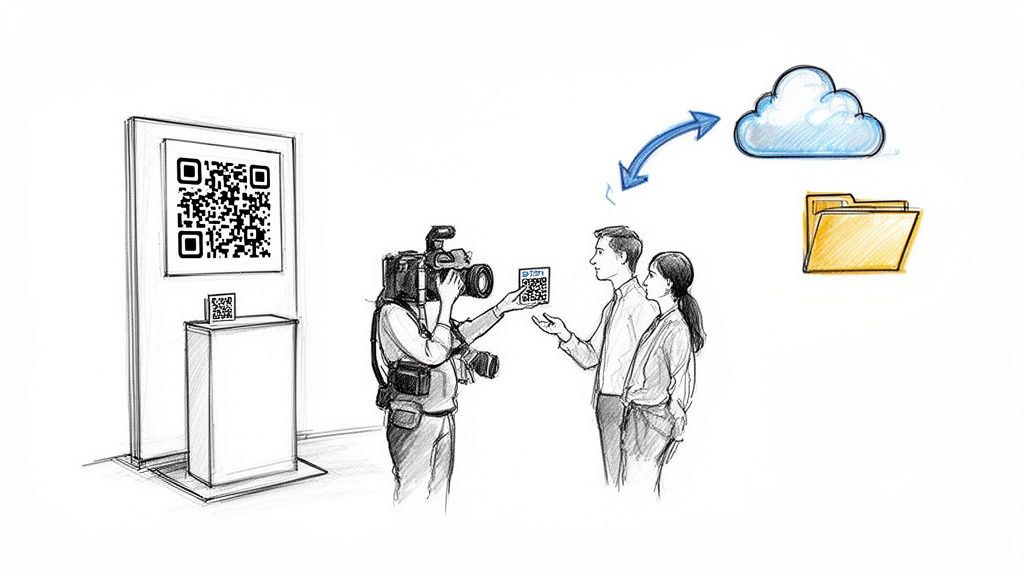
Not all events are the same, so your approach shouldn't be either. For a gala fundraiser or a busy trade show booth, a dedicated photo booth is a brilliant centerpiece. You can plaster a QR code photo gallery link right on the screen, so guests get that instant gratification of seeing their shots right away.
But what about a sprawling music festival or a fast-paced sports tournament? That's where roaming photographers shine. The trick is to arm them with small, branded cards featuring the event's QR code. After snapping a few pictures of a group, the photographer can simply hand them a card. It’s a personal touch that works wonders.
Building an Automated Upload Pipeline
Here's where you can save yourself a world of post-event headaches. The goal is to build an automated pipeline for your photography team that makes manual sorting and tagging a thing of the past.
With the right setup, your photographers should be able to drag and drop entire folders from their SD cards straight into the event gallery. The system takes it from there, churning through the images in the background and prepping them for facial recognition. This frees up your photographers to do what they do best: capture amazing moments, not get bogged down in file management.
And the volume of photos is no joke. People take a staggering 5.3 billion photos every single day globally, with Instagram alone seeing 1.3 billion daily shares. This firehose of content makes manual sorting completely impractical for modern events. Research confirms that 78.7% of online photo albums with location data are linked to specific events, which tells you everything you need to know. People don't want to wade through a messy, chronological dump; they want their photos from their experience, and they want them now. You can dive deeper into how people organize and share their digital memories.
Systematically Collecting Attendee Photos
Don't sleep on the goldmine of photos your attendees are taking on their own phones. This user-generated content (UGC) is authentic and powerful, but you need a plan to gather it. A simple upload link or a dedicated QR code just for guest photos can work wonders.
The key is to funnel all incoming images—whether from professional photographers, photo booths, or attendees—into a single, centralized system. This unified ingestion process is the backbone of an efficient photo distribution workflow.
By pulling all these different sources together, you’re not just collecting photos; you’re building a complete visual story of your event from every angle. The next step is where the magic really kicks in: turning this massive collection into personalized galleries that make every attendee feel seen.
If you want to see how simple this can be, you can explore a simple drag-and-drop uploader to get your event photos organized.
Automating Distribution with Selfie Photo Matching
This is where all the planning and setup really start to shine. Once your event photos are flowing into one central hub, a modern system can take over the heavy lifting. We’re talking about turning a massive, jumbled pile of images into a collection of personal, high-impact moments for every single guest.
The secret sauce is AI-powered facial processing. As soon as a photo hits the server, the system scans it, identifies the faces, and maps them. This all happens automatically in the background, creating a powerful, searchable index of who is in which photo—no manual tagging required from your team.
How It Works for Your Guests
From an attendee's point of view, the experience is dead simple. It feels like magic. They don’t see any of the complex machinery whirring behind the curtain. All they get is a quick, two-step interaction that delivers instant gratification.
Here’s the typical guest flow:
- Scan or Click: They can scan a QR code placed around the venue or click an event photo sharing link you send out after the fact.
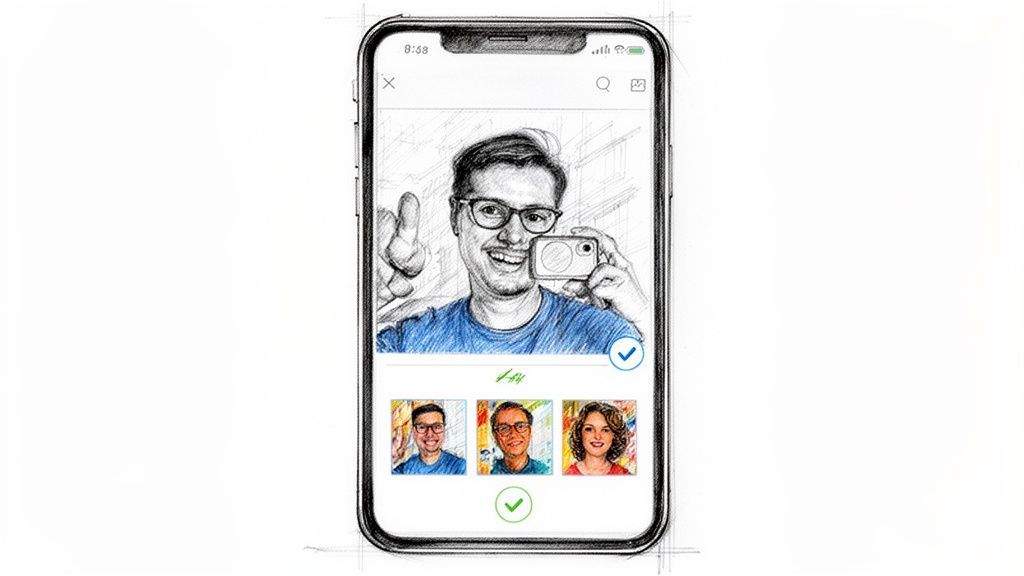
- Snap a Selfie: Their phone’s browser opens to a page prompting them for a quick selfie. This photo is only used for that one-time search.
In a matter of seconds, the platform’s selfie photo matching technology compares their selfie against all the faces it indexed from the event. It then serves up a private, curated gallery of every single photo they’re in. It's their personal highlight reel, delivered on the spot.
This completely flips the old model on its head. Instead of dumping a giant, disorganized folder on your attendees, you're giving them the power to pull their moments to them, whenever they want. The difference in engagement is night and day.
This approach is so effective because it eliminates the two biggest hurdles that crush participation with other methods: app downloads and account creation. When people can get their photos right in their browser without signing up for yet another service, adoption rates go through the roof.
Why This Method Is a Game-Changer
The genius of a selfie-powered "find my photos" system is how direct it is. It respects your guests' time and gives them exactly what they want with almost zero friction. Photo delivery is no longer just a boring administrative task; it becomes an active, genuinely enjoyable part of the event experience.
Think about the average guest at a big conference. They might get snapped during a keynote, in a networking lounge, and again at a sponsor's booth. Digging through a shared drive to find those three specific shots is a needle-in-a-haystack nightmare. With selfie matching, they get all three photos delivered to them in a clean, personal gallery in under 60 seconds.
This kind of speed is what turns your event photos from a simple keepsake into a powerful engagement tool. When guests can find and share their favorite moments this easily, they’re far more likely to post them online, tag your event, and spread the word for you. Fine-tuning this process is crucial, and you can always explore how to configure event-specific privacy settings to get it just right for your audience.
Getting More Out of Your Event Photos: Engagement and Revenue
The life of your event photos shouldn't stop when the last guest leaves. In fact, how you deliver those images is a golden opportunity to keep the conversation going, strengthen your brand, and even open up new streams of income. A smart photo distribution plan is the best way to collect photos from a group and turn them into a powerful, lasting asset.
For event organizers, the incredibly high open and click-through rates of an event photo sharing link are a marketer's dream. Think about it: this isn't just another link to a gallery. It’s a direct line to your most excited attendees, and you can bundle it with post-event messages that hit real business goals.
Strategies for Event Organizers
Imagine sending a thank-you email that does more than just say "thanks." What if it included a personal link where guests could instantly find every photo of themselves from the night? This simple shift turns a routine follow-up into an exciting, interactive experience people are genuinely eager to open.
Here are a few high-impact ways to put this to work:
- Surveys and Feedback: Drop a link to your post-event survey right inside the photo gallery. You'll get much better responses when people are happily reliving great memories.
- Promoting What's Next: The photo gallery is prime real estate. Use that high-traffic space to announce your next event and maybe even offer an exclusive early-bird discount for past attendees.
- Sponsor Love: Give your sponsors amazing visibility by featuring their logos and thank-you messages prominently in the gallery. It’s direct exposure to a highly engaged audience.
The moment an attendee finds a fantastic photo of themselves is a moment of pure joy. If you place a call-to-action—whether for feedback, a ticket sale, or a sponsor message—at that exact point, its effectiveness goes through the roof.
New Revenue Channels for Photographers
For photographers, modern photo delivery systems unlock a direct-to-attendee sales channel that used to be a logistical nightmare. Instead of just handing a hard drive over to the organizer, you can now present a professional, monetized gallery directly to the people in the photos. This elevates your service from a one-time gig into an ongoing revenue opportunity.
This direct connection makes it easy to offer a whole range of upsells that guests will actually want, without creating any extra hassle.
Here are some monetization ideas you can use right away:
- Print Sales: Integrate with a print-on-demand service. Attendees can order high-quality prints, canvases, or photo books with just a click.
- Digital Downloads: Offer high-resolution, watermark-free digital files for a small fee. This is perfect for guests who want a pristine copy for social media or personal archives.
- Curated Photo Sets: For a sports tournament photo sales gallery, you could bundle an athlete's best action shots into a premium "highlight reel" package.
- Sponsored Frames: At a gala fundraiser photo gallery, you could team up with a sponsor to offer custom-branded digital frames that attendees can add to their photos before sharing.
This approach fits perfectly with the booming global events industry, which is on track to hit $2.1 trillion by 2032. With 70% of event professionals already incorporating AI into their work, attendees now expect these kinds of seamless digital experiences. This creates a huge opening for platforms that not only boost engagement but also deliver a clear return on investment. You can learn more about the trends shaping the future of events and how to stay ahead of the curve.
A Few Common Questions We Get
 Whenever I talk to event organizers or photographers about this kind of photo workflow, a few key questions always pop up. It’s a new way of doing things, so it’s natural to wonder about privacy, scale, and whether it’s truly worth the effort. Let's dig into the most common ones.
How Do You Handle Privacy and Consent with Face Recognition Galleries?
This is, without a doubt, the most important question. Privacy has to come first. The best approach is to get clear consent right from the start. You can do this during the event registration process or by posting clear, highly visible signs at the venue itself.
The key is transparency. Your notice should state that photos will be taken and that you're using a facial recognition feature to make it easier for guests to find their pictures.
You also absolutely need a simple way for people to opt out. Good platforms are built with privacy in mind. They create private, temporary galleries for each person searching—they aren't public or searchable on the web. The selfie an attendee takes is only used for that one search; it isn't stored, keeping their data safe.
Will This System Work for a Big, Multi-Day Conference or a Festival?
Yes, absolutely. This is where a modern platform really shines. They're built to handle massive scale without breaking a sweat. For a big multi-day event, you just create one single gallery link that you can use for the entire duration.
As your photographers upload new batches of photos each day, the gallery is automatically updated. Attendees can scan the same QR code or click the same link to see new photos of themselves as the event unfolds. It’s a great way to keep the excitement going, rather than dumping thousands of unorganized photos on them weeks later.
For multi-day events, the big win is sustained engagement. The 'find my photos' experience becomes a daily touchpoint, keeping people connected and sharing their experience in real-time.
What Kind of ROI Can We Actually Expect From This?
The return on investment shows up in a few different ways, benefiting everyone. For event organizers, the big payoff is a massive spike in post-event engagement. When attendees share their branded photos, you get powerful user-generated content, and you save a ton of administrative time.
For photographers, the ROI is much more direct. You're opening a direct channel to every attendee, which is a perfect opportunity to offer upsells and monetize your work. This can look like:
- Print Sales: Offering high-quality prints or canvases right from the gallery.
- Digital Downloads: Selling high-resolution, watermark-free versions of the photos.
- Premium Edits: Providing options for advanced retouching or special artistic effects.
Suddenly, photo delivery isn’t just a cost center; it's a real business opportunity.
Do My Guests Have to Download an App or Create an Account?
Nope, and that's one of the best parts. The whole experience is web-based and designed to be as smooth as possible. There’s no friction.
An attendee just scans a QR code or clicks a link, which opens a page in their phone's browser. They snap a selfie right there, and the system instantly shows them their photos. By getting rid of app downloads and account sign-ups, you remove the biggest hurdles to participation. You'll see way more guests actually use it and love it.
Ready to build a modern photo experience that wows your guests and delivers real results? With a platform like Saucial, you can automate the entire process, giving every single attendee instant access to their personal gallery.


