The Ultimate Guide to Your AI Photo Organizer
Think back to the last big event you attended—a wedding, a corporate gala, or maybe even a marathon you ran. You know the professional photographer was there, capturing amazing moments. Days later, you get the link, excited to find your pictures. But it's a link to a massive, chaotic folder with thousands of photos.
You start scrolling... and scrolling... and scrolling. The initial excitement quickly fades into frustration. This is the all-too-common reality of event photography, a huge pain point for guests and a missed opportunity for event hosts and photographers. Most people just give up, and those beautiful, expensive photos are never seen or shared.
Moving Past the Clutter of Shared Folders
This is where an AI photo organizer completely flips the script. Instead of that dreaded link to a jumbled mess, guests get a much smarter, personalized experience. They just scan a QR code, snap a quick selfie, and like magic, a curated gallery appears with only their photos.
This isn't just a minor upgrade; it's a fundamental change in how people connect with their memories. The market for this kind of technology is exploding for a reason. It’s projected to jump from USD 450 million in 2022 to an incredible USD 1.5 billion by 2026. With over 1.4 trillion photos taken every single year, manually sorting through them just isn't realistic anymore, especially for large-scale events.
An AI photo organizer turns a passive, frustrating photo gallery into an active, engaging touchpoint. It bridges the gap between professional photography and personal connection, ensuring every attendee feels seen.
What this technology really does is transform photo delivery from a logistical headache into a powerful engagement tool. Whether you're running a fundraiser, a trade show, or a wedding, instantly connecting people with their best moments is a true game-changer. You can get started by preparing your photos for a quick upload.
How AI Photo Organizers Find Your Best Moments
Think of an AI photo organizer as the world's most efficient photo assistant. Instead of you or your attendees spending hours digging through a massive, unsorted gallery, this technology does all the heavy lifting in a matter of seconds. It intelligently sorts thousands of images to connect every single person with their own photos. This isn't magic—it's just a few clever technologies working in perfect harmony.
The engine driving this whole process is facial recognition. It works by creating a unique digital signature for every face it sees. The AI scans each photo, analyzing distinct facial features—the distance between the eyes, the shape of the nose, the curve of the jawline—and converts that data into a numerical code. When that same code appears in other photos, the system knows it's the same person and groups those images together into a private collection.
From Digital Signatures to Instant Galleries
Once the AI has mapped out all the faces from the event photos, the real fun begins with selfie photo matching. This is the simple, elegant step your guests will love. An attendee just scans a QR code and snaps a quick selfie.
Instantly, that selfie is turned into the same kind of numerical signature. The system then blitzes through the thousands of signatures it already cataloged from the main gallery, looking for a match. It’s a bit like a high-tech game of "Guess Who?"; the selfie is the clue, and the prize is a personalized album delivered right to their phone. The whole process is nearly instantaneous.
This diagram really captures the shift from the old, frustrating way of doing things to a smooth, AI-driven experience.
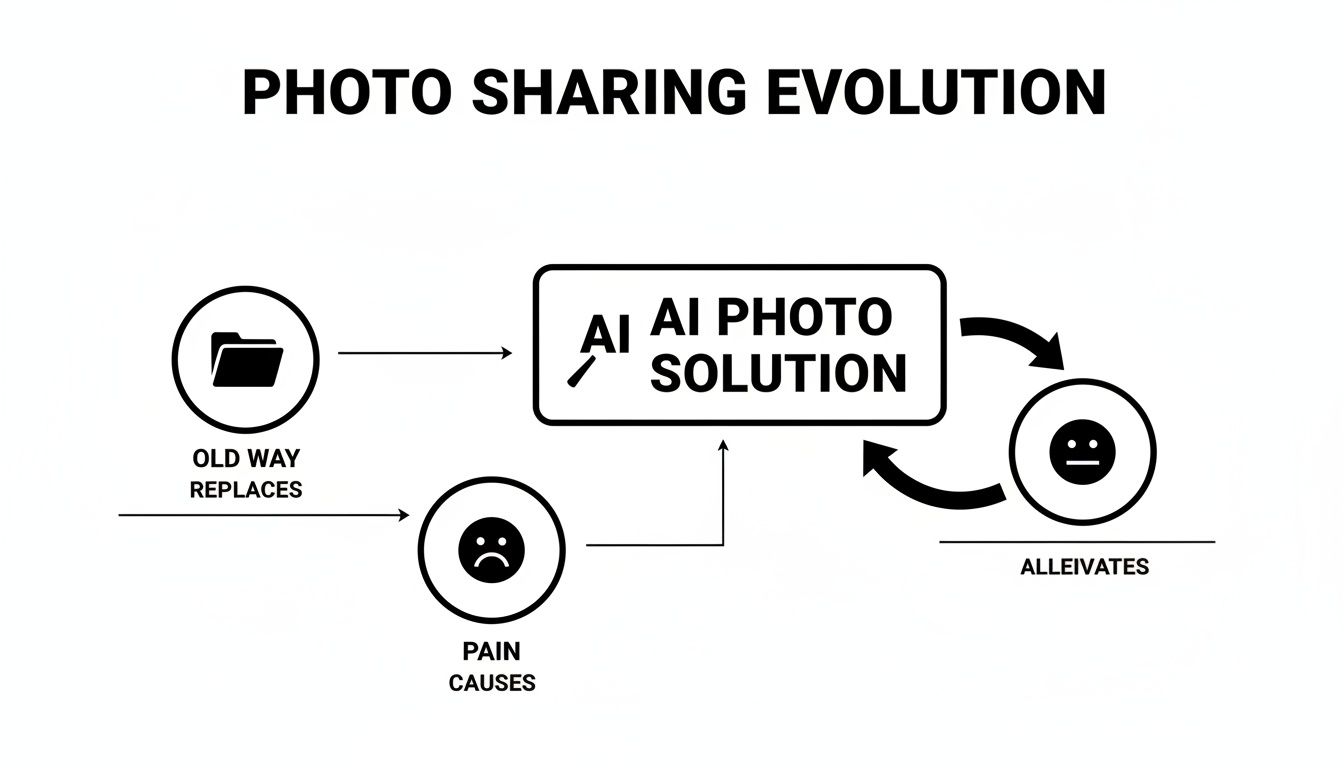
As you can see, it completely eliminates the chaotic manual search that used to be the norm, replacing it with a direct, targeted delivery system that guests actually enjoy using.
The Simple Bridge to Your Photos
The final piece of the puzzle is the delivery mechanism: QR codes and shareable web links. This is what makes the whole system so incredibly easy to use. There are no clunky apps to download or tedious accounts to create.
A simple scan or a click is all it takes to kick off the "find my photos" process. This low-friction approach serves as the perfect bridge between the live event and the digital photo gallery, making sure everyone can get their pictures without any hassle.
This powerful combination is why the market for AI-powered image tools is exploding. Platforms like Saucial are in high demand as event organizers ditch outdated, manual methods. Photographers are reporting they save over 50% of their time on "find my photos" requests alone, which is a massive win for their workflow. Looking ahead, the market for related AI photo tools is projected to climb to an impressive USD 2.2 billion by 2033, with billions of AI-processed images becoming standard at events everywhere.
Why Organizers and Photographers Are Embracing This Technology
Let's get down to what really matters. Beyond the fancy tech, how does an AI photo organizer actually make life better for the people on the ground? For event organizers and photographers, the answer is simple but powerful: it turns photo delivery from a frustrating, manual slog into an automated engine for engagement and sales.
For event organizers, this is about creating a genuine connection that lasts long after the event wraps up. Instead of blasting out a generic gallery link that gets buried in an inbox, you're giving attendees an exciting, personal way to find their own moments. This personal touch is what sparks people to share, creating a wave of authentic, user-generated content that extends your event's buzz across social media.
For Organizers: More Engagement, Less Hassle
Picture a charity gala. A simple QR code at each table lets guests pull up a gallery filled with their photos. As they find and post their favorite shots on LinkedIn or Instagram, they’re not just sharing a picture—they’re amplifying your event’s message and showing off its success to their entire network. That’s not just a nice feature; it’s a marketing multiplier.
The efficiency gains are just as huge. The entire photo management software market is expected to grow from USD 3.61 billion in 2024 to USD 6.28 billion by 2032, and there's a good reason why. Smart, automated tools are becoming essential. For event teams, bringing in an AI photo organizer can slash production costs by up to 30% by 2028 simply by wiping out all those hours spent on manual sorting and distribution. You can dive deeper into these trends and see the impact of these software tools.
For Photographers: A New Way to Earn
For photographers, the benefits are just as tangible, boiling down to two key things: getting your time back and opening up new ways to make money. All those hours spent manually sorting photos or answering endless "can you find my picture?" emails? Gone. This technology can cut photo sorting time by as much as 45%, which means more time for shooting, editing, and growing your business.
For photographers, the real magic is turning the delivery process into a direct sales channel to every attendee. You’re no longer just handing a folder of images to the organizer; you’re creating an immediate, personal connection with every single person in your photos.
This direct line to attendees is a goldmine. Think about a sports photographer at a youth tournament. Now, they can offer print sales or digital downloads directly to a parent the second they find that perfect action shot of their kid. That kind of instant upsell was simply impossible with the old way of doing things.
Turning Benefits into Measurable Outcomes
These benefits aren't just abstract concepts; they translate into real, measurable results for both organizers and photographers. The table below breaks down the key performance indicators (KPIs) you can expect to see improve.
| Stakeholder | Metric | Typical Improvement |
|---|---|---|
| Event Organizer | Attendee Engagement | 2-3x higher social sharing rates and branded content generation. |
| Event Organizer | Operational Efficiency | Up to 30% reduction in administrative costs related to photo management. |
| Photographer | Time Savings | Up to 45% less time spent on post-event sorting and fulfillment. |
| Photographer | Revenue Growth | Opens a new, direct-to-attendee channel for print and digital sales. |
Ultimately, using an AI photo organizer creates a scenario where everyone's goals line up perfectly. Organizers nail their engagement targets, photographers discover new income streams, and guests get a fantastic, instant way to find and share their favorite memories. It's a true win-win-win, all driven by smart automation.
AI Photo Sharing in the Real World
It’s one thing to talk about technology in theory, but it’s another thing entirely to see it work in a real, live setting. That’s where the power of an AI photo organizer really hits home. This isn't just a fancy filing system; it's a flexible tool that completely changes how people interact with event photos, whether it's at a formal gala, a chaotic sports tournament, or a massive trade show.
Let's dive into a few examples to see what this looks like on the ground.
The Corporate Gala Fundraiser
Picture a swanky, black-tie fundraiser for a well-known charity. Hundreds of attendees are mingling, networking, and posing for a professional photographer. The old way? Wait a week, get a link to a massive, unorganized gallery, and maybe scroll through a few hundred images before giving up. By then, the energy from the event is long gone.
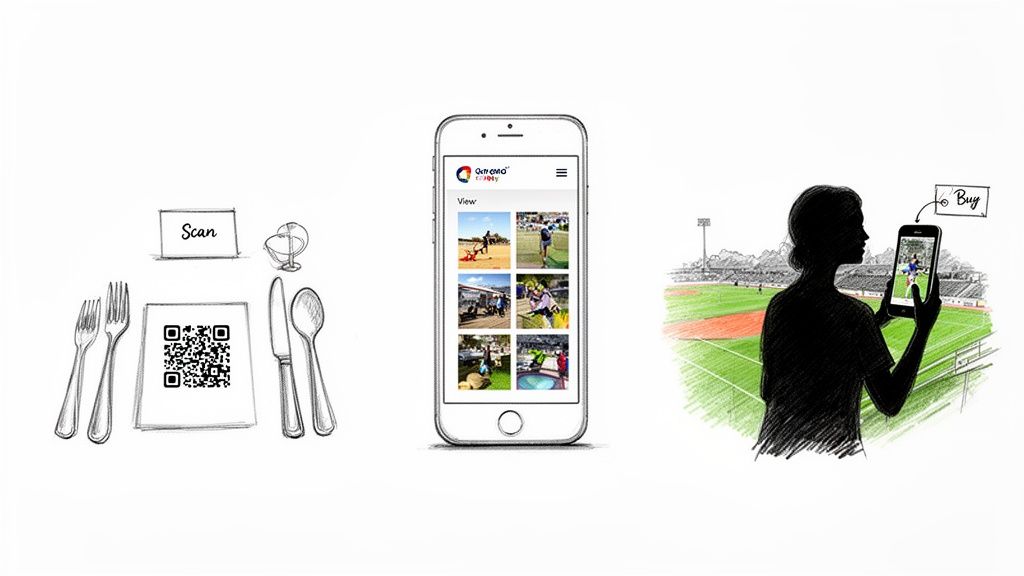
Now, let’s add AI to the mix. Each table has a small, tastefully designed card with a QR code. A guest pulls out their phone, scans the code, and snaps a quick selfie. Instantly, their phone displays a personal gallery of every single professional photo they appear in. They find a fantastic shot with their team, and with a single tap, share it to LinkedIn, automatically tagging the nonprofit and their company.
The experience shifts from "I have to find my photos" to "Here are my photos." That simple change turns every guest into an enthusiastic brand ambassador, replacing the friction of the search with the instant gratification of sharing a great memory.
Suddenly, you have a wave of positive, branded content hitting social media while the event is still fresh in everyone's minds. The organizer isn't just distributing photos anymore; they're actively amplifying the event's success and reaching a far wider audience online.
The Youth Sports Tournament
Think about the controlled chaos of a weekend-long youth soccer tournament. Photographers are everywhere, capturing thousands of incredible action shots across multiple fields. Every parent is dying for that one epic photo of their kid making a play, but who has time to sift through 10,000 images to find it? It's a logistical nightmare.
This is where the AI photo organizer becomes a brilliant sales tool. A single QR code photo gallery link is sent out to all the teams. A parent scans it, uploads a selfie of their child, and the platform’s face recognition instantly filters the entire library. In seconds, they see a curated collection of just their athlete’s best moments.
From there, they can buy high-resolution digital downloads or order prints directly. The photographer has created a direct, frictionless path to monetization. They sell more photos because they connected the right image with the right buyer at the exact moment of peak emotional excitement.
The Bustling Trade Show
Finally, imagine a sprawling industry trade show. The organizer’s main goal is to deliver value and keep thousands of attendees engaged. A roaming photographer is hired to capture the energy—the handshakes on the show floor, the packed breakout sessions, and the lively networking mixers.
Instead of just dumping all those photos into a generic gallery, attendees are given a link to find their pictures. They use selfie photo matching and are immediately presented with a professional collection of their headshots and candid moments from the event.
This approach accomplishes two key things:
- It offers a high-value takeaway. Attendees get professional, branded photos they can use for their LinkedIn profiles or company websites right away.
- It creates an engagement touchpoint. Organizers can see which photos are getting the most views and shares, giving them real data on what parts of their event resonated most.
In all of these scenarios, the underlying idea is the same. The AI system takes away the tedious, frustrating work of finding photos and replaces it with an instant, personal experience that provides real value to everyone involved.
Navigating Privacy and Consent with Confidence
Let's be honest: whenever you bring facial recognition into the mix, people get nervous. And they should be. That’s why any conversation about AI photo organizers has to start and end with privacy and consent. This isn't just a "nice-to-have" feature; it's the bedrock of trust between you, your photographers, and your guests.
A well-designed system puts the event host firmly in the driver's seat. You—or your photographer—are the gatekeeper. You decide which photos make it into the gallery. No images are ever scanned or shared until you explicitly upload them, which means you have total control over the content from the get-go.
Putting Attendees in Control
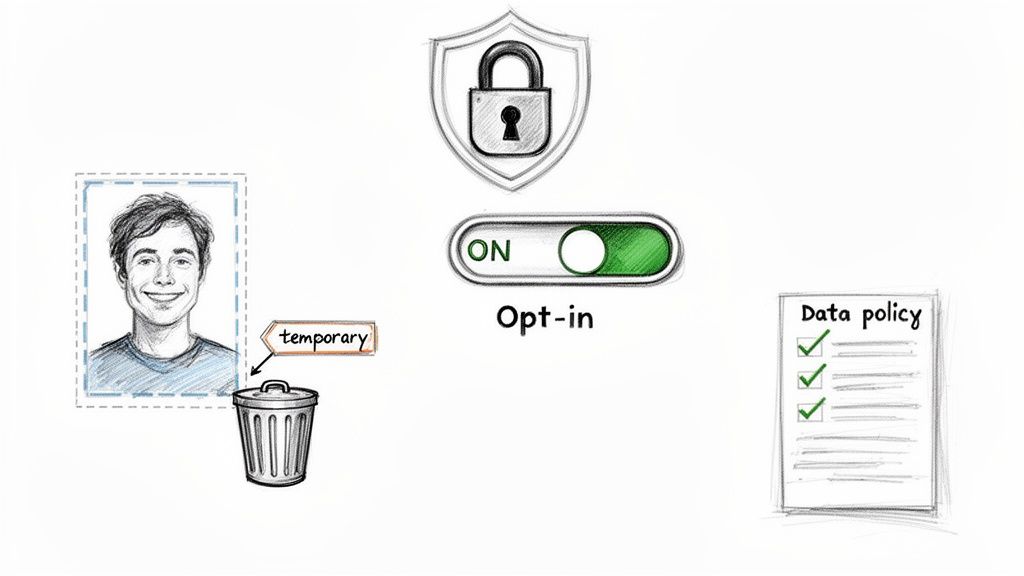
Here’s the most important part of the entire process: it is 100% opt-in. No one is being passively scanned or tagged in the background. For the magic to happen, a guest has to take direct action. They have to walk up, scan a QR code, and take a selfie. That simple act is their consent.
The selfie an attendee provides acts only as a temporary search key, not as a permanent identifier. It is used for the sole purpose of matching them to their photos in that specific gallery and is not stored long-term.
This model is a world away from passive surveillance. It empowers your guests by making them active participants. They trigger the technology themselves, on their own terms, to get something they want—their photos.
Secure by Design
Beyond getting explicit consent, a trustworthy AI photo platform has to be built on a foundation of data security and transparency. Anything less is a non-starter. Here’s what that looks like in practice:
- Temporary Data Use: The selfie someone takes to find their pictures? It’s used for the search and then it’s gone. It shouldn't be held onto or used for anything else.
- Clear Policies: You should have easy access to the platform's data policies so you can confidently answer any questions from attendees. No jargon, just straight answers.
- Encrypted Connections: Every piece of data, from the photos you upload to the selfies guests take, must be protected with secure, end-to-end encryption.
When you combine organizer control with attendee-driven consent and transparent security measures, the technology becomes a genuinely safe and helpful tool. For a behind-the-scenes look at how this is managed, platforms like Saucial provide clear user authentication and settings to keep you in full command.
How to Choose the Right AI Photo Organizer for Your Needs
Picking the right AI photo organizer isn't just about the tech—it's about finding a partner that actually gets your event goals. There are a lot of platforms out there, and knowing what to look for is the difference between a seamless, engaging experience and a total administrative headache.
The best solution should feel effortless for you and a little bit like magic for your attendees.
First things first, look at it from your own perspective as the organizer or photographer. How easy is it to get up and running? The process should be as simple as dragging and dropping your photos. You shouldn't need a technical manual just to create a gallery. A clean, intuitive interface that takes you from a folder of images to a shareable link in minutes is what you're after.
The Attendee Experience Is Everything
Now, let’s talk about the guest experience, because this is where most platforms either shine or completely fall flat. The biggest killer of engagement is friction. Does the platform force your guests to download an app? Do they have to create an account just to see their pictures? If the answer to either of those is yes, expect your engagement numbers to tank.
The gold standard is a simple, browser-based process. A guest should be able to scan a QR code, snap a quick selfie on their phone, and instantly see their photos. That seamless "find my photos" workflow is what gets people excited to participate and share.
An app-free experience removes all the barriers, making photo retrieval feel like a natural and fun part of the event itself.
Key Features and Controls to Look For
Beyond the core user experience, any serious AI photo organizer needs to give you robust controls to manage your gallery. Here’s a quick checklist of the non-negotiables you should look for when comparing options:
- Privacy and Sharing Controls: How much control do you have over who sees the photos? You need the ability to easily set a gallery to public or private from a secure settings dashboard.
- Monetization Tools for Photographers: If you're a pro photographer, does the platform help you make money? Look for built-in tools that let you sell digital downloads, prints, or premium edits directly to the people who find and love their photos.
- Branding and Customization: Can you make the gallery look like it’s a part of your event? Adding your logo, brand colors, and a custom URL makes the experience feel professional and cohesive.
- Workflow Integration: Does it play nice with how you already work? The right tool should fit into your existing process, not force you to change it. It should be simple to share the gallery link via email, social media, or with on-site QR codes.
Ultimately, choosing the right tool is a strategic decision. It has a direct impact on how your attendees feel, how far your brand reaches, and how much time you save. Focus on finding a platform that prioritizes simplicity for your guests and gives you powerful, flexible controls behind the scenes.
Common Questions About AI Photo Organizers
Still have a few questions? We get it. Here are some quick, straightforward answers to the most common things people ask when they're thinking about using an AI photo organizer for their event.
How Accurate Is the Selfie Matching, Really?
It’s impressively accurate. Modern facial recognition can hit over 99% accuracy in decent lighting. What that means for your event is the AI can reliably pick out an individual from a sea of faces, even in crowded group shots or photos taken from less-than-perfect angles. These systems are built to handle the chaos of a real-world event and still deliver the right photos to the right person.
Do My Guests Have to Download an App?
Nope, and that's a huge plus. The best platforms are entirely web-based, which means no one has to go through the hassle of downloading an app they’ll only use once.
Guests just scan a QR code or tap a link, which pops open a page in their phone's browser. They take a quick selfie, and bam—their personal photo gallery appears instantly. It’s a smooth, friction-free process designed to get as many people involved as possible.
Can I Control Who Sees the Photos?
You have total control. As the event host or photographer, you're the gatekeeper. You decide which photos get uploaded and become searchable. The AI simply does the private sorting in the background.
When a guest uses their selfie, they only see the photos they’re actually in. This completely avoids the old-school "public gallery" problem where anyone could browse through everyone else's pictures, which is a massive win for guest privacy.
Ready to give your guests a "find my photos" experience they'll actually enjoy? Saucial makes it simple to set up engaging, personalized galleries that leave a lasting impression. Learn more at https://saucial.com.


